
Harvest
Contracts
Sign up

Babysitting Contract Template

Many families overlook the importance of a babysitting contract, risking misunderstandings. Harvest helps contractors manage time and expenses efficiently, though it's not for contract creation.

Start from a template

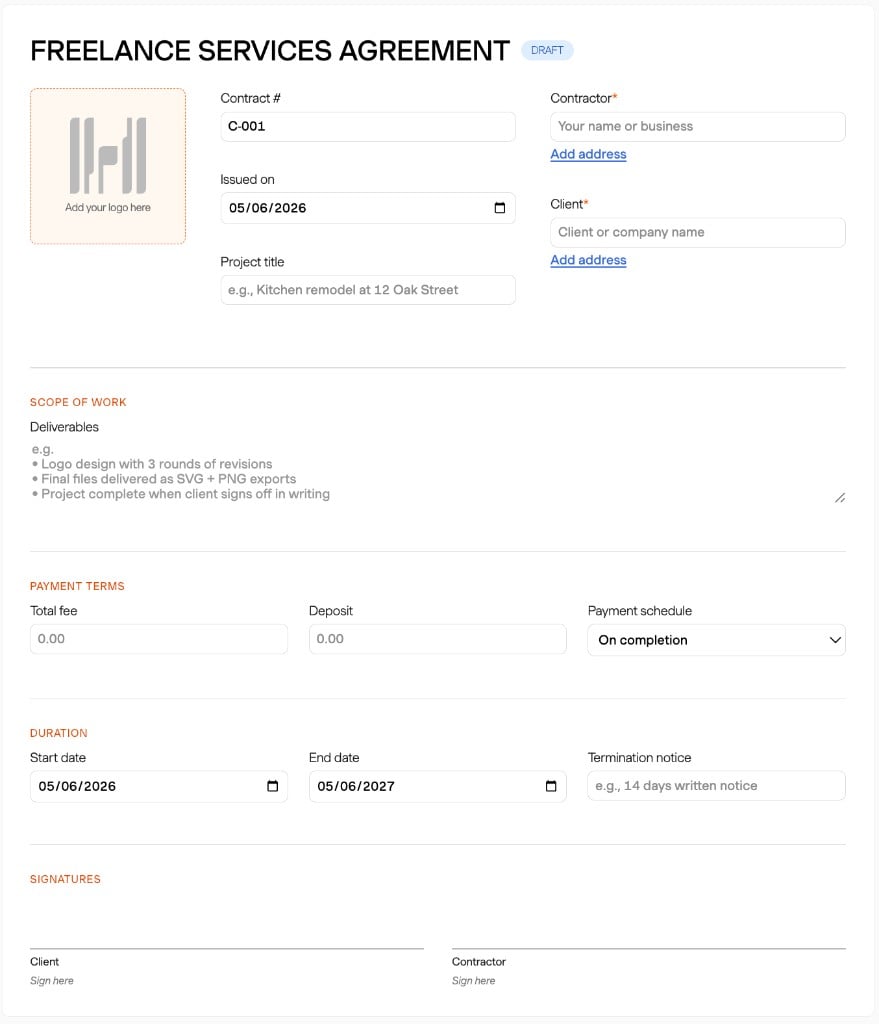
AGREEMENT DRAFT

Add your logo here

Scope of work

Payment terms

Duration

Signatures

Client

Sign here

Contractor

Sign here

Get paid via:
Credit card / Debit card
ACH
Wire transfer

Customize contract

Appearance

Add a logo
Show contract title

Contract settings

Include payment terms Total fee, deposit, and schedule
Include termination clause Notice required to end the contract
Include signature blocks Both parties sign at the bottom

The Importance of Babysitting Contracts

Babysitting contracts have become an essential tool for establishing clear expectations and providing legal protection for both parents and caregivers. With the increasing trend towards formalizing these agreements, even casual childcare arrangements benefit significantly from having a written contract. A well-outlined contract helps prevent misunderstandings and miscommunications, which are common in verbal agreements. For instance, a caregiver may expect to be paid $20/hour based on a verbal agreement, but without a written contract, discrepancies can lead to underpayment and no recourse for the sitter.

Moreover, babysitting contracts are legally binding when signed by both parties and contain clear terms, making them enforceable in court like any other written agreement. This legal protection is crucial, especially considering that most nannies are classified as non-exempt employees under federal law, entitled to overtime pay. Professional nanny agencies often provide comprehensive contract guidance, ensuring that all legal bases are covered and expectations are clearly communicated.

What to Include in a Babysitting Contract

A comprehensive babysitting contract should include essential details to ensure clarity and protect both parties. These elements typically encompass the contact information for all parties involved, the children's names and ages, specific job responsibilities such as meal preparation and homework assistance, and the work schedule, including days, hours, and overtime. Additionally, compensation terms like hourly rate, payment schedule, and reimbursement for expenses should be clearly detailed.

It's also important to outline benefits such as vacation, sick leave, and holidays, along with emergency protocols including contact information and medical details. House rules, confidentiality clauses, and termination procedures should be addressed to avoid any ambiguity. For longer engagements, regularly reviewing and updating the agreement is advisable, ensuring that all modifications are written, dated, and signed by both parties.

Customizing Your Babysitting Contract

Customizing a babysitting contract to fit your specific needs can greatly enhance its effectiveness. Instead of using vague terms like "tidying up," specify exact cleaning tasks to prevent any ambiguity. Address "what-if" scenarios such as unexpected sick days or doctor's visits to ensure all parties are prepared for various situations. Including guidelines on mobile phone use, whether children can be taken on outings, and policies on visitors further clarifies expectations.

For live-in arrangements, specific clauses should detail living accommodations, coverage of utilities and expenses, privacy boundaries, and guest policies for the nanny's living space. Incorporating a trial period, typically ranging from two days to two weeks, allows both the family and the caregiver to assess if the placement is a suitable fit. Additionally, storing a digital copy of the contract can aid in easy access and record-keeping, complementing a printed, signed version.

Legal Considerations for Babysitting Contracts

Legal considerations are paramount when drafting a babysitting contract. In the U.S., a babysitter earning more than $2,700 per year may require the employer to issue a Form W-2 and withhold Social Security and Medicare taxes. However, Harvest does not handle tax reporting but can assist with tracking time and expenses, which can be exported for financial analysis. It's crucial to understand that in many jurisdictions, such as California, contract clauses attempting to exempt parties from legal responsibility are invalid.

Experts emphasize that a written agreement protects both parties, reduces miscommunication by making expectations crystal clear, and demonstrates professionalism and respect for the caregiver's role. It's advisable to consult legal guidance, especially for clauses pertaining to overtime pay and at-will employment terms, to ensure compliance with local employment laws.

Explore Babysitting Contracts with Harvest

See how Harvest helps contractors manage time and expenses, though it doesn't create contracts. Ideal for tracking work hours and managing finances.

Screenshot of babysitting contract template in Harvest.

Babysitting Contract Template FAQs

  • A babysitting contract should include contact details, job responsibilities, work schedule, compensation terms, benefits, emergency protocols, house rules, and termination procedures. These elements help set clear expectations and protect both parties legally.

  • Customize your contract by specifying exact tasks instead of vague terms, addressing "what-if" scenarios, and including guidelines on phone use, outings, and visitors. Regularly update the contract to reflect any changes in schedules or responsibilities.

  • A signed babysitting contract is legally binding and enforceable in court. It's crucial to include clear terms and consult legal guidance for compliance with employment laws, particularly regarding tax obligations and overtime pay.

  • Use a babysitting contract whenever you engage a caregiver, whether for occasional sitting or regular nanny services. Written agreements help prevent misunderstandings and provide legal protection for both parties.

  • Yes, a babysitting contract should include emergency contact information, medical details, and protocols for various scenarios. This ensures caregivers are prepared and can act swiftly in emergencies.

  • Documenting compensation in a contract ensures clarity and prevents disputes. It should detail hourly rates, payment schedules, and any reimbursements, helping both parties understand financial obligations.

  • Update the contract annually or whenever there are changes in routines or expectations. Written, dated, and signed modifications ensure that all parties are on the same page regarding any new agreements.