
Harvest
Quotes
Sign up

Construction Proposal Template

Harvest helps contractors manage project budgets and track expenses, crucial for accurate construction proposals. While not a dedicated proposal tool, Harvest supports financial transparency.

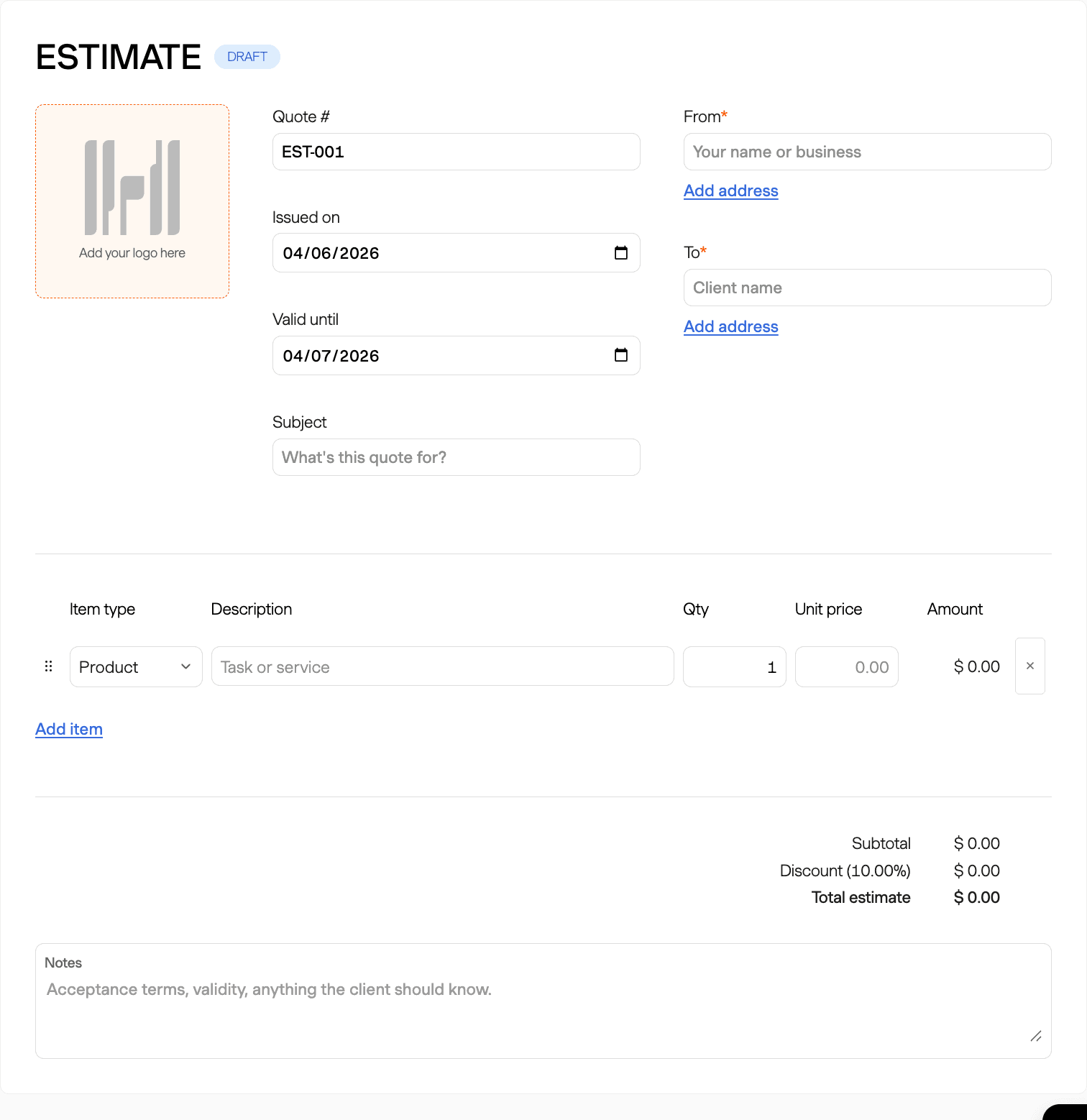
ESTIMATE DRAFT

Add your logo here
Item type
Description
Qty
Unit price
Tax
Amount
Subtotal
$0.00
Discount
$0.00
Total estimate
$0.00
Get paid via:
Credit card / Debit card
ACH
Wire transfer

Customize estimate

Appearance

Add a logo
Show estimate title

Quote settings

Tax Add up to 2 tax rates
%
Discount Apply a discount percentage
%

Key Components of a Construction Proposal

A well-crafted construction proposal is essential for securing projects and effectively communicating with potential clients. It typically includes several key components: a detailed project overview, a comprehensive scope of work, a realistic project timeline, and a transparent cost estimate. These elements ensure that the client fully understands what the project entails, reducing the risk of misunderstandings.

The project overview should outline the objectives and expected outcomes, setting the stage for a successful collaboration. A detailed scope of work is crucial, as it specifies all activities, tasks, equipment, labor, and materials involved, while also clearly stating any exclusions to prevent disputes. Including a realistic project timeline with key milestones helps manage client expectations and ensures alignment on deadlines.

Lastly, a transparent cost estimate is vital. It should break down all costs, including labor, materials, permits, and contingencies, ensuring no hidden surprises for the client. While Harvest does not offer a comprehensive construction proposal builder, it can aid in managing costs by organizing job expenses and labor as billable items.

Customizing Construction Proposal Templates

Customization is key when preparing a successful construction proposal. Tailoring the document to the specific needs of the client and project can make a significant difference in winning bids. This involves adapting generic scope language to align with the actual work and strategically highlighting relevant qualifications and past project successes.

For example, using standardized templates ensures consistency and professionalism, which is crucial for fair client comparisons. However, it’s essential to customize these templates to reflect the unique aspects of each project. This can include specific project details, such as unique timelines or client-specific requirements, which demonstrate an understanding of the client's needs.

Harvest can assist in this customization process by helping contractors manage project budgets and track expenses accurately. By using Harvest to organize job costs and materials as billable expenses, contractors can provide precise cost estimates that reflect the project’s unique requirements, enhancing the proposal’s credibility.

Legal Considerations in Construction Proposals

Legal considerations are a vital part of any construction proposal, as they often become legally binding once signed. Essential contractual elements typically include insurance requirements, payment terms, and dispute resolution mechanisms. While Harvest does not offer specific tools for drafting legal terms, it supports the financial aspect of proposals through detailed expense tracking.

Ensuring the accuracy of all data in a proposal is crucial, as inaccuracies can lead to disputes and undermine professionalism. This is where Harvest’s strengths in time and expense tracking come into play, allowing contractors to provide reliable financial data that supports the proposal’s integrity.

Despite the absence of features for handling legal requirements, Harvest aids contractors in managing project budgets and keeping track of expenses, which contributes to clear and reliable proposals. This can help mitigate potential legal challenges by ensuring that all financial aspects are well-documented and transparent.

Leveraging Technology for Efficient Proposal Creation

The construction industry is increasingly leveraging technology to enhance proposal creation efficiency. With 87% of US contractors using digital tools, the adoption of technology like Harvest can streamline processes such as cost estimation and expense tracking, which are integral to proposal preparation.

By integrating technology, contractors can reduce the time spent on proposals and improve their quality. For instance, AI-powered tools can significantly reduce the time spent on manual tasks like plan reviews and quantity takeoffs, allowing more focus on proposal quality. Although Harvest does not provide AI takeoff capabilities, it facilitates accurate cost estimations and budget management.

Furthermore, using Harvest to integrate project management and expense tracking can lead to more organized and efficient proposal processes. This not only saves time but also ensures the accuracy and professionalism of proposals, ultimately increasing the chances of winning bids.

Improving Bid Win Rates with Strong Proposals

Winning construction bids often depends on the strength and professionalism of the proposal. The average bid win rate for commercial contractors is around 25%, but top performers achieve win rates of 40-50% by submitting stronger proposals with more competitive pricing. A well-structured proposal, supported by accurate data and a clear presentation, is key to success.

Utilizing tools like Harvest can enhance proposal accuracy by providing detailed cost estimates and tracking expenses efficiently. While Harvest does not replace comprehensive proposal software, it aids in ensuring that financial aspects are clearly documented and error-free, contributing to a more compelling proposal.

By focusing on creating detailed, accurate, and professional proposals, contractors can improve their bid win rates significantly. Strong client relationships and clear communication of project scope and costs are enhanced by the reliable financial data that Harvest provides, supporting successful bidding outcomes.

Boost Your Proposals with Harvest

Explore how Harvest enhances construction proposal accuracy with project budget and expense tracking features—ideal for winning more bids.

Construction proposal template displayed on Harvest's platform.

Construction Proposal Template FAQs

  • A construction proposal typically includes an introduction, detailed project overview, scope of work, timeline, cost estimates, payment terms, and legal conditions. These components ensure clarity and help manage client expectations.

  • Customization involves adapting the template to the specific project and client needs. Highlighting unique project details and aligning the scope of work with actual tasks can make the proposal more compelling and client-focused.

  • Technology streamlines proposal creation by reducing manual tasks and enhancing accuracy. Tools like Harvest aid in managing project budgets and tracking expenses, crucial for accurate and efficient proposal preparation.

  • Accurate cost estimation involves breaking down all project expenses, including labor and materials, into detailed line items. Harvest helps contractors organize these costs clearly, supporting precise and reliable proposals.

  • A detailed scope of work is crucial as it outlines all project activities and exclusions. This clarity helps prevent misunderstandings and disputes, ensuring all parties are aligned on project expectations.

  • While Harvest does not create detailed construction proposals, it supports proposal preparation by tracking project budgets and expenses, ensuring accurate financial data for proposals.

  • The average bid win rate for commercial contractors is about 25%. Top performers can achieve 40-50% by submitting strong, well-crafted proposals with competitive pricing.