
Harvest
Contracts
Sign up

Create an Electrical Contract

Harvest provides an efficient way to manage invoicing and time tracking for electrical projects, ensuring contractors can focus on compliance and efficiency.

Start from a template

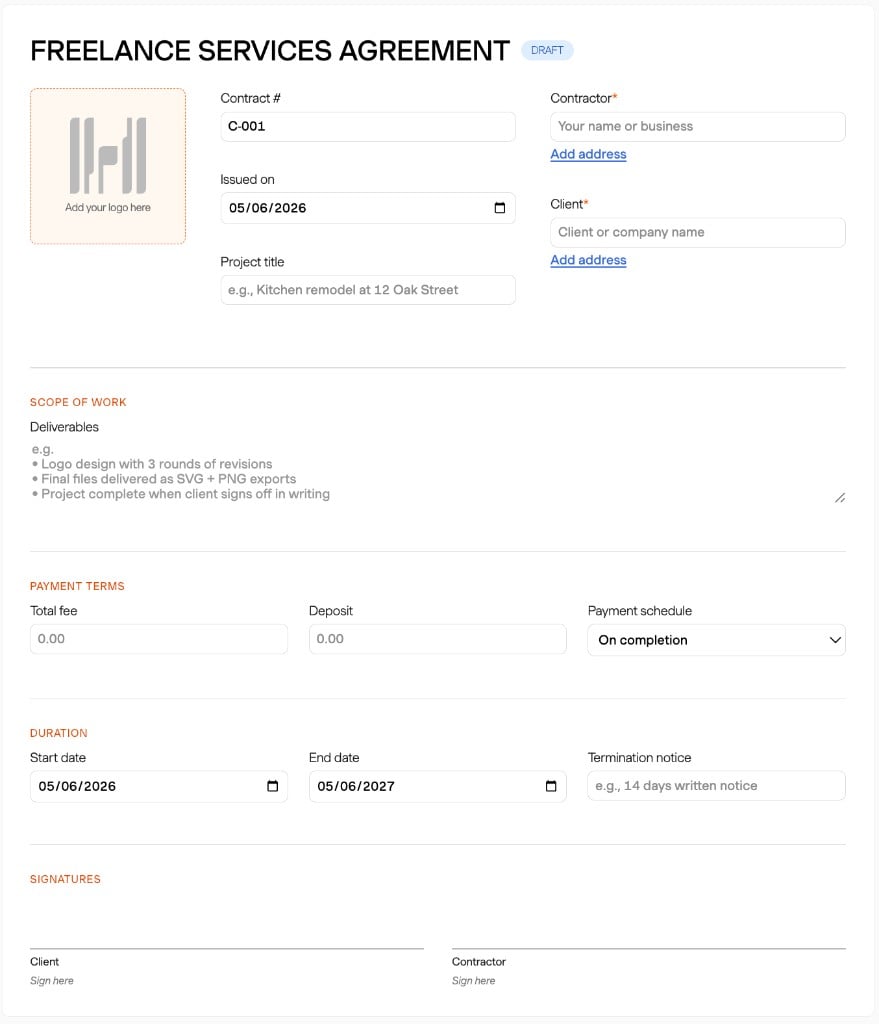
AGREEMENT DRAFT

Add your logo here

Scope of work

Payment terms

Duration

Signatures

Client

Sign here

Contractor

Sign here

Get paid via:
Credit card / Debit card
ACH
Wire transfer

Customize contract

Appearance

Add a logo
Show contract title

Contract settings

Include payment terms Total fee, deposit, and schedule
Include termination clause Notice required to end the contract
Include signature blocks Both parties sign at the bottom

Essential Elements of an Electrical Contract

Creating an electrical contract requires careful consideration of several key elements to ensure clarity and compliance. An effective contract should clearly identify the parties involved, including the electrical contractor and the client, complete with their contacts and business details. This step helps establish a solid foundation for the agreement.

Next, it's crucial to define the scope of work. This section should provide a detailed description of the electrical services to be performed, listing any exclusions. Specifying the materials and equipment to be used is also essential. Including these details in bullet points can enhance clarity and prevent misunderstandings. Additionally, referencing any plans or specifications, such as blueprints, can help ensure that both parties are on the same page regarding the project's requirements.

Another critical component is outlining the project schedule and duration. The contract should specify the timeframe, estimated start and completion dates, and address potential delays beyond the contractor's control. This approach helps manage expectations and mitigate disputes over timelines.

Legal Clauses and Compliance in Electrical Contracts

Ensuring legal compliance in electrical contracts is vital to avoid costly penalties and project setbacks. Most U.S. states require electricians to hold a license, and specific projects may necessitate permits. Including a clause that confirms the contractor's adherence to these requirements can protect both parties.

Contracts should also detail the safety protocols to be followed at the worksite. This section should include safety standards and a clause requiring the contractor to adhere to these regulations. It's also advisable to specify the contractor's liability insurance provider to cover any damages, losses, or injuries during the project. This is crucial for protecting both the contractor and the client from potential claims.

Recent legal changes, such as the Inflation Reduction Act, have introduced new requirements for electrical contractors, including prevailing wage and apprenticeship standards. Keeping abreast of such regulations and incorporating relevant clauses into contracts is essential for compliance and minimizing legal risks.

Customizing an Electrical Contract for Your Project

Customizing an electrical contract involves tailoring each section to fit the specific needs of a project. Start by identifying the unique aspects of your project and ensure they are accurately reflected in the contract. This includes defining the scope of work, payment terms, and any exclusions specific to the project.

Payment terms are particularly important and should clearly state the agreed-upon amount, payment schedule, due dates, and invoicing specifics. If the project involves hourly billing, it's crucial to include the hourly rate and requirements for proof of hours worked. These details help prevent disputes and ensure transparency.

It's equally important to review the safety protocols and ensure they align with the project's requirements. This includes specifying any additional safety measures that may be necessary due to the project's location or complexity. Regular updates to the contract throughout the project can help address any changes or unforeseen circumstances.

Common Mistakes to Avoid in Electrical Contracts

Avoiding common mistakes in electrical contracts can save time, money, and prevent legal complications. One prevalent error is underestimating costs, which can lead to financial losses if expenses like permits or materials are overlooked. Thoroughly calculating all costs beforehand can mitigate this risk.

Incomplete documentation is another pitfall. Ensuring that the contract includes a detailed scope of work, comprehensive drawings, and specifications can prevent misunderstandings and disputes. Additionally, addressing potential project delays and budget overruns in the contract can help manage expectations.

Another mistake is failing to update the contract when changes occur. Integrated Project Delivery (IPD) can help minimize risks by bringing all project participants together early, ensuring that everyone is aligned and aware of any changes. This approach has been shown to significantly reduce project delays and budget overruns.

Ensuring Compliance with Electrical Codes

Compliance with electrical codes is a fundamental aspect of creating a robust electrical contract. In the U.S., electrical contractor licensing is primarily regulated at the state level, with variations in requirements. It's imperative to incorporate a clause that ensures compliance with the relevant state and local codes.

The National Electrical Code (NEC) serves as a model code that many states adopt, often with amendments. Contracts should specify that the work will comply with these standards, including any local variations. This is essential to passing inspections and avoiding costly rework.

Penalties for non-compliance can be severe, including fines or the revocation of a business's operating authority. Therefore, it's crucial to include a clause detailing the contractor's responsibility for adhering to these codes and regulations, safeguarding both parties from potential liabilities.

Create Your Electrical Contract with Harvest

Harvest provides tools to create detailed electrical contracts, covering scope, legal clauses, and payment terms. Tailor your contract for project success.

Harvest electrical contract creation tool interface.

Create an Electrical Contract FAQs

  • An electrical contract should include the identification of parties, a defined scope of work, reference plans and specifications, a project schedule, payment terms, and safety protocols. Each element ensures clarity and compliance, preventing misunderstandings and disputes.

  • Yes, an electrical contract should include clauses for compliance with licensing and permit requirements, safety protocols, and liability insurance. These clauses help mitigate legal risks and ensure adherence to state and local regulations.

  • To customize an electrical contract, tailor each section to the project's unique needs. This includes detailing the scope of work, payment terms, and any exclusions. Regular updates throughout the project can address changes and unforeseen circumstances.

  • Common mistakes include underestimating costs, incomplete documentation, and failing to update the contract when changes occur. Thorough planning and using Integrated Project Delivery (IPD) can help avoid these issues.

  • Ensure compliance by including a clause in the contract that mandates adherence to relevant state and local codes, such as the National Electrical Code (NEC). This helps pass inspections and avoid costly penalties and rework.

  • Payment terms should clearly state the agreed amount, payment schedule, due dates, and invoicing specifics. For hourly billing, include the hourly rate and proof of hours worked to ensure transparency and prevent disputes.

  • Defining the scope of work prevents misunderstandings by clarifying the services to be performed and any exclusions. It ensures both parties have a clear understanding of the project requirements.

  • The contract should detail safety standards and protocols, including a clause requiring adherence to these measures. This ensures a safe worksite and compliance with regulations, protecting both parties from liabilities.