
Harvest
Contracts
Sign up

Contract Template in Finnish

Navigating Finnish contract requirements can be complex. Harvest helps businesses streamline time tracking and invoicing, but understanding local legal standards is crucial for compliance.

Start from a template

AGREEMENT DRAFT

Add your logo here

Scope of work

Payment terms

Duration

Signatures

Client

Sign here

Contractor

Sign here

Get paid via:
Credit card / Debit card
ACH
Wire transfer

Customize contract

Appearance

Add a logo
Show contract title

Contract settings

Include payment terms Total fee, deposit, and schedule
Include termination clause Notice required to end the contract
Include signature blocks Both parties sign at the bottom

Understanding Finnish Contract Requirements

Finnish contract law is characterized by its flexibility, allowing agreements to be concluded in any form that suits the parties involved, including verbally. However, for significant business transactions, written contracts are highly recommended to prevent misunderstandings and provide a clear reference in case of disputes. This flexibility means there are no compulsory form requirements, but it's crucial to ensure that all essential terms and clauses are included to meet Finnish legal standards.

In Finland, industry-specific standardized terms are commonly used and are typically drafted by groups of interested parties within a relevant sector. These terms aim to create a balanced framework applicable across contracts in that industry. Despite the flexibility of Finnish contract law, precise drafting is vital, especially when defining termination rights or shifting liabilities. This ensures that the contract withstands judicial scrutiny and reflects the actual project and justified interests of each party.
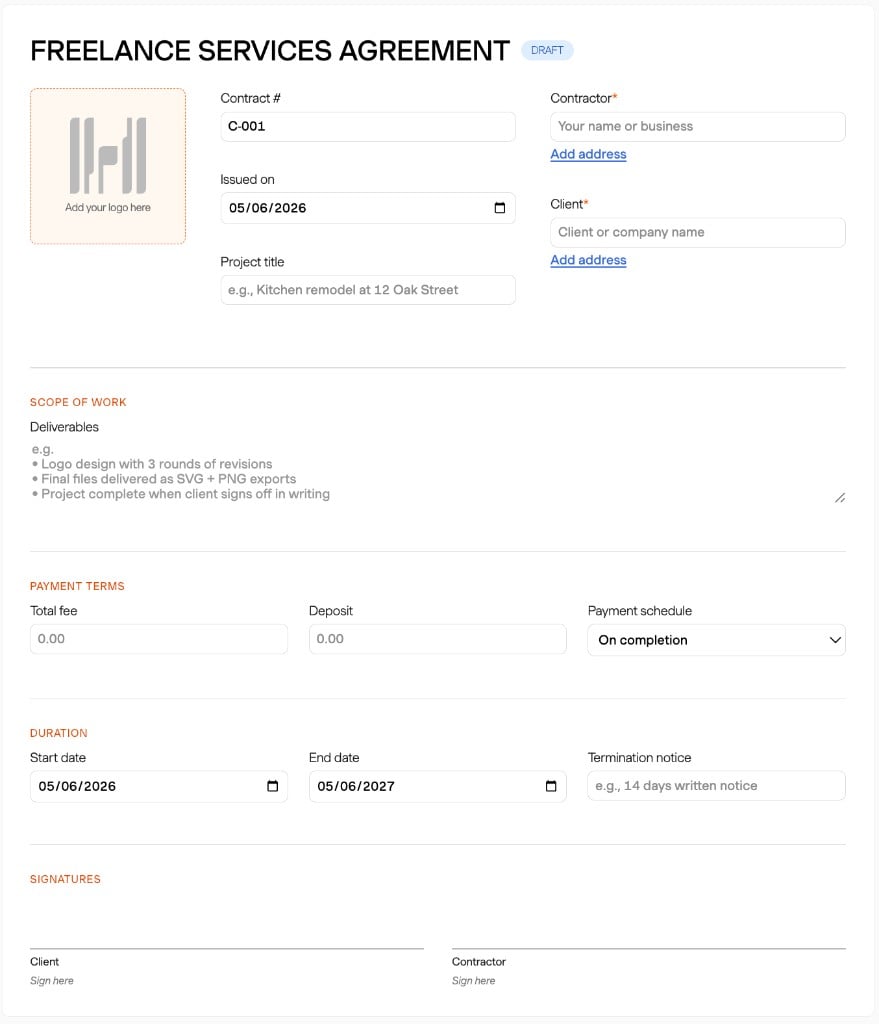

Creating a Finnish Contract Template

When creating a Finnish contract template, it's essential to consider the specific needs of your business or project. Finnish law emphasizes the "fact over form" approach, meaning the courts prioritize the intent of the parties over the exact wording. Therefore, clarity and precision in drafting are crucial. Start by outlining the scope of work, responsibilities, and payment terms clearly.

For those in specialized industries, such as construction or ICT, consider adopting internationally recognized contract forms like FIDIC for complex projects. These forms provide comprehensive tools for procedures like takeover and acceptance, which are particularly beneficial for large-scale endeavors. In the construction sector, distinguishing between "modification works" and "additional works" is important for clarity in pricing and scheduling.

Digitalization and E-signatures in Finland

Digitalization has significantly impacted contract management in Finland, with a notable rise in the use of electronic signatures. This trend mirrors the broader digital transformation across Nordic countries, where the convenience and efficiency of digital agreements are increasingly valued. Finnish businesses have projected a 58% increase in digital investments in 2024, further highlighting the shift towards digital solutions.

Electronic signatures streamline the contracting process by eliminating the need for physical paperwork and facilitating faster agreement finalization. This practice is supported by Finland's high internet penetration rate, which provides a solid foundation for adopting digital contract templates and services. For businesses, leveraging third-party signature service providers can enhance the efficiency of contract execution and management.

Practical Tips for Finnish Contracts

While Finnish contract law allows for verbal agreements, it is highly advisable to prioritize written contracts. Written agreements provide clear evidence of the terms agreed upon and help prevent potential disputes. In industries like construction, where project specifics can change, maintaining up-to-date written agreements is crucial.

Regularly updating contracts ensures they remain compliant with any legal or business changes. When significant changes occur, such as shifts in job responsibilities, drafting a new contract that supersedes previous agreements can prevent misunderstandings. It's also essential to embrace electronic signatures, which are becoming a standard practice in Finland, to streamline and secure the contracting process.

The Role of Collective Agreements

Collective agreements play a significant role in Finnish employment contracts, setting minimum standards for various employment conditions like wages, working hours, and overtime compensation. These agreements are negotiated between employer organizations and trade unions, ensuring that individual employment contracts meet or exceed the industry-specific baseline requirements.

Understanding the influence of collective agreements is crucial for businesses operating in Finland. These agreements provide a foundation that individual contracts must build upon, ensuring fair and standardized conditions across an industry. For employers, aligning with these standards not only ensures compliance but also enhances employee satisfaction and retention.

Build Contracts with Harvest

Explore how Harvest supports creating Finnish contract templates, aiding in time tracking and invoicing.

Screenshot showing Finnish contract template creation.

Contract Template in Finnish FAQs

  • Finnish contract law is flexible, allowing contracts to be concluded in any form, including verbally. However, written contracts are recommended for clarity and dispute resolution. Industry-specific standardized terms are often used to ensure compliance and balance.

  • To fill out a Finnish contract template, start by clearly defining the scope of work, responsibilities, and payment terms. Ensure that the contract reflects the parties' intent and includes all necessary clauses to comply with Finnish legal standards.

  • Yes, electronic signatures are valid in Finland and are becoming increasingly common. They streamline the contracting process by eliminating the need for physical paperwork and enhancing efficiency.

  • Collective agreements set minimum standards for wages, working hours, and more in Finnish employment contracts. They ensure that individual contracts meet or exceed these industry-specific standards.

  • Regular updates to Finnish contracts ensure they remain legally compliant and reflect any significant changes in business or employment terms. This helps prevent misunderstandings and disputes.

  • The 'fact over form' approach means Finnish courts prioritize the parties' intent over specific wording. This underscores the importance of clarity and precision in drafting contracts.

  • Digitalization has led to increased use of electronic signatures and digital contract solutions in Finland, improving efficiency and aligning with broader digital transformation trends.