Sign up


Key Components of a Roofing Contract
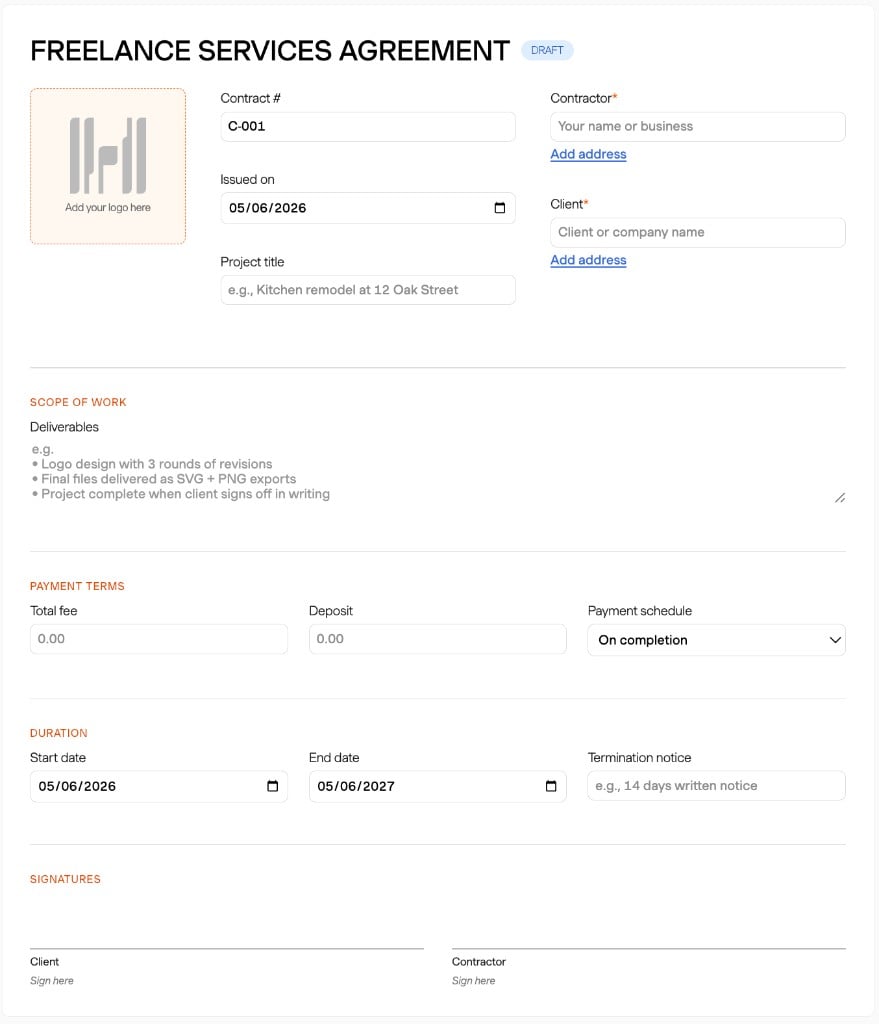
A comprehensive roofing contract is essential to protect both the contractor and the client. The contract should include several critical components to ensure clarity and legality. First, identify the parties involved by listing full names, addresses, and contact information for both the contractor and the client. Next, clearly define the scope of work, detailing the services provided, including repair, replacement, or installation, along with specific materials and procedures.
It is crucial to set a project timeline with start and completion dates, considering milestones and potential delays due to weather. The payment terms should outline the total cost, deposit, progress payments, and final payment upon completion, including accepted payment methods and late fee provisions. Additionally, warranties for materials and workmanship, contractor's licenses and insurance, and responsibilities for obtaining necessary permits should be included.
Finally, a dispute resolution clause and a termination clause detailing conditions for contract cancellation are vital. Each of these elements ensures that both parties understand their obligations and rights, minimizing potential disputes.