
Harvest
Contracts
Sign up

Create a Landscaping Contract

Harvest simplifies managing landscaping projects by tracking time, expenses, and handling invoices, ensuring seamless project adjustments and service consistency.

Start from a template

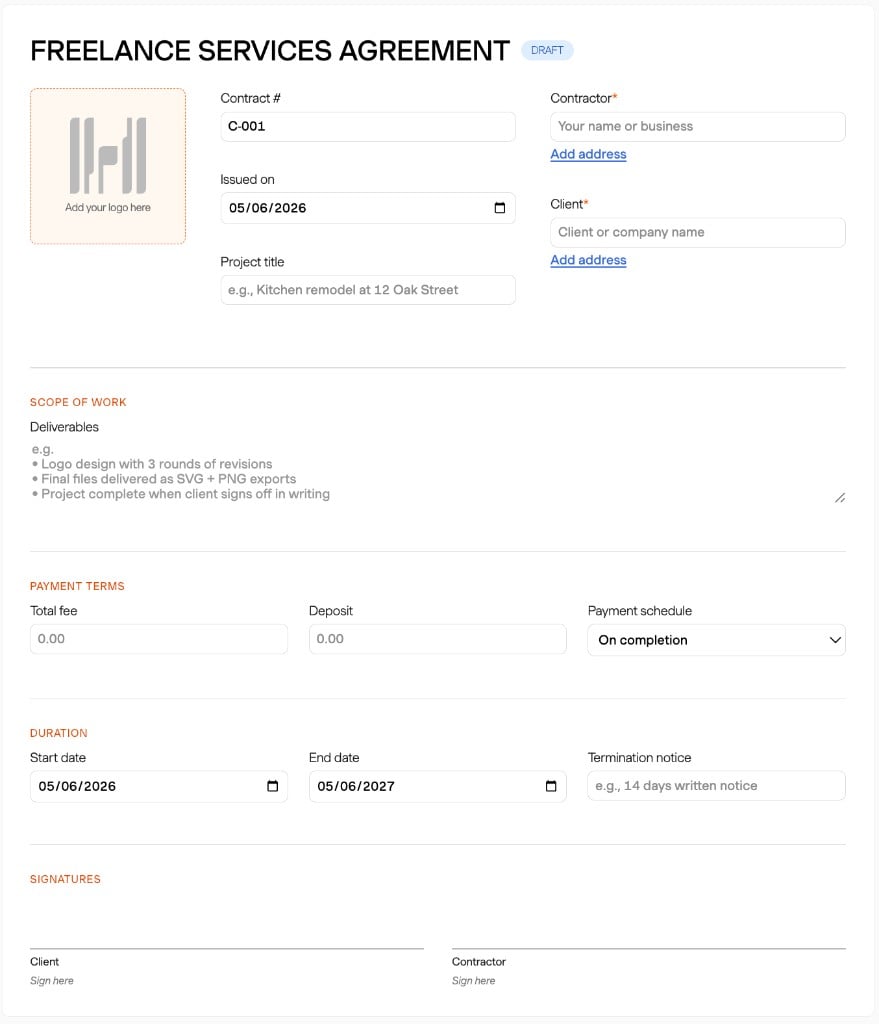
AGREEMENT DRAFT

Add your logo here

Scope of work

Payment terms

Duration

Signatures

Client

Sign here

Contractor

Sign here

Get paid via:
Credit card / Debit card
ACH
Wire transfer

Customize contract

Appearance

Add a logo
Show contract title

Contract settings

Include payment terms Total fee, deposit, and schedule
Include termination clause Notice required to end the contract
Include signature blocks Both parties sign at the bottom

Understanding Key Elements in a Landscaping Contract

Creating a comprehensive landscaping contract is essential for ensuring clear expectations and mitigating potential disputes between contractors and clients. A well-structured contract should include fundamental elements such as the scope of work, payment terms, and liability clauses. For instance, the scope of work should detail the specific tasks to be performed, such as mowing, edging, and planting, and include timelines and deadlines. It's crucial to address potential weather-related delays explicitly to manage client expectations effectively.

Payment terms must be clearly outlined, specifying the total cost, payment schedule, and any penalties for late payments. Including a formal change order process is vital, as it accommodates modifications to the project scope, materials, or timeline, ensuring both parties sign off on changes. While Harvest does not create detailed scopes of work, it aids in tracking time and expenses related to landscaping tasks, helping contractors manage project costs efficiently.

The Importance of Legal and Compliance Considerations

Ensuring a landscaping contract is legally sound involves several key considerations. Fundamental elements include a clear offer and acceptance, consideration, and mutual assent. Additionally, when contracts involve the supply and installation of materials, they may fall under the Uniform Commercial Code (UCC) and respective state laws, adding layers of legal requirements.

Liability clauses are crucial, detailing the contractor's insurance coverage, such as commercial general liability and workers' compensation insurance. This coverage, often $1 million per occurrence, protects both parties from unforeseen incidents. Though Harvest does not manage insurance clauses, it can track project expenses and budgets, providing a clear financial overview. Lastly, contracts should address compliance with local zoning laws and permits, particularly for large-scale projects, ensuring adherence to environmental regulations.

Leveraging Technology for Efficient Contract Management

Incorporating technology into the management of landscaping contracts can significantly enhance efficiency and reduce administrative burdens. Landscape management software and digital tools streamline operations, from generating estimates to automating invoicing and payment collection. Harvest supports these processes by offering features like recurring invoice templates, which differentiate between ongoing maintenance and one-time services, ensuring accurate billing.

Additionally, technology integration facilitates better service delivery. For example, GPS tracking can verify service completion, and performance metrics can be tracked to identify inefficiencies. While Harvest does not handle GPS tracking directly, it helps manage recurring services and project changes through efficient time and expense tracking. This proactive approach allows contractors to focus on delivering quality services and maintaining client satisfaction.

Common Pitfalls to Avoid in Landscaping Contracts

Avoiding common pitfalls in landscaping contracts can prevent disputes and promote successful client relationships. One major pitfall is relying on informal agreements for services, which can lead to misunderstandings. Instead, it's essential to have detailed written contracts for every project, regardless of size, to maintain transparency and consistency.

Short-term agreements can also be problematic, often leading to increased costs due to frequent changes and rebidding. Opting for multi-year contracts can secure consistent service and stabilize pricing. Furthermore, not including a formal change order process can result in disputes over project modifications. Harvest supports managing these changes by tracking additional services and incorporating them into invoices, ensuring clarity and accountability.

Maximizing Revenue Through Strategic Contract Structuring

Strategically structuring landscaping contracts can maximize revenue and foster long-term client relationships. Incorporating sustainable practices into contracts, such as smart irrigation systems and native plant usage, addresses growing client demand for environmentally friendly services. This can be a unique selling point, given that smart irrigation alone can save an estimated 15,000 gallons of water per household annually.

Offering bundled services and customized options is another effective strategy. By providing itemized services rather than rigid packages, contractors can tailor offerings to client needs, often leading to cost savings and better results. While Harvest does not manage detailed service breakdowns, it supports tracking the financial aspects of bundled services, helping contractors maintain profitability.

Create Landscaping Contracts with Harvest

Harvest helps landscapers create detailed contracts by tracking time and expenses. Simplify project management and enhance service delivery.

Harvest platform showing landscaping contract creation interface.

Create a Landscaping Contract FAQs

  • A landscaping contract should include the scope of work, payment terms, liability clauses, and a formal change order process. It should also address compliance with local regulations and any specific client requirements.

  • Customize a landscaping contract by detailing the specific services, timelines, and payment terms relevant to your project. Adjust the scope of work and incorporate client-specific requirements or preferences.

  • Legal requirements for landscaping contracts include clear offer and acceptance, consideration, and mutual assent. Compliance with local zoning laws and insurance coverage are also essential.

  • Protect yourself legally by ensuring all terms are clearly documented, including liability clauses and a formal change order process. Regularly update contracts to reflect current regulations and client agreements.

  • Common pitfalls include relying on verbal agreements and short-term contracts. Ensure all terms are written and consider multi-year contracts for stable pricing and service consistency.

  • Harvest assists by tracking time, expenses, and managing invoices, making it easier to handle project changes and recurring services, though it does not create the contract itself.

  • A written agreement establishes clear expectations, mitigates risk, and serves as a legal reference if disputes arise, protecting both the client and the contractor.