
Harvest
Contracts
Sign up

Create a Photography Contract

Protect your photography business with detailed contracts. Harvest helps streamline invoicing and expenses, ensuring efficient workflows and accurate billing.

Start from a template

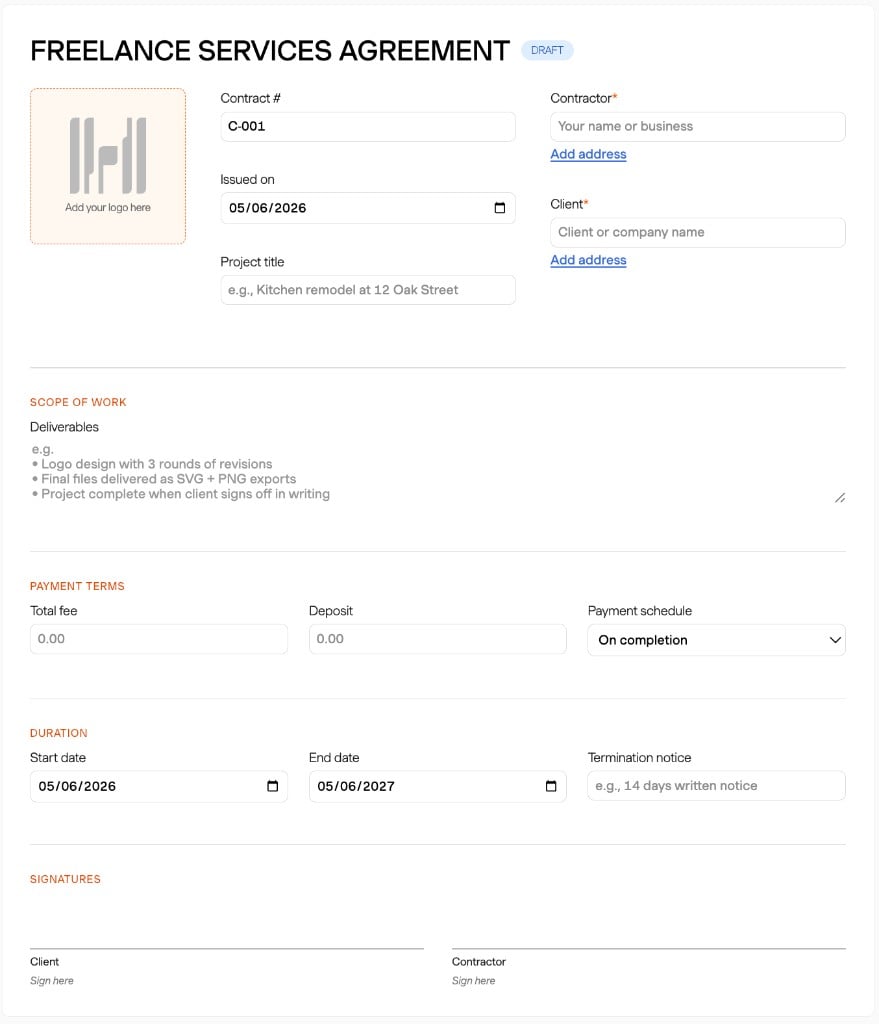
AGREEMENT DRAFT

Add your logo here

Scope of work

Payment terms

Duration

Signatures

Client

Sign here

Contractor

Sign here

Get paid via:
Credit card / Debit card
ACH
Wire transfer

Customize contract

Appearance

Add a logo
Show contract title

Contract settings

Include payment terms Total fee, deposit, and schedule
Include termination clause Notice required to end the contract
Include signature blocks Both parties sign at the bottom

Essential Clauses for a Photography Contract

Creating a comprehensive photography contract is crucial for protecting both the photographer and the client. The contract should clearly define the scope of services, outlining the type of photography, session duration, and deliverables, such as the number of edited images and their format. This clarity helps prevent disputes over expectations and deliverables.

Another key element is payment terms. Specify the total cost, deposit requirements, payment schedule, and consequences for late payments. Harvest streamlines this process by allowing photographers to set up invoices with specific payment terms, including deposits and recurring payment plans, ensuring clear financial arrangements.

Additionally, address ownership and usage rights explicitly. This includes who holds the copyright and the extent of the client's usage rights. While Harvest focuses on invoicing and expense tracking, contracts should specify these legal aspects to avoid misunderstandings. Including these clauses not only protects intellectual property but also defines the commercial use of photographs.

Common Mistakes to Avoid in Photography Contracts

Photographers often make mistakes in contract creation that can lead to significant issues. One common error is using ambiguous terms like "full rights," which can lead to disputes over usage. Instead, contracts should specify exact usage details, such as media channels, territories, and duration. This clarity prevents costly legal battles.

Another mistake is omitting necessary model and property releases. For any commercial use of photographs featuring identifiable individuals or private property, obtaining signed releases is essential. This protects against legal claims and ensures compliance with privacy laws.

Additionally, neglecting to include a post-production policy can result in client dissatisfaction. Contracts should outline the photographer's editing style and restrict clients from altering delivered images. While Harvest does not manage these specific contract terms, it can help track time spent on post-production tasks, aiding in accurate billing and project management.

Tools and Best Practices for Efficient Contract Management

Integrating contract management with digital tools can significantly enhance efficiency for photographers. Online contract systems can save photographers 2 to 3 hours per week, streamlining the entire booking process, including contract signing, to as little as 10 minutes.

CRM software integration is a growing trend, allowing photographers to automate the sending of contracts, link them with invoices, and streamline client onboarding. This seamless workflow enhances client interactions and professional image.

For signing contracts, electronic signature software simplifies the process, eliminating the need for printing and scanning. Harvest supports efficient project workflows by managing time, expenses, and invoicing, ensuring photographers can focus more on their creative work rather than administrative tasks.

Legal Considerations in Photography Contracts

Photography contracts must navigate various legal considerations to ensure protection and compliance. In the United States, photographers generally hold automatic copyright to their images unless explicitly transferred. Contracts should detail intellectual property ownership and usage rights to prevent costly legal disputes.

Moreover, it's crucial to include clauses regarding cancellation and rescheduling policies. These policies should specify any fees or penalties associated with changes, protecting the photographer's time and revenue.

While Harvest does not handle legal clauses, it supports efficient management of financial terms and project-related expenses. This focus allows photographers to maintain clear financial records and streamline their business operations, aligning with legal and professional standards.

Create Photography Contracts with Harvest

Explore how Harvest helps photographers manage invoicing and expenses while creating comprehensive contracts.

Screenshot of Harvest's photography contract workflow.

Create a Photography Contract FAQs

  • A photography contract should include the scope of services, payment terms, ownership and usage rights, cancellation policies, and any required model or property releases. These elements help protect both the photographer and the client, preventing legal disputes.

  • To protect your rights, clearly outline ownership and usage rights in the contract. Specify who holds the copyright and the extent of the client's usage rights. Also, include clauses for payment terms and cancellation policies to safeguard your interests.

  • Model and property releases are crucial for commercial use of photographs featuring identifiable individuals or private property. They protect against legal claims and ensure compliance with privacy laws, allowing the images to be used commercially.

  • While Harvest doesn't create contracts, it facilitates efficient project workflows by managing invoicing and expenses. This allows photographers to maintain clear financial records and streamline their business operations.

  • Common mistakes include using ambiguous terms like "full rights," omitting necessary releases, and not defining post-production policies. Avoid these by specifying usage details, obtaining signed releases, and outlining editing expectations clearly.

  • Electronic signatures simplify the contract signing process, eliminating the need for printing and scanning. This convenience enhances efficiency and professionalism in client interactions, saving time for both parties.

  • Essential payment terms include the total cost, deposit requirements, payment schedule, and consequences for late payments. Harvest supports setting up invoices with these specific terms, ensuring clear financial arrangements.

  • CRM software can automate sending contracts, link them with invoices, and streamline client onboarding. This integration enhances efficiency and professionalism in managing client relationships and contract workflows.