
Harvest
Contracts
Sign up

Create a Cleaning Contract

Harvest helps cleaning businesses manage essential elements like payment terms through invoicing, ensuring timely client payments and efficient budget tracking.

Start from a template

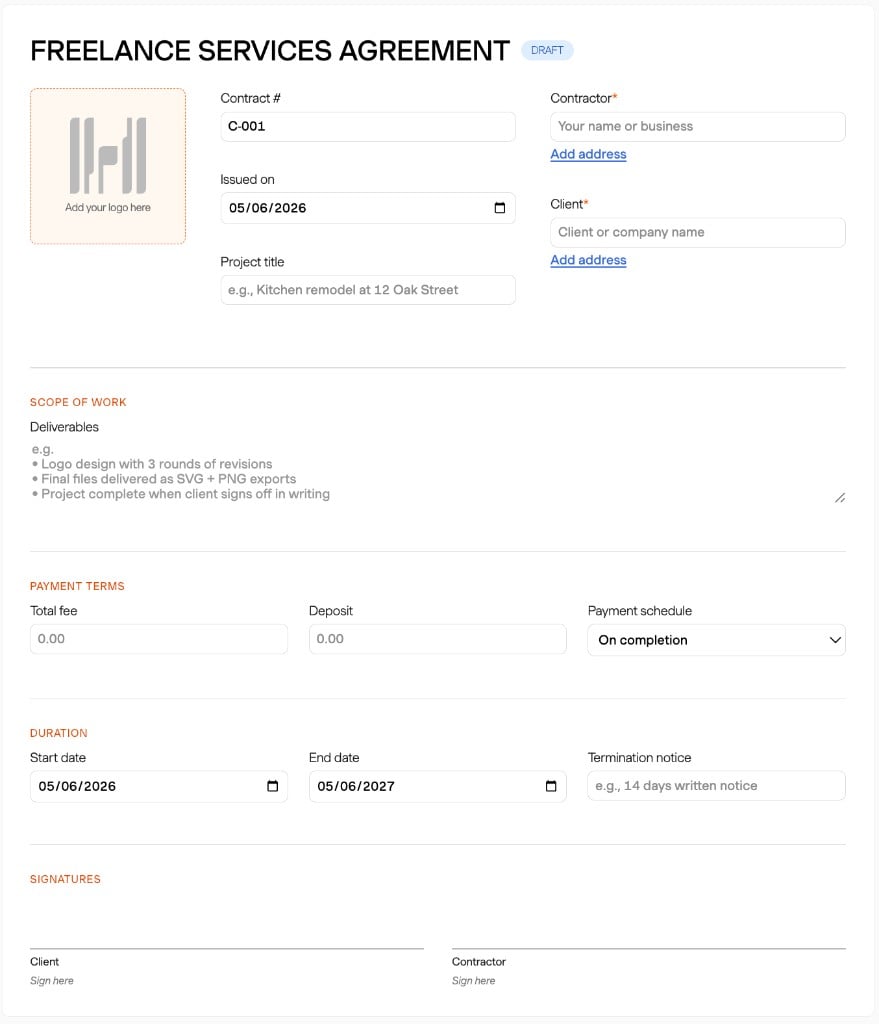
AGREEMENT DRAFT

Add your logo here

Scope of work

Payment terms

Duration

Signatures

Client

Sign here

Contractor

Sign here

Get paid via:
Credit card / Debit card
ACH
Wire transfer

Customize contract

Appearance

Add a logo
Show contract title

Contract settings

Include payment terms Total fee, deposit, and schedule
Include termination clause Notice required to end the contract
Include signature blocks Both parties sign at the bottom

Essential Elements of a Cleaning Contract

Creating a cleaning contract requires careful consideration of several key elements to ensure clarity and prevent disputes. Payment terms are crucial, including details on late fees and payment schedules. Harvest allows cleaning businesses to manage these terms efficiently through its invoicing features, ensuring timely payments and reducing the risk of revenue loss. Industry data suggests that clear payment terms can significantly impact cash flow, with late payments affecting up to 30% of small businesses.

Another vital component is a well-defined scope of work. This helps avoid ambiguity and disputes by detailing cleaning tasks room by room. While Harvest does not offer contract creation, it supports tracking time and expenses related to cleaning tasks, providing insights into labor costs and project budgets. By clearly defining the scope in contracts, businesses can enhance accountability and reduce risk.

Legal and Compliance Considerations

Understanding the legal framework is essential when drafting a cleaning contract. In the US, while no single federal law governs cleaning contracts, compliance with IRS regulations and state-specific laws is necessary. Contracts should include liability and insurance clauses to protect both parties. Harvest aids businesses by tracking expenses and generating invoices, but it does not incorporate legal features into contracts.

In the UK and Australia, additional regulations apply, such as the UK's COSHH for hazardous substances and Australia's WHS Act. While Harvest excels in tracking work hours and expenses, it's important for businesses to separately ensure their contracts meet these regional legal requirements. Misclassifying workers can lead to penalties, so specifying employee status within the contract is recommended, although not managed by Harvest.

Customizing Your Cleaning Contract

Customization is key to a successful cleaning contract. Different industries, from healthcare to retail, require tailored services. For example, medical offices may need daily disinfection, while retail stores might focus on high-traffic areas. Harvest aids in tracking the time and expenses associated with these varied tasks, helping businesses allocate resources efficiently.

To ensure clarity, specify service frequencies and durations in the contract. While Harvest does not handle these specifics, it offers robust time-tracking features to monitor the completion of tasks, assisting in project budget management. This ensures services are delivered as promised, enhancing client satisfaction and contract compliance.

Avoiding Common Contract Pitfalls

Common pitfalls in cleaning contracts include vague terms and hidden costs. Clearly specifying who supplies materials can prevent disputes over additional charges. Harvest supports tracking and invoicing for cleaning services but does not manage contract terms related to material provisions. Ensuring transparency in cost allocation helps avoid misunderstandings and builds trust.

Quality assurance is another area of concern. Implementing routine inspections and using digital QA platforms has become a standard practice. Although Harvest does not offer QA features, it provides visibility into labor costs and time spent on tasks, helping businesses maintain high service standards. Clear contracts combined with effective tracking can lead to improved client relationships and business growth.

The Role of Sustainability in Cleaning Contracts

Sustainability is increasingly influencing cleaning contracts, with 72% of procurement managers considering eco-friendly practices. Contracts should specify the use of plant-based, biodegradable products. Harvest, while not directly managing these contract details, helps businesses track expenses for sustainable materials, supporting eco-friendly initiatives.

As demand for sustainable practices grows, businesses that effectively integrate these into their contracts can achieve higher margins. Post-COVID trends show specialized services like electrostatic spraying fetching 15-25% higher margins. Harvest aids in managing these complex service offerings by tracking time and expenses, ensuring businesses remain competitive.

Create a Cleaning Contract with Harvest

Explore how Harvest helps cleaning businesses manage invoicing and expenses, ensuring clarity and efficiency in contracts.

Screenshot of Harvest's invoicing interface for cleaning contracts.

Create a Cleaning Contract FAQs

  • A cleaning contract should include payment terms, scope of work, service frequency, and legal clauses like liability and insurance. Harvest supports managing payment terms through its invoicing features.

  • Customization involves tailoring the contract to industry-specific needs, such as different cleaning frequencies for medical offices versus retail stores. Harvest helps track the time and costs associated with these tasks.

  • Yes, legal requirements vary by region. In the US, IRS compliance and state laws are crucial, while in the UK and Australia, additional regulations apply. Harvest aids in financial tracking but not in legal compliance.

  • To avoid hidden costs, clearly define who supplies materials and specify all fees upfront. While Harvest tracks expenses, ensuring contract transparency is key to avoiding disputes.

  • Sustainability is crucial as many procurement managers prioritize eco-friendly practices. While Harvest tracks expenses, contracts should specify the use of sustainable products.

  • Common mistakes include vague terms and hidden fees. Ensuring clear definitions and transparency in contracts prevents disputes. Harvest helps track related expenses for better financial oversight.

  • Harvest assists by managing invoicing and tracking time and expenses, ensuring payment terms are clear and budgets are efficiently managed. It does not create contracts but supports financial aspects related to them.