
Harvest
Contracts
Sign up

Independent Contractor Agreement Template in Spanish

Harvest supports contractors with project-based work and payment structures through effective time tracking, invoicing, and expense management, making it easier to manage projects and payments.

Start from a template

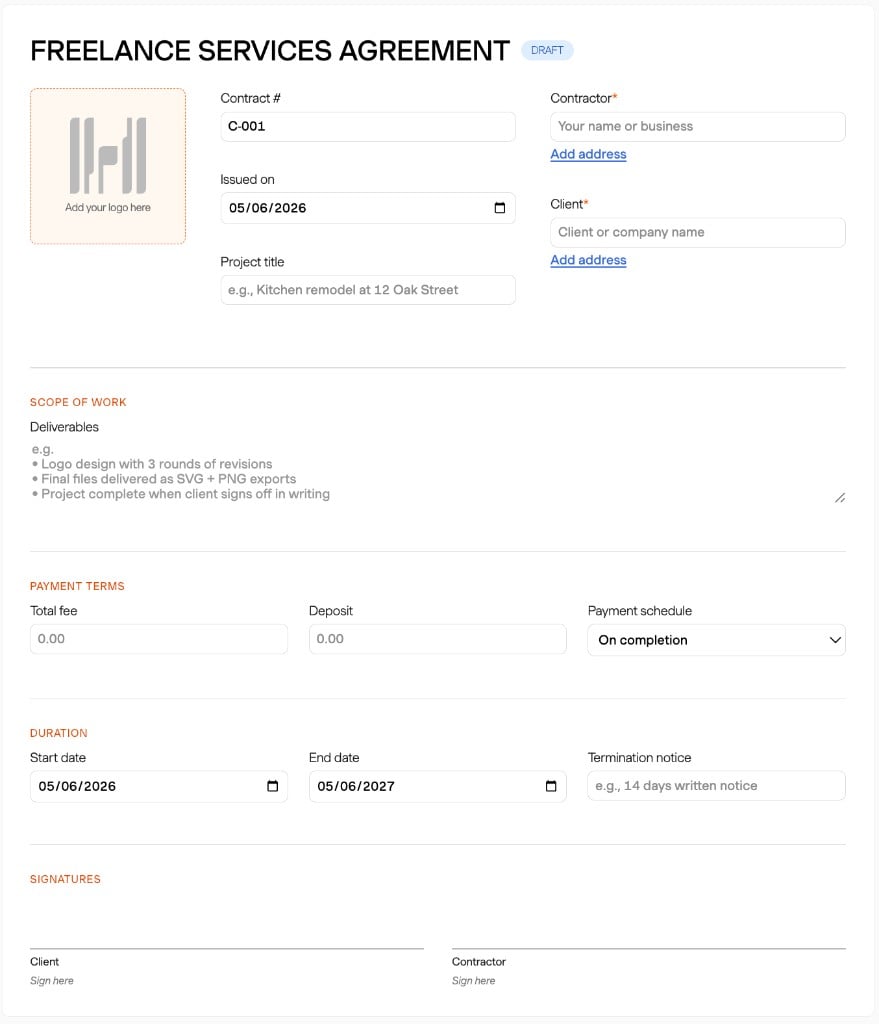
AGREEMENT DRAFT

Add your logo here

Scope of work

Payment terms

Duration

Signatures

Client

Sign here

Contractor

Sign here

Get paid via:
Credit card / Debit card
ACH
Wire transfer

Customize contract

Appearance

Add a logo
Show contract title

Contract settings

Include payment terms Total fee, deposit, and schedule
Include termination clause Notice required to end the contract
Include signature blocks Both parties sign at the bottom

Understanding the Independent Contractor Agreement

An independent contractor agreement is a crucial document that outlines the terms and conditions between a contractor and a client. This agreement typically includes details such as the scope of work, payment terms, and responsibilities of both parties. In Spain, the rise of freelancers and contractors has made such agreements increasingly important, as they ensure clarity and prevent legal disputes. Spanish law emphasizes the actual work relationship over contractual labels, making it essential to clearly define each party's role in the agreement.

Industry research highlights that over 70% of business operations are governed by contracts, yet many lack standardization. This can result in significant financial losses, estimated at 10-15% of a contract's value, due to ambiguities and omissions. When creating an agreement, ensure it includes specific clauses for dispute resolution and intellectual property rights. While Harvest supports contractors with project-based work and payment structures through time tracking and invoicing, it's advisable to seek legal review for the agreement itself.

Key Clauses in a Spanish Independent Contractor Agreement

When drafting an independent contractor agreement in Spanish, certain clauses are vital to ensure compliance and clarity. These include the scope of work, payment terms, confidentiality, and termination conditions. Additionally, clauses addressing intellectual property rights and indemnification are essential, particularly when dealing with international clients.

In Spain, contractors are responsible for their own taxes and social security, which makes it crucial to detail the payment structure clearly. Legal experts advise including a clause that specifies the contractor’s economic independence, particularly if the contractor dedicates more than 75% of their activity to a single client. Harvest aids contractors in managing these payment structures through its comprehensive time tracking and invoicing features, though it does not provide the specific legal language required in agreements.

How to Customize Your Contractor Agreement

Customizing a contractor agreement to fit specific needs is a common practice. Start by using a template as a foundation, then tailor it by clearly defining the tasks, deliverables, and deadlines unique to the project. Specify payment terms, including rates, schedules, and any reimbursable expenses. Consider integrating clauses on exclusivity and dispute resolution to protect both parties.

To ensure the agreement aligns with Spanish regulations, consult with a legal professional familiar with the local laws. While Harvest supports the operational aspects such as time tracking and expense management, having a legally vetted contract is vital to avoid misclassification risks and potential penalties. Additionally, maintaining records of all communications and agreements can safeguard against disputes, a practice that complements Harvest's robust project management capabilities.

The Importance of Legal Review for Contractor Agreements

Legal review is critical when finalizing an independent contractor agreement, especially in international contexts like Spain. The Spanish legal framework prioritizes the substance of the work relationship over contractual labels, making it essential to ensure that the agreement accurately reflects the nature of the engagement.

Experts warn against relying solely on verbal agreements, as these can lead to significant legal issues. Written agreements clarify terms, payments, scope, and timelines, reducing the risk of misclassification and non-compliance. Harvest provides tools for managing project-based work and payment structures, but legal advice is crucial for ensuring that the agreement meets all regulatory requirements and protects both parties' interests.

Discover Harvest's Spanish Agreement Template

Explore Harvest's Spanish contractor agreement template. Manage project work and payments effortlessly.

Screenshot showing Harvest's contractor agreement template in Spanish.

Independent Contractor Agreement Template in Spanish FAQs

  • Key clauses include the scope of work, payment terms, confidentiality, termination conditions, and intellectual property rights. These ensure clarity and compliance with Spanish regulations.

  • Consult a legal professional to review the agreement. Spanish law focuses on the actual work relationship, so it's important the contract accurately reflects this to avoid misclassification.

  • Written agreements provide clarity on terms, payments, and timelines, reducing the risk of disputes and misclassification, which verbal agreements often fail to prevent.

  • Harvest offers tools for time tracking, invoicing, and expense management, which help contractors manage project-based payment structures effectively.

  • Payment terms should specify the rate, schedule, and any reimbursable expenses. Detail these clearly to avoid misunderstandings and ensure compliance with local regulations.

  • Start with a template and tailor it by defining specific tasks, deliverables, and deadlines. Include clauses for exclusivity and dispute resolution to protect both parties.

  • Harvest supports contractors by providing time tracking, invoicing, and expense management tools, facilitating better management of project work and payments.

  • Avoid vague language, ensure all terms are detailed, include dispute resolution clauses, and seek legal review. These steps prevent potential legal issues.