
Harvest
Contracts
Sign up

Late Payment Fees for Contractors

Harvest helps contractors manage invoicing efficiently, addressing the pain point of delayed payments which affects 70% of contractors. While it doesn't provide legal enforcement, its tools support effective billing practices.

Start from a template

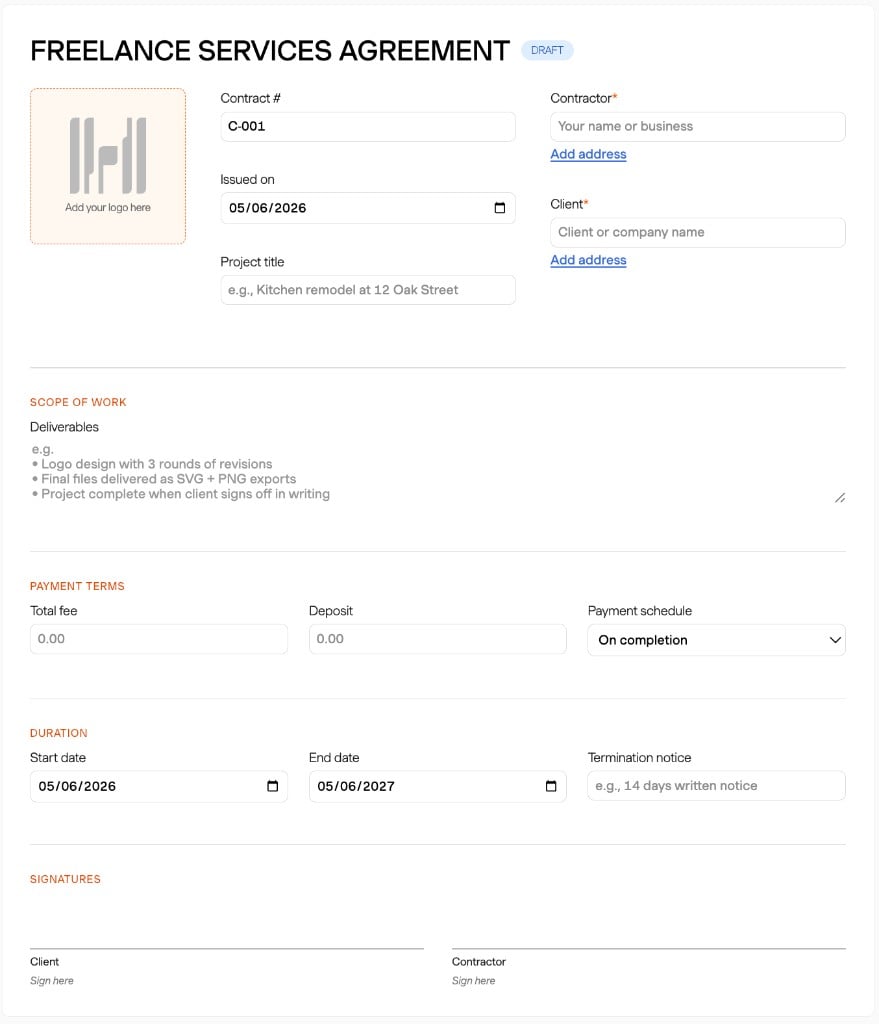
AGREEMENT DRAFT

Add your logo here

Scope of work

Payment terms

Duration

Signatures

Client

Sign here

Contractor

Sign here

Get paid via:
Credit card / Debit card
ACH
Wire transfer

Customize contract

Appearance

Add a logo
Show contract title

Contract settings

Include payment terms Total fee, deposit, and schedule
Include termination clause Notice required to end the contract
Include signature blocks Both parties sign at the bottom

Understanding Late Payment Fees for Contractors

Late payment fees are a necessary consideration for contractors dealing with delayed payments, which are a widespread issue in the industry. As of 2024, the U.S. construction industry lost an estimated $280 billion due to slow payments, up from $208 billion in 2022. This trend has worsened, with 82% of contractors experiencing payment delays exceeding 30 days, compared to 49% two years prior. Such delays can lead to inflated bids and project cancellations, with contractors increasing their bids by up to 10% to mitigate financial risks.

To combat these challenges, contractors often implement late payment fees. However, these fees must be carefully structured within contracts to comply with legal requirements. Most states have usury laws capping interest rates between 5% and 12% annually, and without a clear contractual clause, courts default to lower statutory rates. Therefore, it is crucial for contractors to include explicit terms regarding late payment fees in their agreements to ensure enforceability.

Legal Considerations for Charging Late Payment Fees

Contractors must navigate a complex legal landscape when imposing late payment fees. The U.S. Federal Prompt Payment Act mandates timely payments on government projects, with penalties for delays, but state-specific laws vary. For example, New Jersey imposes interest rates at the prime rate plus 1% for late payments, while Washington, D.C. sets a 1.5% monthly interest rate. Contractors should familiarize themselves with these laws to ensure compliance.

In addition to state laws, contractors must ensure that their contracts explicitly state any interest charges for late payments. This includes noting the rate and conditions under which interest will accrue. Failing to include a clear interest clause can result in lower default rates being applied by courts, which may not suffice to cover the financial strain caused by delayed payments. Therefore, legal consultation is recommended when drafting these clauses in contracts.

Implementing Late Payment Fees in Contracts

To effectively implement late payment fees, contractors should establish clear and concise contractual terms. It's essential to prominently display late payment interest language on invoices, such as "Late Payment: 1.5% monthly interest applies to balances over 30 days past due." This clarity helps to ensure that clients understand the financial implications of delayed payments.

Contractors should also consider leveraging technology, such as automated invoicing software, to streamline their billing processes. While Harvest does not provide legal advice or manage late payment enforcement, it offers tools to help contractors track time and manage expenses efficiently. This can support contractors in maintaining consistent cash flow and preparing for potential late payment scenarios.

Best Practices for Avoiding Payment Delays

To minimize the risk of payment delays, contractors should adopt proactive strategies. Conducting client credit checks prior to engaging in projects can help identify potential payment risks. Establishing progress billing, where clients are invoiced at project milestones, can also maintain a steady cash flow.

Additionally, leveraging technology for automated reminders and diverse payment options can enhance payment efficiency. Although Harvest does not enforce late payment fees, its capabilities in time tracking and invoicing can support contractors in maintaining organized and efficient billing practices. By adopting these strategies, contractors can better mitigate the financial impact of delayed payments.

Manage Late Payments with Harvest

See how Harvest helps contractors handle invoicing efficiently, mitigating delayed payment issues. Discover tools for effective billing practices.

Screenshot of Harvest invoicing tool in the context of late payment fees for contractors.

Late Payment Fees for Contractors FAQs

  • Typical late payment fees for contractors often range from 5% to 12% annually, aligning with state usury laws. These fees must be clearly defined in contractual agreements to be enforceable.

  • Contractors can enforce late payment fees by including clear terms in their contracts and prominently displaying interest clauses on invoices. Legal consultation is advisable to ensure compliance with state laws.

  • Delayed payments significantly impact contractors, with 82% experiencing waits over 30 days. This can lead to financial strain, inflated bids, and project delays, costing the U.S. industry $280 billion in 2024.

  • The Federal Prompt Payment Act mandates timely payments for government projects, imposing interest penalties for delays. It requires payments down the subcontractor chain within seven days of receipt.

  • Technology, such as automated invoicing software, can streamline billing and track payments efficiently. While Harvest doesn't enforce late fees, it provides tools for managing time and expenses effectively.

  • Best practices include conducting client credit checks, implementing progress billing, and using technology for payment tracking. These strategies help maintain cash flow and reduce payment delays.

  • States like New Jersey and Washington, D.C. have specific laws regarding late payment fees, such as setting interest rates for delayed payments. Contractors should familiarize themselves with these regulations.

  • Including payment terms in contracts is crucial to ensure that late payment fees are enforceable. Without clear terms, courts may default to lower statutory interest rates, insufficient to cover financial impacts.