
Harvest
Contracts
Sign up

Nda Template in Hebrew

Navigating the complexities of NDAs in Israel's innovative business environment can be challenging. Harvest offers tools to streamline your contract management alongside time tracking and invoicing.

Start from a template

AGREEMENT DRAFT

Add your logo here

Scope of work

Payment terms

Duration

Signatures

Client

Sign here

Contractor

Sign here

Get paid via:
Credit card / Debit card
ACH
Wire transfer

Customize contract

Appearance

Add a logo
Show contract title

Contract settings

Include payment terms Total fee, deposit, and schedule
Include termination clause Notice required to end the contract
Include signature blocks Both parties sign at the bottom

Understanding the Importance of NDAs in Israel

Non-disclosure agreements (NDAs) are pivotal in protecting sensitive information in Israel's dynamic business landscape. Given the country's high innovation rate and the significant role of intellectual property, NDAs ensure that trade secrets and confidential information remain secure. However, Israeli judges often scrutinize NDAs that are overly broad, focusing on the necessity of confidentiality rather than accepting generic clauses. This judicial skepticism underscores the importance of crafting precise and context-specific NDAs.

In Israel, NDAs are not just legal formalities but critical tools for fostering safe collaborations, especially in the high-tech sector. With 63% of tech collaborations involving cross-jurisdictional agreements, robust NDAs are essential for ensuring international compatibility. Moreover, the Israeli Trade Secrets Law requires that confidential information must possess commercial value and that reasonable steps are taken to maintain its secrecy. These legal frameworks highlight the necessity for well-drafted NDAs that clearly define protected information and use cases.

Key Elements of a Comprehensive NDA in Hebrew

Drafting an NDA in Hebrew requires attention to several critical elements to ensure its enforceability and effectiveness. First, the NDA should clearly identify all parties involved and precisely define what constitutes confidential information. It is advisable to define this information broadly but to restrict its "permitted use" as narrowly as possible to mitigate the risk of misuse. Additionally, the agreement should specify the duration of confidentiality obligations and include provisions for dispute resolution.

Common exclusions, such as information already public or lawfully known to the recipient, should be explicitly stated. It's also crucial to ensure that the NDA is signed by the correct legal entity and individuals with authority to bind that entity. These elements not only enhance legal enforceability but also provide clarity to all parties involved. Moreover, for international collaborations, hybrid governing law clauses might be necessary to address confidentiality and intellectual property concerns under different jurisdictions.

Legal Considerations and Compliance for NDAs

In Israel, the legal foundation for NDAs is rooted in the Contracts Law and the Commercial Torts Law, which address trade secrets and misuse of confidential information. Recent legal developments, like the Privacy Protection Law aligning with GDPR standards, underscore the need for NDAs to be compliant with data protection regulations. Breaching an NDA can lead to significant civil consequences, including financial damages and injunctions.

Israeli courts require that claimed damages from NDA breaches be tied to demonstrable financial loss, rather than punitive sums. Additionally, courts review the reasonableness of non-compete clauses to avoid undue restriction on an individual's ability to work. These legal standards emphasize the importance of thorough legal review to ensure that NDAs are not only protective but also fair and reasonable. Overbroad NDAs risk being unenforceable, highlighting the necessity for precision and practicality in drafting.

Practical Tips for Customizing Your NDA

Customizing an NDA to meet specific needs involves several practical steps. Begin by ensuring that the NDA is signed before any sensitive information is disclosed, especially if patent registration is pending. This precaution prevents premature disclosure that could jeopardize patentability. Additionally, avoid vague definitions of "confidential information" to maintain the agreement's enforceability.

Implement internal controls to limit access to confidential information on a need-to-know basis. This practice helps maintain the confidentiality status of the information, strengthening the NDA's protection. For complex business situations, seek tailored legal advice to ensure comprehensive coverage. While standardized templates offer efficiency, they may not address unique or complex scenarios adequately. Tailoring your NDA with these considerations in mind can significantly enhance its effectiveness.

The Role of NDAs in Cross-Border Collaborations

In Israel's tech-driven economy, cross-border collaborations are commonplace, necessitating NDAs that are adaptable to different legal environments. NDAs in such contexts must include hybrid governing law clauses, where Israeli law might govern confidentiality while another jurisdiction's law addresses intellectual property. This approach ensures that the NDA is robust and enforceable across different legal systems.

Given Israel's prominent role in global innovation and its high-tech industry's reliance on international partnerships, NDAs facilitate the safe exchange of proprietary information. They enable companies to engage with partners and investors worldwide without compromising their intellectual property. As such, NDAs are not just protective measures but strategic tools that support international growth and collaboration in Israel's vibrant business landscape.

Explore Hebrew NDA Templates with Harvest

Discover how Harvest helps streamline contract management alongside time tracking and invoicing, focusing on NDA templates in Hebrew.

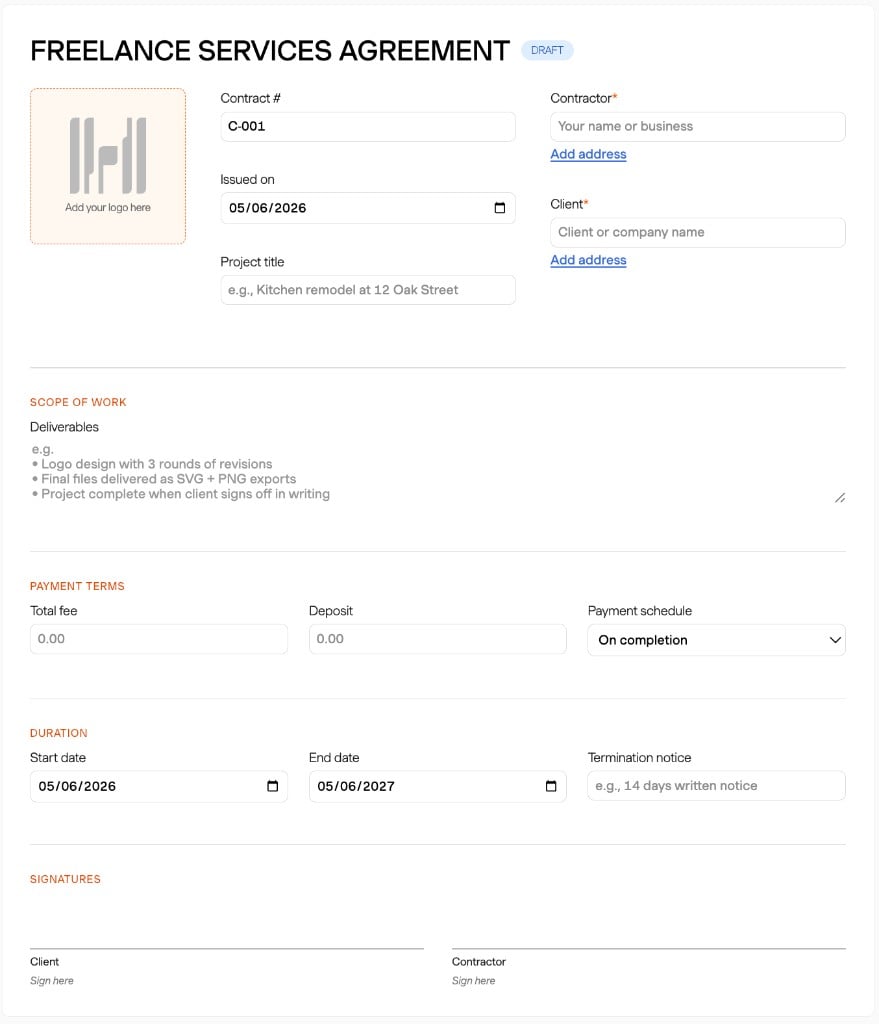
Screenshot of an NDA template in Hebrew within Harvest's interface.

Nda Template in Hebrew FAQs

  • A comprehensive NDA in Hebrew should include clear identification of all parties, a precise definition of confidential information, obligations of the receiving party, permitted disclosures, duration of confidentiality, and dispute resolution provisions.

  • Yes, Israeli law requires NDAs to be specific and reasonable. Overbroad agreements risk being unenforceable. The Israeli Trade Secrets Law mandates that confidential information must have commercial value and be protected by reasonable measures.

  • To customize an NDA, define "confidential information" broadly but restrict its "permitted use" narrowly. Ensure it's signed before disclosing sensitive information and tailor clauses to reflect your specific business context.

  • Common exclusions include information already public, lawfully known by the recipient prior to the agreement, or independently developed by the recipient. These should be explicitly stated to avoid misunderstandings.

  • NDAs enable safe sharing of proprietary information in international partnerships. Hybrid governing law clauses ensure that confidentiality and intellectual property rights are protected across different jurisdictions.

  • Legal review ensures that NDAs are enforceable and tailored to specific needs. It helps avoid overbroad clauses that could render the NDA unenforceable and ensures compliance with relevant laws.

  • The law aligns with GDPR standards, requiring NDAs to ensure data protection, transparency, and adequate measures for personal data transfers, enhancing legal compliance and data security.