Sign up


Key Components of a Graphic Design Contract
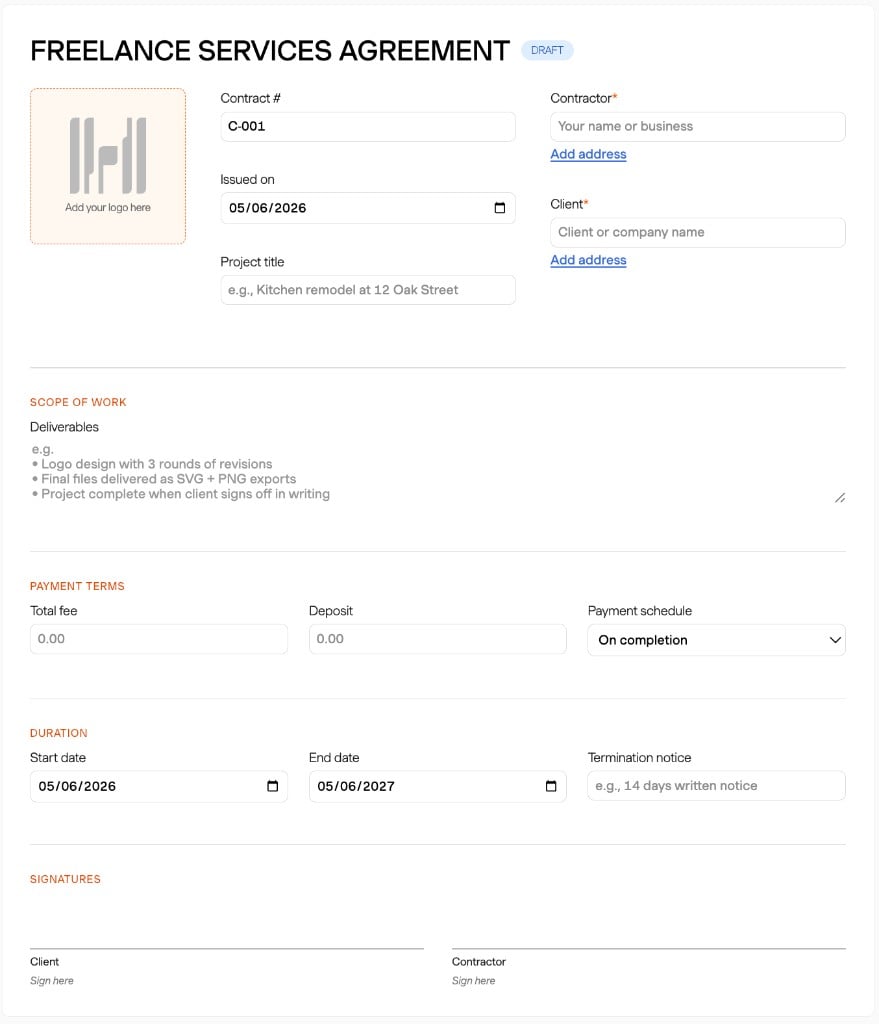
A graphic design contract serves as a vital tool for defining the scope and terms of a project, ensuring clarity and legal protection for both designers and clients. Essential components of such a contract typically include the identification of parties involved, a detailed scope of work, and payment terms. The contract should clearly outline the services to be provided, project timelines, and deliverables, including any specific design elements or file formats required.
Payment terms are crucial, often specifying fees, deposits, and a payment schedule, such as 50% upfront and the remainder upon completion. Additionally, intellectual property rights must be addressed, indicating whether the client receives full ownership or specific usage rights. Confidentiality clauses and termination conditions further safeguard both parties. By explicitly defining these terms, designers can prevent scope creep, where projects expand beyond initial agreements without additional compensation, a common pitfall in freelance work.