
Harvest
Contracts
Sign up

Statement of Work Template in Hebrew

Harvest supports your project management by integrating with time tracking and invoicing, making managing your Hebrew Statement of Work easier.

Start from a template

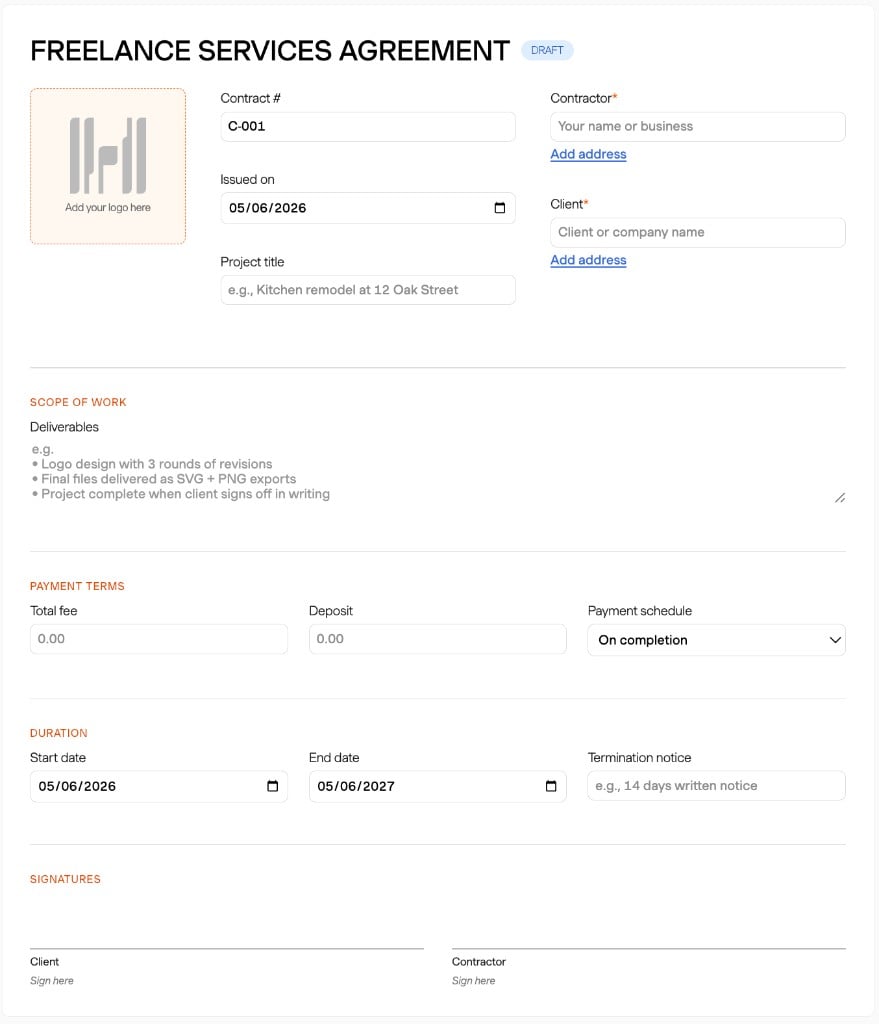
AGREEMENT DRAFT

Add your logo here

Scope of work

Payment terms

Duration

Signatures

Client

Sign here

Contractor

Sign here

Get paid via:
Credit card / Debit card
ACH
Wire transfer

Customize contract

Appearance

Add a logo
Show contract title

Contract settings

Include payment terms Total fee, deposit, and schedule
Include termination clause Notice required to end the contract
Include signature blocks Both parties sign at the bottom

Understanding the Importance of a Statement of Work in Israel

In Israel, a Statement of Work (SOW), or "הצהרת עבודה" (Hatzharat Avoda), is pivotal in project management and contracting, ensuring all parties have a clear understanding of project expectations. The role of an SOW is particularly critical in Israel's fast-paced industries like high-tech and construction. It outlines deliverables, timelines, and responsibilities, providing a framework that prevents misunderstandings and disputes. Given the recent amendments to Israeli contract law, which emphasize clear contractual language, having a comprehensive SOW is even more essential.

These legal nuances underscore the importance of using precise terminology and structured templates to meet contractual standards and expectations. In industries such as tech, where projects often involve international collaborators, an SOW ensures alignment with both local and global partners. It serves as a legally binding document once signed, detailing enforceable obligations and reducing ambiguity. This clarity is crucial in Israel, known for its high-tech sector's near-universal AI adoption, where efficiency and precision are paramount.

Key Components of a Hebrew Statement of Work Template

A well-structured "הצהרת עבודה" template should include several essential sections to ensure clarity and compliance. These components typically cover a project overview, detailed scope of work, deliverables, timelines, roles and responsibilities, and acceptance criteria. Additionally, pricing, payment terms, and a change management process are crucial to manage expectations and adapt to project changes effectively.

Incorporating these elements helps mitigate risks such as scope creep and financial disputes. For example, specifying timelines instead of using vague terms like "as soon as possible" can prevent potential delays and misunderstandings. By involving all stakeholders in the review process, from legal to finance teams, the template can be customized to suit specific project needs and comply with local regulations. This approach not only aligns with best practices but also leverages the collaborative culture prevalent in Israeli business environments.

Legal Considerations for SOWs in Israel

Israeli contract law has specific implications for "הצהרת עבודה," especially following recent amendments. These changes emphasize the importance of the wording in contracts, with the courts interpreting based on the text unless it results in an absurdity or contradiction. This legal landscape requires SOWs to be meticulously drafted to ensure they are both comprehensive and enforceable.

The principle of good faith in Israeli law also plays a crucial role. It mandates honest conduct during contract negotiation and drafting, which is particularly important in balancing power dynamics between contracting parties. A well-crafted SOW helps in delineating clear deliverables and responsibilities, thus protecting all parties involved from potential disputes. In the context of Israel's dynamic economy, especially with recent economic shifts affecting the tech sector, a precise SOW can serve as a strategic tool for managing project and financial risks.

Cultural and Practical Tips for Drafting an SOW in Hebrew

When drafting a "הצהרת עבודה" in Hebrew, cultural and practical considerations are paramount. Language precision is critical to avoid misinterpretations, especially when projects involve international teams. Ensuring that the SOW is reviewed by bilingual experts can mitigate risks associated with linguistic nuances, preventing scope creep and contractual disputes.

Incorporating AI tools for drafting and reviewing SOWs is becoming increasingly common in Israel's tech sector, with 95% of employees using such technologies to enhance efficiency. This trend suggests that integrating AI can lead to more consistent and high-quality SOWs. Additionally, involving all relevant stakeholders in the drafting process ensures that the SOW is comprehensive and aligned with business objectives. By following these best practices, businesses can create effective SOWs that not only meet legal requirements but also support successful project execution in Israel's competitive market.

Simplify SOW Management with Harvest

Harvest makes managing your Hebrew Statement of Work seamless with integrated time tracking and invoicing features.

Screenshot of Harvest interface for Hebrew Statement of Work templates.

Statement of Work Template in Hebrew FAQs

  • A Statement of Work (SOW) in Hebrew, or "הצהרת עבודה," is a detailed document used in project management to outline project scope, deliverables, timelines, and responsibilities. It serves as a legally binding contract once signed by all parties.

  • An effective SOW should include a project overview, detailed scope of work, deliverables, timelines, roles and responsibilities, acceptance criteria, pricing, payment terms, and a change management process. These components help manage expectations and mitigate risks.

  • Yes, once signed by all parties, a "הצהרת עבודה" is considered a legally binding document in Israel. It outlines enforceable obligations and helps reduce ambiguity in project management.

  • AI tools can enhance the drafting and reviewing process of SOWs by increasing efficiency and consistency. In Israel's tech sector, 95% of employees use AI regularly, indicating its growing role in contract management.

  • Language precision is crucial to avoid misinterpretations in a Hebrew SOW. Engaging bilingual experts for review and ensuring all stakeholders are involved in the drafting process can help mitigate risks and align the document with cultural nuances.

  • The principle of good faith in Israeli contract law requires parties to act honestly during negotiations and drafting. It ensures that the SOW is fair and balanced, protecting against power imbalances and potential disputes.

  • Involving stakeholders like project teams, legal, and finance in the SOW creation process ensures comprehensive coverage and alignment with business objectives. This collaborative approach helps identify potential issues early on.