
Harvest
Contracts
Sign up

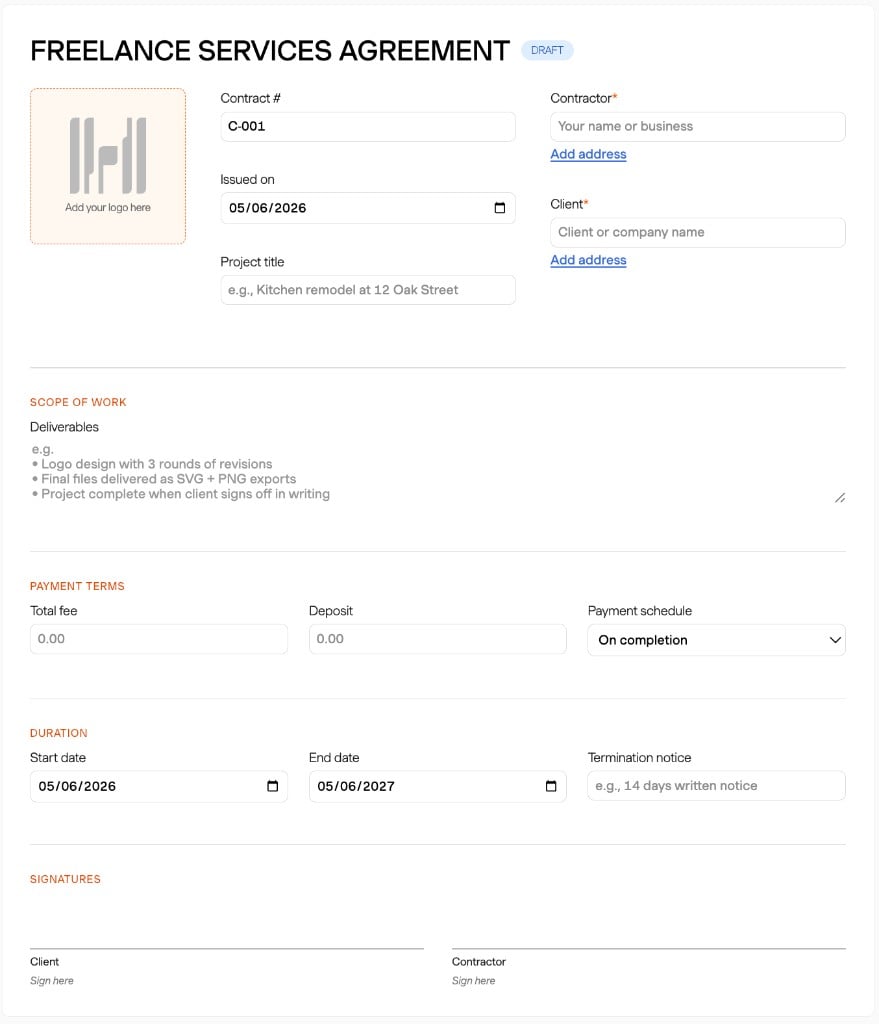
Electrical Contract Template

Many electrical contracts underestimate project costs, leading to financial losses. Harvest supports contractors with efficient time tracking and invoicing.

Start from a template

AGREEMENT DRAFT

Add your logo here

Scope of work

Payment terms

Duration

Signatures

Client

Sign here

Contractor

Sign here

Get paid via:
Credit card / Debit card
ACH
Wire transfer

Customize contract

Appearance

Add a logo
Show contract title

Contract settings

Include payment terms Total fee, deposit, and schedule
Include termination clause Notice required to end the contract
Include signature blocks Both parties sign at the bottom

Understanding Electrical Contract Essentials

Creating an effective electrical contract involves understanding the specific terms and conditions necessary for a successful project. Essential elements include a clear scope of work that details the specific tasks and materials involved, thus preventing misunderstandings and disputes. For instance, explicitly defining the installation of lighting or wiring new additions can help avoid scope creep.

Another critical component is the financial terms, which should outline the total project cost, payment schedules, and acceptable methods. According to industry research, clearly defined financial terms help prevent disputes and ensure contractors are compensated fairly. Additionally, including clauses on late payments or penalties helps protect financial interests.

The importance of compliance cannot be overstated. Contracts must adhere to federal, state, and local regulations, which can vary significantly. Ensuring compliance not only protects legal standing but also enhances trust with clients. Including the contractor's license number and insurance details is essential for transparency and accountability.

Customizing Your Electrical Contract Template

Customization is key when using an electrical contract template. While generic templates can provide a good starting point, failing to tailor them to specific project needs and legal requirements can lead to liability issues. Experts recommend revising templates to align with the unique aspects of each project, such as specific local laws or client requirements.

To effectively customize a template, begin by gathering all pertinent information, including client and contractor details, and defining the project scope with precision. This reduces the risk of misunderstanding and ensures that all parties are on the same page. For example, a contract for a multi-family apartment project will differ significantly from one for a residential installation.

Additionally, it is wise to incorporate specific clauses related to changes and approvals. Establishing a formal process for change orders, including how they affect costs and timelines, helps prevent disputes. This is crucial as informal negotiations can lead to disagreements and project delays.

Leveraging Digital Platforms for Electrical Contracts

The shift towards digital contract management platforms offers numerous advantages over traditional methods. These platforms enhance efficiency, reduce administrative workloads, and improve customer service by allowing for quick and customized contract creation. They can automatically populate key data, minimizing errors and freeing up time for more strategic tasks.

Digital solutions also provide real-time visibility and version control, enabling seamless integration with other business processes like estimates, work orders, and invoices. This integration is particularly beneficial for electrical contractors looking to streamline operations and improve client interactions. For instance, the ability to generate invoices directly from contract data enhances accuracy and speeds up payment processes.

Moreover, digital platforms support secure cloud storage and digital signatures, facilitating easy access and record-keeping. This ensures that contracts are easily retrievable and legally binding, which is essential for maintaining organized and professional business operations.

Common Mistakes in Electrical Contracting and How to Avoid Them

One frequent mistake in electrical contracting is underestimating project costs. This often happens due to a lack of detailed cost breakdowns, which can lead to significant financial losses. To avoid this, contractors should meticulously calculate all expenses, factor in potential overtime, and adjust for local labor rates.

Another common pitfall is vague language in the scope of work. Ambiguity can lead to disputes and project delays. Contractors should use precise language, break down tasks into specific items, and attach detailed plans or drawings to ensure clarity. This approach helps both parties understand the project's full scope, minimizing misunderstandings.

Using unmodified templates is another risk. Experts advise against using templates "as is" without customization, as they may not align with specific business operations or state laws. Regularly reviewing and updating contracts to reflect legal changes is essential for ongoing compliance and protecting business interests.

Explore Harvest's Electrical Contracts

Harvest offers customizable templates to streamline your electrical contracts, ensuring compliance and clarity.

Screenshot showing Harvest's electrical contract template features.

Electrical Contract Template FAQs

  • An electrical contract should include a clear scope of work, financial terms, compliance with regulations, and specific clauses for changes and approvals. This ensures clarity and protects both parties.

  • To customize an electrical contract template, gather complete project details and define the scope of work precisely. Adjust template sections to align with specific legal and client requirements.

  • Compliance with federal, state, and local regulations ensures that the contract is legally binding and protects both parties from potential legal issues. It also enhances trust with clients.

  • Common mistakes include underestimating costs, vague scope of work, and using unmodified templates. To avoid these, provide a detailed cost breakdown and ensure language clarity.

  • Digital platforms enhance contract management by providing real-time visibility, reducing errors with automated data entry, and integrating with other business processes like invoicing.

  • Detailed cost breakdowns prevent underestimation and financial losses by accounting for all expenses, including permits, materials, and potential overtime. This ensures accurate project budgeting.

  • Change orders modify the original contract terms, affecting cost and timelines. It is essential to have a formal process for documenting and approving these changes to avoid disputes.