
Harvest
Contracts
Sign up

Subcontractor Agreement Template

Harvest helps streamline project management by tracking time and budgets, reducing the risks of poorly structured subcontractor agreements that can lead to costly disputes.

Start from a template

AGREEMENT DRAFT

Add your logo here

Scope of work

Payment terms

Duration

Signatures

Client

Sign here

Contractor

Sign here

Get paid via:
Credit card / Debit card
ACH
Wire transfer

Customize contract

Appearance

Add a logo
Show contract title

Contract settings

Include payment terms Total fee, deposit, and schedule
Include termination clause Notice required to end the contract
Include signature blocks Both parties sign at the bottom

Essential Elements of a Subcontractor Agreement

A well-structured subcontractor agreement is crucial for clear communication and effective project management. It should comprehensively define the scope of work, payment terms, timelines, and legal requirements. Miscommunication over these elements can lead to costly disputes, with project delays potentially costing up to $10,000 for a two-week delay. Therefore, clarity and precision in drafting are paramount.

Key clauses to include are the identification of parties involved, detailed scope of work, payment terms, and timelines. For example, the construction industry has seen significant improvements in project completion and subcontractor performance through well-defined agreements. Legal experts also recommend including indemnification clauses and insurance requirements to protect against unforeseen expenses. Though Harvest does not provide legal templates, its tools can help track project budgets and ensure timely invoicing, which are critical components in managing subcontractor relationships.

Customizing Your Subcontractor Agreement Template

Customizing a subcontractor agreement template allows businesses to tailor the document to specific project needs and industry standards. This process involves defining the project’s scope, payment terms, and responsibilities. For instance, in the IT sector, agreements often detail cybersecurity measures and software development milestones.

To customize effectively, start by clearly defining the scope of work, including deliverables and deadlines. Establish payment terms that specify the type of payment (fixed, hourly, or retainer) and schedules. It's also crucial to include milestones that align with the project's timeline. While Harvest does not offer specific contract drafting features, its project budget management and time tracking tools ensure that project milestones and expenses are meticulously tracked, supporting smooth project execution.

Legal and Compliance Considerations

Legal and compliance considerations are critical when drafting subcontractor agreements. Misclassification of workers can lead to significant fines, with penalties for intentional misclassification reaching up to $1,000 per worker plus criminal charges. Therefore, ensuring accurate classification and compliance with federal, state, or country-specific laws is essential.

Subcontractor agreements should also include clauses addressing confidentiality, intellectual property, and dispute resolution. In the UK, agreements must incorporate data protection terms if personal data is processed. Although Harvest does not handle these legal aspects, its tools are invaluable for tracking compliance-related processes such as project timelines and expenses, thereby supporting contractual obligations indirectly through meticulous management of project data.

Avoiding Common Pitfalls in Subcontractor Agreements

Avoiding common pitfalls in subcontractor agreements can save significant time and resources. Vague scopes of work, unclear payment terms, and lack of written agreements are frequent issues that lead to disputes. Clearly defining each party's responsibilities and expectations can mitigate these risks.

Implementing a formal change order process can prevent unexpected costs and project delays. Regularly reviewing and updating contract terms ensures they remain relevant to current project requirements and legal standards. While Harvest does not provide contract management features, its time tracking and invoicing capabilities help maintain project oversight, ensuring that work progresses according to the agreed terms.

Integrating Subcontractor Agreements with Business Processes

Integrating subcontractor agreements with broader business processes ensures consistency and compliance across projects. For example, aligning subcontractor agreements with the main contract can prevent gaps in liability and ensure "flow-down" provisions are consistent.

Engaging subcontractors often involves approval workflows, such as submitting agreements for vetting. Regular communication with subcontractors is essential to maintain alignment and accountability. While Harvest cannot draft agreements, its tools for tracking project budgets and expenses can enhance transparency and efficiency in managing subcontractor relationships, ensuring all parties are informed and on schedule.

Streamline Subcontractor Agreements with Harvest

Harvest tools help manage project budgets and track time, ensuring subcontractor agreements are clear and effective.

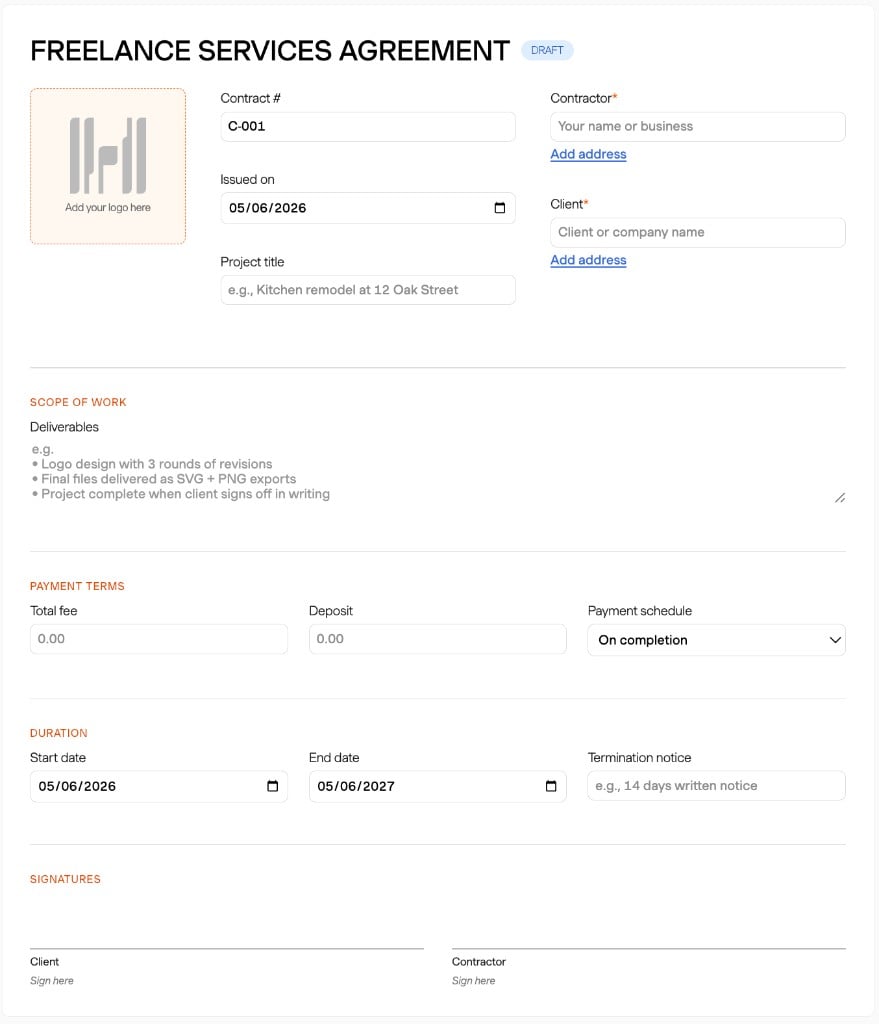
Harvest interface showing subcontractor agreement template.

Subcontractor Agreement Template FAQs

  • Key clauses in a subcontractor agreement include scope of work, payment terms, timelines, indemnity, liability, and dispute resolution. Including these helps prevent disputes and ensures clear communication between parties.

  • To customize a subcontractor agreement template, start by defining the scope of work, payment terms, and timelines specific to your project. Adjust clauses to meet industry standards and legal requirements relevant to your location.

  • Legal considerations include accurate classification of workers, compliance with federal and state laws, and inclusion of clauses for confidentiality, liability, and dispute resolution. Misclassification can lead to substantial penalties.

  • Poorly drafted agreements can result in costly disputes, project delays, and financial losses, with potential costs of $10,000 for a two-week delay. Clear terms and communication are essential to prevent these issues.

  • Common mistakes include vague scopes of work, unclear payment terms, and not using written agreements. These can lead to disputes and delays. Clearly define all terms and include a formal change order process.

  • Harvest supports subcontractor management by providing tools for tracking project budgets, time, and expenses. These features help ensure projects stay on schedule and within budget, complementing effective subcontractor agreements.

  • Aligning agreements with business processes ensures consistency and compliance across projects. It helps prevent liability gaps and ensures subcontractor terms match the main contract, facilitating smooth project execution.