
Harvest
Expenses
Sign up

Business Trip Reimbursement

Harvest streamlines business trip reimbursements by enabling precise expense tracking and categorization, easing compliance and reducing errors.

  • Attach receipts to projects & tasks
  • Turn tracked expenses into client invoices
  • Free 30-day trial, no credit card needed

or drag & drop • Images and PDFs, max 10 MB

Understanding Business Trip Reimbursement

Business trip reimbursement encompasses a wide range of expenses incurred by employees while traveling for work. These can include transportation, lodging, meals, and other business-related costs. As global business travel spending is projected to reach $1.48 trillion by 2024, understanding the nuances of reimbursement processes is crucial for companies aiming to manage costs effectively. With the average business trip costing $1,128 in 2025, a 35.3% increase from 2024, managing these expenses efficiently is imperative.

Reimbursement policies are often guided by IRS regulations, which require detailed documentation of expenses to qualify as non-taxable. For instance, receipts are mandatory for expenses over $75, and meals have specific deduction rules. Businesses must ensure that excess reimbursements are returned within 60 days to avoid taxation. Harvest supports this need by allowing users to maintain detailed records of travel expenses, categorizing them by date, project, and category, and uploading receipt images for compliance purposes.
Challenges in Processing Travel Expense Reimbursements

Processing travel expense reimbursements can be fraught with challenges, from manual data entry errors to policy compliance issues. Approximately 19% of all manual expense reports contain errors, leading to hidden costs and inefficiencies. Furthermore, 43% of professionals report confusion around reimbursement policies, which can result in non-compliant expenses and delayed reimbursements.

Harvest addresses these challenges by offering a platform where expenses can be meticulously tracked and categorized. Users can mark expenses as billable or non-billable, helping to streamline the reimbursement process. By automating these aspects, Harvest reduces the time spent on manual corrections and enhances compliance, ultimately improving efficiency and reducing processing times by up to 41%.

Best Practices for Effective Expense Management

Implementing best practices in expense management is key to efficient business trip reimbursement. Clear documentation of expense policies is vital, outlining what is reimbursable, required documentation, and submission timelines. Automated systems are increasingly adopted, with 83% of large enterprises and 71% of SMEs in the U.S. using these solutions to improve efficiency and compliance.

Harvest facilitates effective expense management by providing tools for detailed tracking and categorization of expenses. Although it does not handle IRS compliance directly, it supports users in maintaining accurate records, which is essential for meeting external regulatory requirements. By integrating with corporate card programs and providing real-time data access, Harvest helps businesses enforce policy compliance and gain insights into spending patterns, leading to more informed decision-making.

Leveraging Technology for Business Trip Reimbursement

The slow but steady adoption of expense management technology is transforming how businesses handle reimbursements. Despite the benefits of automation, only a modest increase in adoption has been observed, with 69% of organizations utilizing cloud-based solutions. These systems significantly enhance efficiency, with automated expense reporting reducing monthly reconciliation time by up to 95% and saving finance teams an estimated 13 hours weekly per team member.

Harvest supports this technological shift by offering cloud-based solutions that integrate seamlessly with existing financial systems. While it does not manage per diem calculations directly, it allows for comprehensive tracking and categorization of expenses, thus facilitating faster reimbursements and improved employee satisfaction. By adopting Harvest, companies can move from reactive to proactive expense management, setting spending limits and ensuring policy adherence.

Harvest Business Trip Reimbursement

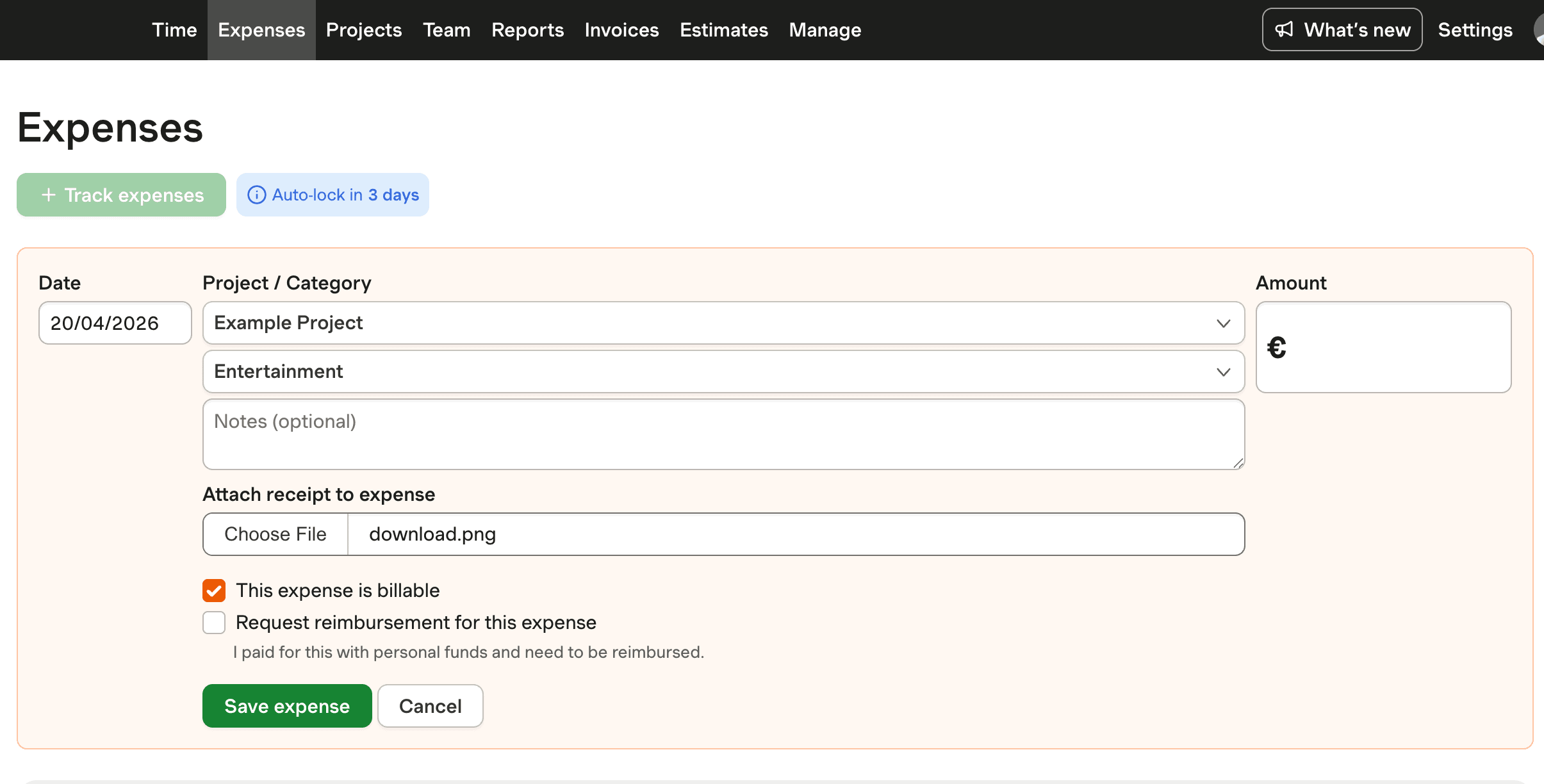
See how Harvest simplifies business trip reimbursement with detailed expense tracking and receipt uploads.

Harvest expense tracking dashboard for business trip reimbursement.

Business Trip Reimbursement FAQs

  • Common reimbursable expenses for business trips include transportation, lodging, meals, and other business-related costs. Documentation, such as receipts, is required for expenses over $75 to comply with IRS guidelines.

  • Harvest allows users to maintain records of travel expenses by tracking expenses by date, project, and category, and uploading receipt images. This helps ensure compliance with IRS documentation requirements.

  • Manual expense reports often contain errors, with 19% of reports needing corrections. They are time-consuming and can lead to compliance issues. Automation, like that provided by Harvest, reduces these errors significantly.

  • Automated systems improve efficiency by reducing processing times by up to 41% and cutting reconciliation time by 95%. Harvest automates tracking, categorization, and approval processes to streamline reimbursements.

  • An accountable plan requires that travel expenses have a business purpose, be substantiated with documentation, and that excess reimbursements be returned within 60 days. This ensures reimbursements are non-taxable.

  • Yes, Harvest can integrate with corporate card programs, allowing for seamless transaction capture and policy enforcement at the point of purchase.

  • Real-time data provides immediate insights into spending patterns, allowing finance teams to monitor budgets effectively and make informed decisions. Harvest offers real-time access to expense data, supporting better financial oversight.

  • Technology, including cloud-based solutions like Harvest, enhances efficiency by automating tracking and approval processes, reducing errors, and speeding up reimbursements, ultimately improving employee satisfaction and compliance.