
Harvest
Expenses
Sign up

Business Use of Personal Vehicle Reimbursement

Harvest simplifies the complex process of mileage reimbursement by offering customizable per-mile rates, perfect for small businesses handling project-based expenses.

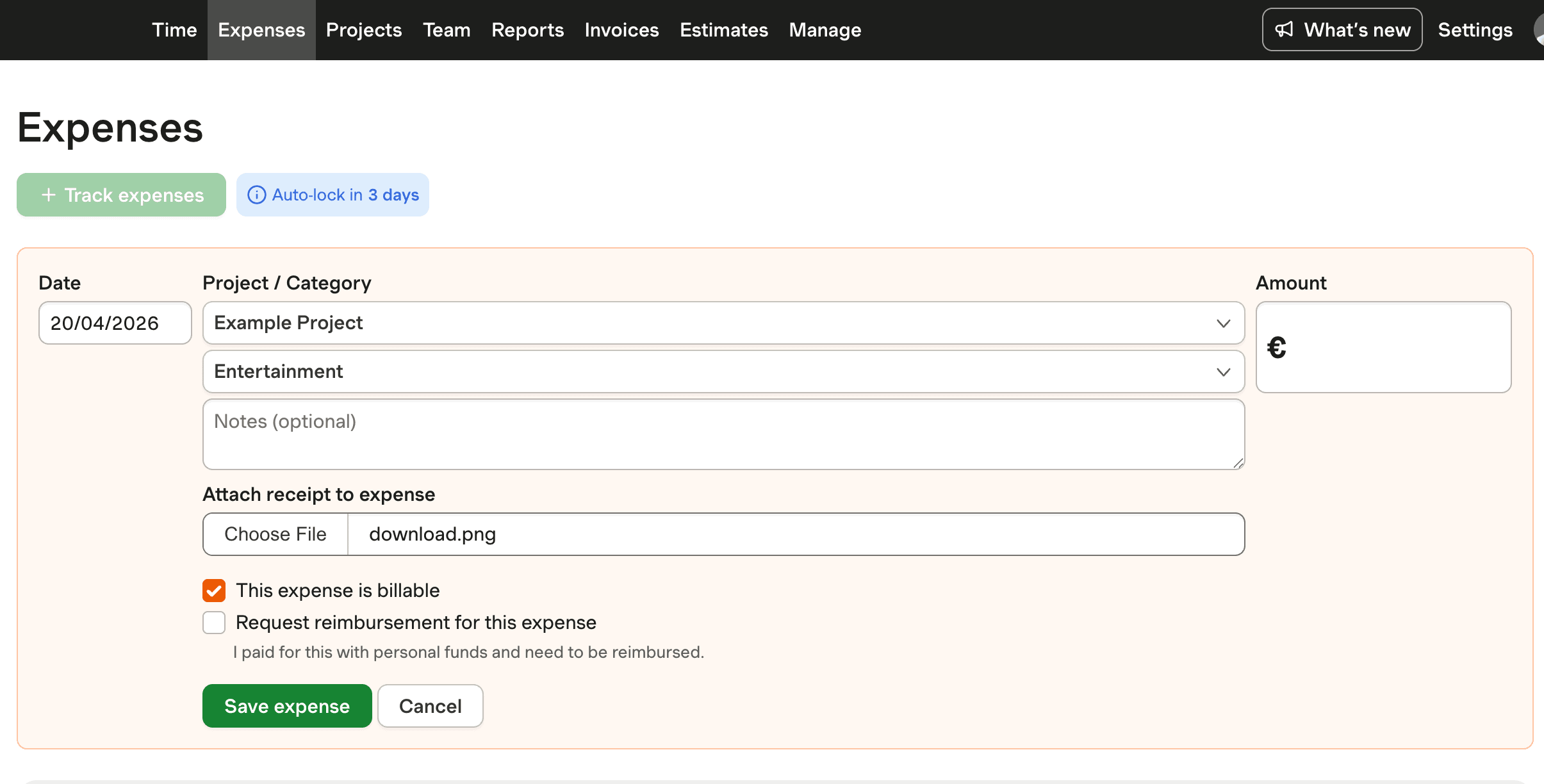
  • Attach receipts to projects & tasks
  • Turn tracked expenses into client invoices
  • Free 30-day trial, no credit card needed

or drag & drop • Images and PDFs, max 10 MB

Understanding IRS Mileage Reimbursement Guidelines

IRS mileage reimbursement guidelines help businesses fairly compensate employees using personal vehicles for work. The IRS standard mileage rate for 2026 is set at 72.5 cents per mile, which is generally considered tax-free under an accountable plan. This rate simplifies reimbursement, but it's not mandatory for employers to use it — the key is to ensure that all reimbursed expenses are substantiated with log records. In states like California and Massachusetts, employers must comply with state-specific rules, often using the IRS rate as a guideline.

Harvest streamlines mileage expense tracking by allowing businesses to set customizable per-mile rates. This flexibility helps small businesses manage project-based expenses efficiently. However, while Harvest simplifies the tracking process, employers are responsible for ensuring compliance with IRS and state-specific requirements, such as maintaining proper mileage logs and ensuring reimbursed amounts do not exceed actual costs.
Maximizing Cost Savings with Automated Tracking

Automated mileage tracking is becoming a standard practice as companies strive to reduce errors and fraudulent claims. Businesses that switch from manual logs to automated systems report significant productivity gains, saving over 4,000 hours annually for 100 employees. This efficiency allows teams to focus on higher-value tasks rather than administrative burdens.

Harvest supports this transition by enabling businesses to track mileage with ease and accuracy. By using Harvest's mileage tracking feature, businesses can eliminate the manual entry errors that often occur with spreadsheets or handwritten logs. This not only ensures precise reimbursement calculations but also aligns with best practices in expense management.

Implementing Fixed and Variable Rate (FAVR) Programs

FAVR programs offer a sophisticated approach to vehicle reimbursement, accounting for both fixed costs like insurance and variable costs such as fuel. These programs can lead to up to 30% cost savings compared to flat taxable allowances. In industries with high mileage, like construction, FAVR programs provide tailored solutions by adjusting for regional cost variations.

While Harvest does not offer a FAVR program, it supports businesses in tracking mileage expenses through customizable rates. This adaptability allows companies to simulate FAVR-like structures by setting rates that reflect both fixed and variable costs, thereby optimizing reimbursement strategies without the complexity of full FAVR implementation.

Best Practices for Tracking and Substantiating Mileage

Accurate mileage tracking is essential for compliance and fair reimbursement. Employees should maintain detailed logs that include the date, purpose, starting and ending locations, and total miles driven. This substantiation is critical under IRS regulations to ensure that reimbursements remain tax-free.

Harvest facilitates this process by providing a straightforward way to log mileage expenses. However, it's important for businesses to develop clear policies outlining what constitutes business travel and the required documentation. By integrating these practices with Harvest's tracking capabilities, companies can ensure accurate and compliant mileage reimbursements.

Streamline Mileage Reimbursement with Harvest

See how Harvest simplifies mileage tracking with customizable rates, perfect for managing business-related travel expenses.

Harvest screenshot showing mileage tracking for business vehicle use.

Business Use of Personal Vehicle Reimbursement FAQs

  • The IRS standard mileage rate for 2026 is 72.5 cents per mile. This rate is used to calculate tax-free reimbursements for business use of personal vehicles, provided the expenses are substantiated under an accountable plan.

  • Businesses can accurately track mileage by using automated GPS tracking solutions or mobile apps. These tools reduce errors and ensure precise record-keeping, essential for compliant reimbursements.

  • FAVR (Fixed and Variable Rate) programs reimburse employees based on both fixed costs, like insurance, and variable costs, such as fuel. These programs help businesses save up to 30% compared to flat taxable allowances.

  • Harvest allows businesses to track mileage expenses using customizable per-mile rates. This feature simplifies the reimbursement process and helps manage project-based expenses effectively.

  • Employees should maintain detailed logs that include the date, trip purpose, starting and ending locations, and total miles driven. These records are crucial for substantiating tax-free reimbursements.

  • As of 2026, California, Illinois, and Massachusetts require employers to reimburse business-related vehicle expenses. Many companies in these states use the IRS rate as a guideline.

  • Harvest allows businesses to set customizable per-mile rates for mileage tracking. While it doesn't differentiate by state, this feature enables tailored rate settings for different regions.