
Harvest
Expenses
Sign up

Expense Summary Example

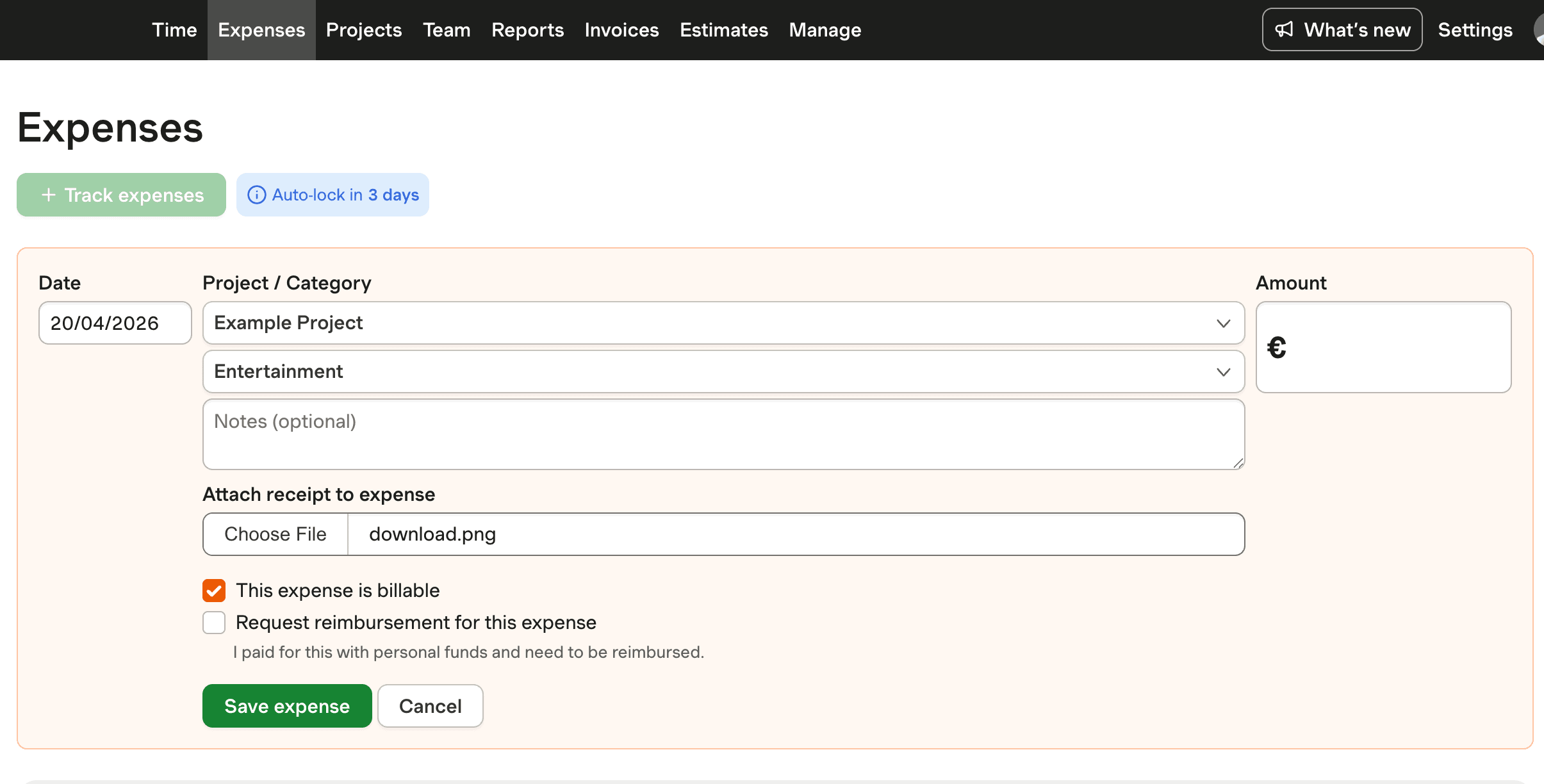
Harvest simplifies expense management by allowing detailed categorization and project-specific tracking, addressing the challenges of manual reporting.

  • Attach receipts to projects & tasks
  • Turn tracked expenses into client invoices
  • Free 30-day trial, no credit card needed

or drag & drop • Images and PDFs, max 10 MB

Understanding the Structure of an Expense Summary

An effective expense summary report is crucial for any business looking to track and manage its financial operations efficiently. Typically, such reports include detailed categorizations of expenses such as meals, travel, and client entertainment, each tied to specific projects or business activities. Categorization helps in maintaining transparency and ease of auditing when reviewing financial records.

For businesses aiming to streamline their expense management, Harvest offers a solution that enables detailed categorization of expenses for project management. By using Harvest, administrators can create and manage expense categories that align with their company’s specific needs, ensuring every expenditure is tracked accurately and associated with the correct project. This meticulous tracking aids in precise financial oversight and aids budgeting decisions.
Leveraging Technology for Efficient Expense Tracking

Modern expense management has evolved significantly, moving from paper-based methods to cloud-based solutions that enhance accuracy and efficiency. With 54% of all expense report submissions being made via mobile applications by 2021, this trend is set to rise, projecting that 75% of businesses will rely primarily on mobile solutions by 2025.

Harvest supports this shift by offering a robust mobile application that facilitates the tracking of expenses related to specific client projects. Users can attach receipts directly to each expense entry, ensuring accurate and reliable record-keeping. This functionality not only simplifies the submission process but also enhances the accuracy of financial reporting, reducing the risk of errors and omissions commonly associated with manual entry.

Analyzing and Reporting Expenses with Harvest

Analyzing spending patterns is essential for informed budgeting and financial planning. Organizations that adopt automated systems report a 60% reduction in processing time and a 35% reduction in costs, underscoring the value of efficient expense reporting tools.

With Harvest's detailed expense reports, businesses can filter and export data to analyze spending patterns, identify potential areas of overspending, and inform future budgeting decisions. This capability is crucial for maintaining financial health and ensuring resources are allocated efficiently. Harvest empowers users to make data-driven decisions, enhancing overall financial management and strategic planning.

Best Practices for Creating an Expense Summary

Creating an accurate and comprehensive expense summary involves several key steps. Begin by collecting all receipts and categorizing each expense according to company standards. Record the transaction date, vendor, amount, and business purpose in the report. This structured approach not only ensures compliance but also facilitates easier audits and reviews.

Employing a tool like Harvest simplifies this process by enabling real-time tracking and categorization, reducing the chances of errors and improving overall efficiency. By integrating these best practices with Harvest’s capabilities, organizations can foster transparency and accountability in their expense management processes.

Expense Summaries with Harvest

See how Harvest allows detailed categorization and project-specific expense tracking. Simplify your financial management today.

Harvest dashboard showing detailed expense summary example.

Expense Summary Example FAQs

  • An expense summary report typically includes categorized expenses such as travel, meals, and client entertainment. Each entry should list the transaction date, vendor, amount, and business purpose. This structured format aids in financial transparency and auditing.

  • Effective categorization involves organizing expenses under specific categories like lodging, meals, and transportation. Using a tool like Harvest, you can create custom categories that fit your business needs, ensuring every expense is tracked precisely.

  • Attaching receipts is crucial for verifying expenses and maintaining accurate financial records. With Harvest, users can upload photos or PDFs of receipts, reducing errors and enhancing record-keeping accuracy.

  • Harvest allows users to track expenses related to specific client projects. This feature enables businesses to associate expenses directly with projects, ensuring accurate project-based financial tracking and reporting.

  • Mobile apps for expense management improve efficiency by allowing real-time submission and tracking of expenses. By 2025, 75% of businesses are expected to use mobile solutions primarily, enhancing accuracy and convenience.

  • Analyzing spending patterns helps identify areas of overspending and informs future budgeting decisions. Tools like Harvest provide detailed reports that aid in reviewing financial data and optimizing resource allocation.

  • Best practices include collecting all receipts, categorizing expenses properly, and providing detailed transaction records. Tools like Harvest streamline these processes, ensuring compliance and efficient financial management.