
Harvest
Expenses
Sign up

Travel Allowance for Employees

Travel allowances for employees are crucial yet complex, impacting everything from compliance to cost control. Harvest simplifies expense tracking for small teams, streamlining project expense management.

EXPENSE REPORT DRAFT

Drop your receipts here or click to upload

Images and PDFs (max 10 MB each)

Date
Category
Merchant
Description
Amount
Total
$0.00

Customise report

Appearance

Show report title

Report settings

Understanding Travel Allowances for Employees

Travel allowances for employees are a fundamental component of business operations, impacting financial management and employee satisfaction. Globally, business travel spending averaged $1,128 per trip, a 35% increase from 2024. In the U.S., domestic trips average $1,293, while international trips can reach $2,600. These figures highlight the significant financial commitment companies make to support employee travel.

Travel allowances typically cover expenses such as transportation, lodging, and meals. In the U.K., HMRC provides benchmark scale rates for meal allowances, allowing businesses to reimburse employees without individual receipts, as long as they adhere to legal limits. Meanwhile, U.S. federal guidelines under IRS Publication 463 mandate that for travel reimbursements to be non-taxable, they must form part of an "accountable plan." This includes substantiation with receipts and timely submission, usually within 60 days.
How Travel Allowances are Calculated

Calculating travel allowances involves various methods, including the "actual cost" approach for major expenses like flights and accommodation, and "per diem" rates for daily incidentals. For example, the IRS sets mileage rates, which rose to 72.5 cents per mile for business travel in 2026. In Canada, travel to a "special worksite" is generally non-taxable if specific conditions are met, such as the temporary nature of the work.

Companies must establish clear policies to define eligible expenses and set spending limits. A hybrid approach, which combines actual expenses and per diem rates, is common. For instance, some U.S. states differentiate between in-state and out-of-state travel reimbursements, ensuring that employees are compensated fairly while adhering to fiscal responsibilities.

Implementing Effective Travel Allowance Policies

Implementing effective travel allowance policies requires a structured approach. Companies can start by defining clear policies, setting spending limits, and establishing approval workflows. These steps help manage employee travel expenses efficiently and ensure compliance with regulations. For instance, timely submissions of expense reports, ideally within 30 to 60 days post-travel, are crucial for maintaining accurate financial records.

Leveraging technology, such as digital expense tracking tools, can further enhance policy implementation. These tools automate receipt capture and GPS-based mileage logging, reducing administrative overhead and minimizing errors. Regular audits of expense documents can help detect fraud and verify compliance, ensuring that policies remain effective and aligned with business needs.

Harvest: Simplifying Expense Tracking for Teams

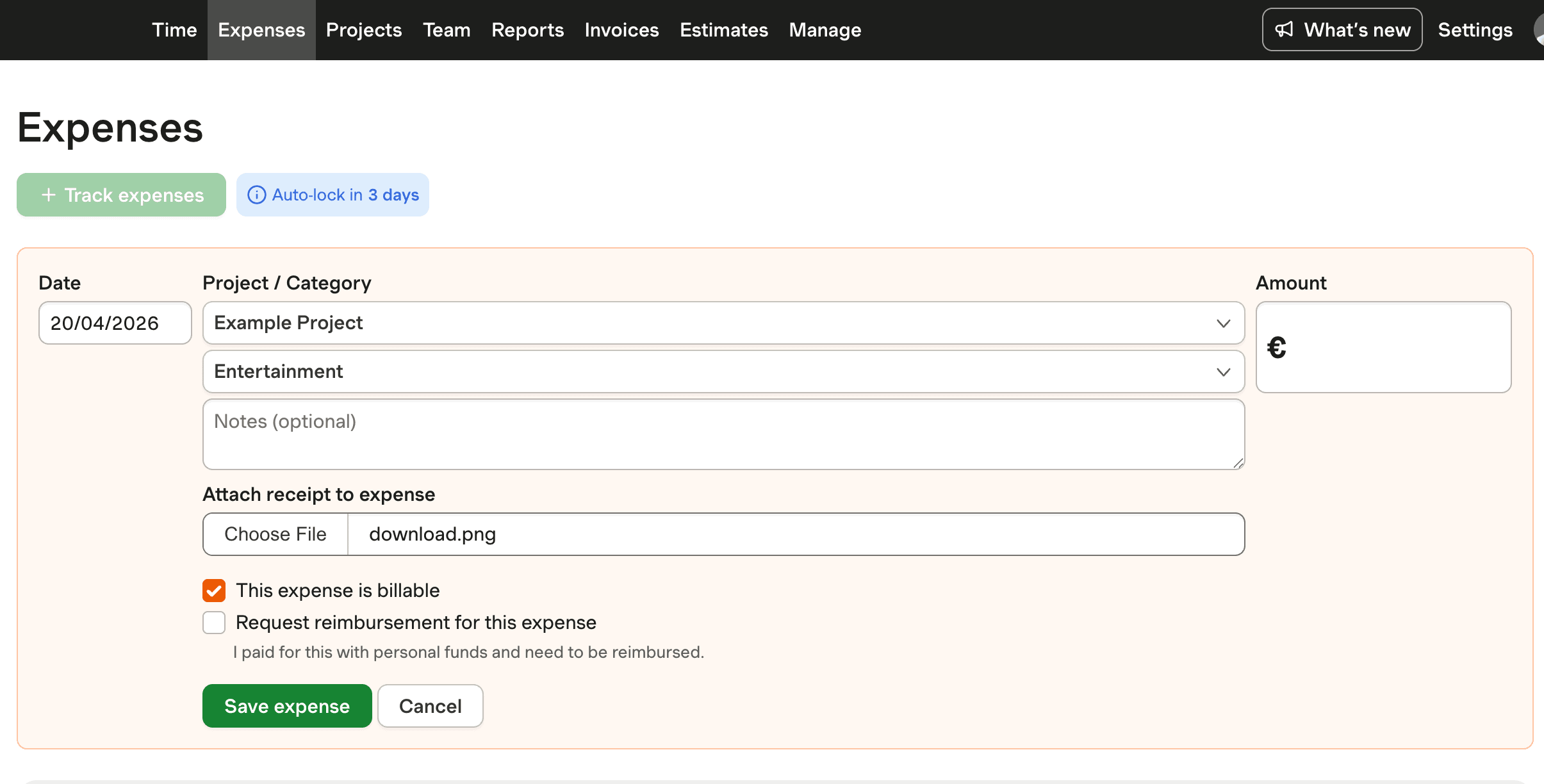
Harvest offers a straightforward expense tracking system perfect for small teams looking to manage project expenses manually. While Harvest does not automate travel allowance policies or integrate with external systems, it provides a user-friendly platform to track expenses efficiently. This is particularly beneficial for teams that do not require complex travel allowance structures but need an efficient way to document and manage expenses.

With Harvest, teams can manually enter expenses, ensuring accurate tracking and reporting. This simplicity allows businesses to focus on core operations while maintaining financial oversight. Although Harvest does not support per diem rates or IRS guidelines, its manual tracking capabilities are ideal for companies prioritizing direct expense management.

Streamline Travel Allowances with Harvest

See how Harvest simplifies expense tracking for travel allowances, making it easy for teams to manage project expenses efficiently.

Harvest expense tracking system for travel allowances

Travel Allowance for Employees FAQs

  • Travel allowances are funds provided to employees to cover expenses incurred during business travel. These typically include transportation, lodging, and meals. For example, international trips can cost up to $2,600, highlighting the need for adequate financial support.

  • Travel allowances are calculated using different methods, such as the "actual cost" for major expenses and "per diem" rates for daily incidentals. In 2026, the IRS set mileage rates at 72.5 cents per mile for business travel.

  • Travel allowances generally cover transportation, lodging, meals, and incidentals. Companies may use a hybrid approach, reimbursing actual costs for major expenses and per diem rates for meals and other daily costs.

  • The IRS guidelines require travel reimbursements to be part of an "accountable plan" to be non-taxable. This includes a business purpose, receipt substantiation, and timely submissions, typically within 60 days.

  • Harvest provides a straightforward expense tracking system, ideal for small teams. It allows manual entry of expenses, supporting efficient management without complex travel allowance policies.

  • Clear travel allowance policies help define eligible expenses, set spending limits, and streamline approval processes. This clarity ensures compliance and efficient expense management.

  • Technology, such as digital expense tracking tools, automates receipt capture and mileage logging. This reduces administrative overhead and enhances policy compliance and accuracy.

  • Common mistakes include relying on manual reporting, unclear policies, and accepting late submissions. These can be avoided by implementing digital tracking and enforcing strict submission deadlines.