
Harvest
Expenses
Sign up

Mileage Claims for Employees

Harvest offers a straightforward solution for tracking mileage expenses, ideal for small teams needing manual entry and customizable rates.

  • Attach receipts to projects & tasks
  • Turn tracked expenses into client invoices
  • Free 30-day trial, no credit card needed

or drag & drop • Images and PDFs, max 10 MB

Understanding Mileage Claims for Employees

Mileage claims for employees are essential for businesses that require employees to use personal vehicles for work-related tasks. This process involves reimbursing employees for their travel expenses, ensuring both compliance with regulations and fair compensation. The IRS has set the standard mileage rate at 72.5 cents per mile for 2026, reflecting rising vehicle operation costs such as fuel and maintenance. Businesses must adhere to these rates to avoid legal issues and maintain employee satisfaction.

Manual mileage logs often result in inflated reports, with studies showing up to 25% overreporting due to human error. Adopting automated mileage tracking can reduce reported mileage by approximately 25%, leading to significant cost savings. For instance, a company saved $382,000 annually by moving to a Fixed and Variable Rate (FAVR) system. However, Harvest provides a simple way to manually track mileage expenses with customizable rates, which is ideal for small teams managing project-based expenses.
Creating a Mileage Reimbursement Policy

A well-defined mileage reimbursement policy is crucial for ensuring compliance and avoiding disputes. Such policies should clearly outline the reimbursement process, applicable rates, and documentation requirements. While Harvest doesn't offer automated policy creation, it supports manual entry of mileage, allowing businesses to apply their policies consistently.

Regularly reviewing and updating your policy to reflect current IRS rates and economic conditions is advisable. This proactive approach helps businesses stay compliant and ensures fair reimbursement. Integrating Harvest's mileage tracking with other business systems like payroll and accounting can streamline operations and provide a comprehensive audit trail, though users must manually ensure compliance with state-specific laws.

Leveraging Technology for Accurate Mileage Tracking

Technology plays a pivotal role in accurate mileage tracking, transforming it from a labor-intensive task into an automated process. Automated systems using GPS technology can eliminate human errors, providing precise mileage measurements and route validation. While Harvest requires manual entry, it can be integrated with other tools to enhance accuracy and compliance.

Manual mileage tracking methods, such as spreadsheets, often lead to inaccuracies and inefficiencies. Embracing digital solutions can boost productivity by reducing labor costs by almost 12% and fuel consumption by 10%. Although Harvest lacks automated GPS tracking, it offers a simple interface for manual entry, suitable for small teams managing project-based expenses.

Ensuring Compliance with Mileage Reimbursement Laws

Compliance with mileage reimbursement laws is vital for businesses to avoid legal penalties and ensure fair compensation. The IRS requires meticulous documentation of each trip's business purpose, date, and destination to qualify for tax-free reimbursements. Harvest facilitates the manual entry of mileage but does not provide automated compliance with IRS or state-specific laws.

Employers should maintain detailed records to support tax compliance and avoid penalties. While Harvest does not differentiate between business and commuting mileage, clear internal policies can guide employees in accurate reporting. Regular policy reviews and employee education on reimbursement processes are recommended to foster compliance and accountability.

Boosting Business Efficiency with Mileage Tracking

Effective mileage tracking can significantly enhance business efficiency and employee satisfaction. By ensuring accurate mileage reporting, businesses can optimize budgets and improve operational efficiency. Harvest supports manual tracking, allowing small teams to manage expenses easily.

Automated mileage tracking solutions have demonstrated measurable benefits, such as a 10% reduction in fuel consumption and operational costs. While Harvest does not support automated tracking, its user-friendly interface facilitates easy manual entry, making it a practical choice for businesses seeking a straightforward solution to manage project-based expenses.

Mileage Claims with Harvest

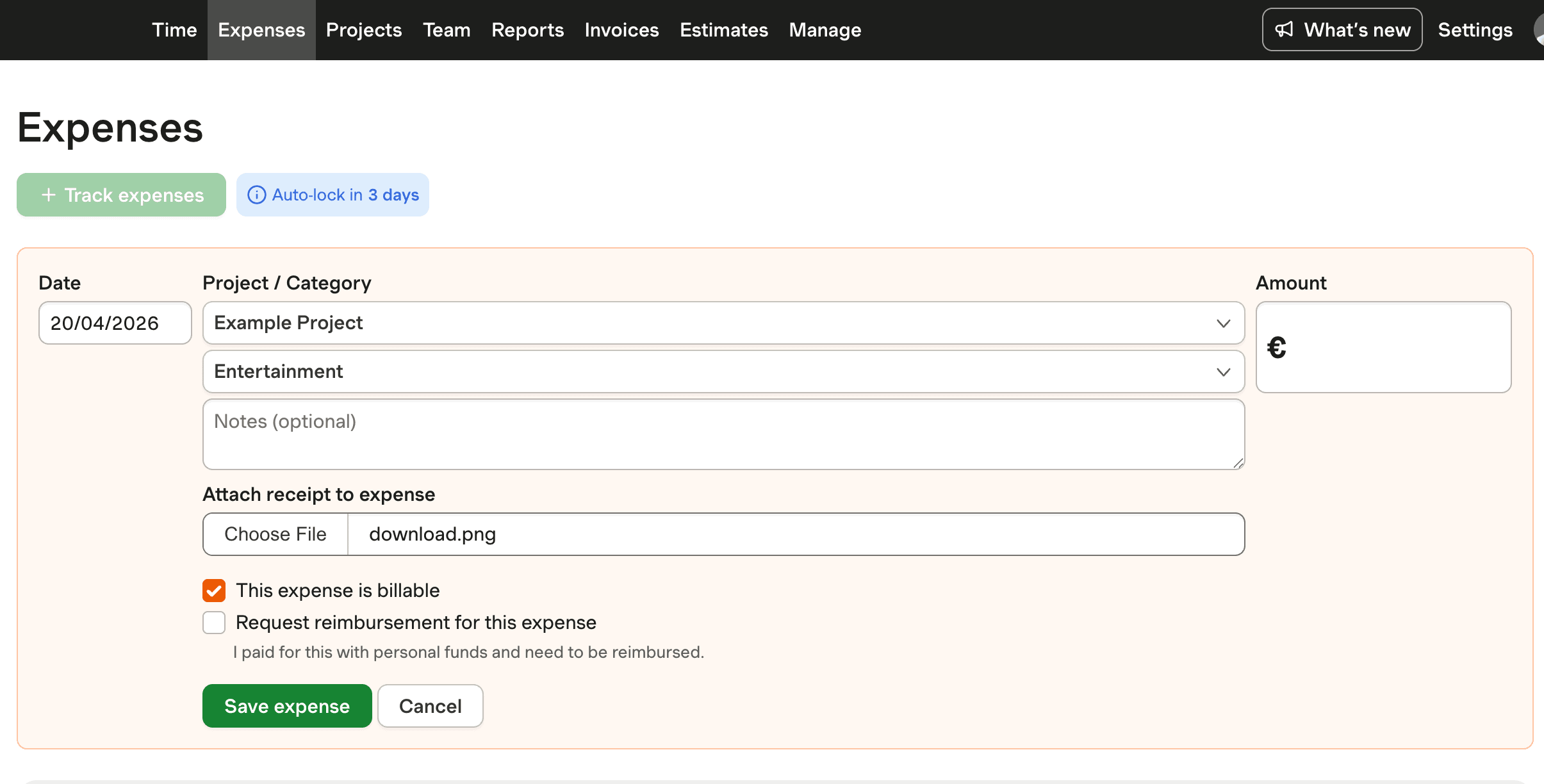
See how Harvest simplifies tracking mileage claims for employees, offering easy manual entry and customizable rates for small teams.

Screenshot of Harvest's mileage tracking feature for employee claims.

Mileage Claims for Employees FAQs

  • Employees typically claim mileage by documenting their business trips, including the date, distance, and purpose. They submit this information to their employer for reimbursement. Using a tool like Harvest, employees can manually track and enter mileage details to ensure accurate claims.

  • The IRS has set the standard mileage reimbursement rate at 72.5 cents per mile for business purposes in 2026. This rate reflects the cost of operating a vehicle, including fuel and maintenance expenses.

  • Businesses can ensure compliance by establishing clear mileage reimbursement policies, regularly updating them to reflect IRS rates, and maintaining accurate records. Harvest allows manual entry of mileage, which can be integrated with policy guidelines to help maintain compliance.

  • Automated mileage tracking systems provide precise data, reduce human error, and can lead to significant cost savings by preventing overreporting. Although Harvest requires manual entry, it supports customizable rates and can be integrated with other systems for enhanced accuracy.

  • State-specific laws may require reimbursement rates that exceed federal guidelines. Businesses must ensure compliance by understanding these laws, as Harvest does not handle state-specific regulations. Manual policy integration is necessary.

  • Mileage reimbursement policies should be reviewed regularly, at least annually, to align with current IRS rates and economic factors affecting vehicle costs. Ensuring policies are up-to-date helps maintain compliance and fair reimbursement.

  • Trips that qualify for mileage reimbursement are those undertaken for business purposes, such as client meetings or site visits. Harvest allows manual entry for these trips, but users should clearly differentiate them from personal travel.