
Harvest
Contracts
Sign up

Contract Template

Harvest supports businesses in managing time tracking and invoicing, providing tools that complement the use of contract templates by streamlining related processes.

Start from a template

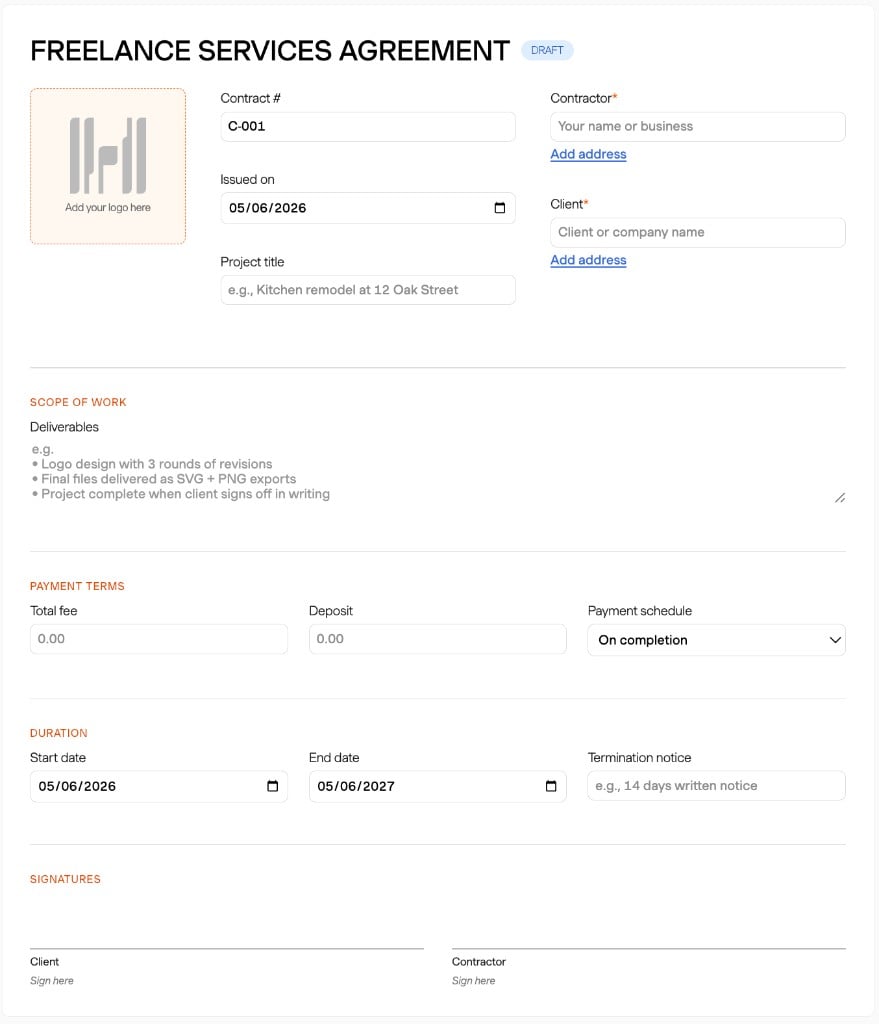
AGREEMENT DRAFT

Add your logo here

Scope of work

Payment terms

Duration

Signatures

Client

Sign here

Contractor

Sign here

Get paid via:
Credit card / Debit card
ACH
Wire transfer

Customize contract

Appearance

Add a logo
Show contract title

Contract settings

Include payment terms Total fee, deposit, and schedule
Include termination clause Notice required to end the contract
Include signature blocks Both parties sign at the bottom

Understanding Contract Templates

Contract templates are essential tools for businesses, helping streamline the process of drafting agreements while reducing potential errors and legal risks. With poor agreement management costing the global economy approximately $2 trillion annually, the importance of standardized contract templates cannot be overstated. These templates offer a structured format that aids in faster creation, reduces negotiation cycles, and enhances risk management. For instance, organizations using standardized templates experience improved stakeholder satisfaction and a 40% reduction in errors.

Despite their utility, contract templates are not a one-size-fits-all solution. They require customization to address specific project requirements and local legal considerations. Experts emphasize that while templates serve as an excellent starting point, they must be tailored to the "commercial core" of each deal to effectively mitigate risks. This involves clearly defining scope boundaries, payment triggers, and ensuring both parties have a mutual understanding of the contract terms.

Customizing Your Contract Template

To maximize the effectiveness of a contract template, customization is key. Begin by identifying the specific needs of your agreement. Are you drafting a service contract, an NDA, or a sales agreement? Each type requires different core language and variables. For example, placeholders for client names, dates, and prices should be clearly marked for easy customization. Research shows that 84% of legal professionals anticipate globally standardized templates becoming the norm, underscoring the need for personalized adjustments.

Once the core language is drafted, a legal review is crucial to ensure compliance with current laws and regulations. This step is vital in avoiding potential legal pitfalls and ensuring the contract is enforceable. After legal review, storing your template in a searchable system with controlled editing permissions can streamline future use, making it easier to adapt as your business needs evolve.

Legal Considerations for Contract Templates

Legal considerations are paramount when using contract templates. Recent changes, such as the FTC's rule prohibiting most noncompete clauses, highlight the need for ongoing legal oversight. Contracts should explicitly state which state's laws govern the agreement and include dispute resolution clauses to mitigate risks. Neglecting these aspects can lead to contracts being deemed invalid, exposing parties to legal liabilities.

Additionally, ensuring compliance with industry-specific regulations, such as those in healthcare or finance, is crucial. Poor contract management can cost companies an average of 9% of their annual revenue, making it imperative to integrate compliance checks within the contract drafting process. This not only safeguards against legal risks but also enhances the overall efficacy of the contract template.

Practical Tips for Using Contract Templates

For effective use of contract templates, follow a structured process. Start by identifying the most common contract types and draft core language using plain terms. Clearly document all agreed-upon products or services, detailing descriptions, quantities, and payment terms. Avoid vague language like "reasonable efforts" and instead specify clear timeframes or metrics.

Beyond drafting, integrating templates with other business systems can enhance efficiency. For instance, linking templates with CRM systems can automate the population of customer information, while connecting with e-signature platforms can streamline contract execution. By storing templates in a centralized repository, businesses can maintain version control and ensure easy access for future use, further reducing legal and operational risks.

Streamline Contracts with Harvest

See how Harvest complements contract templates with tools for time tracking and invoicing, enhancing your business processes.

Contract template screenshot for Harvest.

Contract Template FAQs

  • A contract template is a pre-formatted document that outlines the terms and conditions of an agreement between parties. It provides a structured framework that can be customized to fit specific needs, such as including placeholders for names, dates, and other variables.

  • Contract templates save time and reduce errors by providing a standardized framework for agreements. They help ensure consistency and compliance, reducing the need for extensive legal review and speeding up the contract creation process.

  • To customize a contract template, first identify the specific details needed for your agreement, such as names, dates, and prices. Use placeholders in the template to mark these areas and ensure that the language reflects the specific terms of your deal.

  • While contract templates provide a solid starting point, their enforceability depends on proper customization and compliance with applicable laws. It's recommended to have a legal professional review your template to ensure it meets all legal requirements.

  • Common types include service agreements, NDAs, sales contracts, and employment agreements. Each type serves different business needs, from protecting confidential information to outlining employment terms.

  • Regular updates are crucial to ensure compliance with changing laws and regulations. Reviewing templates annually or whenever significant legal changes occur can help maintain their effectiveness and legality.

  • While Harvest is not a contract management tool, it complements the use of contracts by providing solutions for time tracking and invoicing, which are often related to contractual obligations and project management.