
Harvest
Contracts
Sign up

Contract Template for Drywall Contractors

Managing project budgets and invoicing efficiently is crucial for drywall contractors. Harvest helps streamline these tasks, even if it doesn't provide specific contract templates.

Start from a template

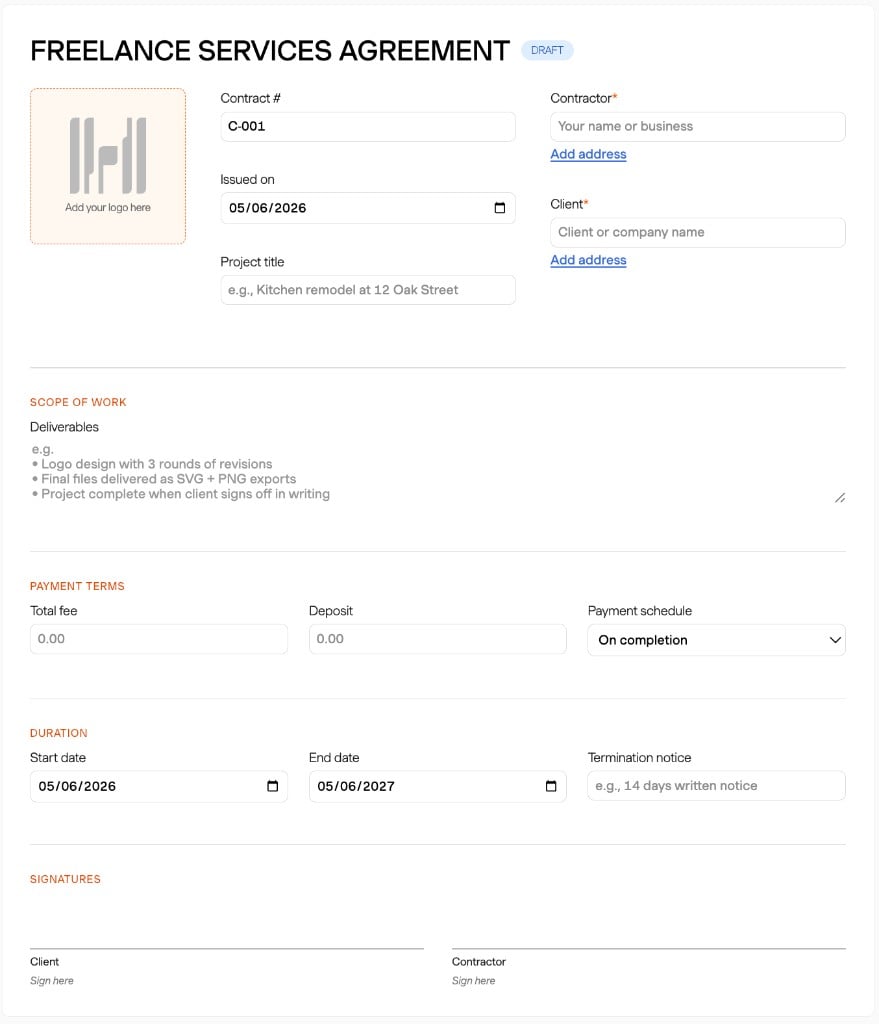
AGREEMENT DRAFT

Add your logo here

Scope of work

Payment terms

Duration

Signatures

Client

Sign here

Contractor

Sign here

Get paid via:
Credit card / Debit card
ACH
Wire transfer

Customize contract

Appearance

Add a logo
Show contract title

Contract settings

Include payment terms Total fee, deposit, and schedule
Include termination clause Notice required to end the contract
Include signature blocks Both parties sign at the bottom

Essential Components of a Drywall Contract

A well-structured drywall contract should include several critical components to ensure clarity and protect all parties involved. First, a clear scope of work is essential, detailing specific tasks such as drywall hanging, finishing, and any special texturing or repair services. This section should reference drawing numbers and explicitly list any exclusions. Properly defining the scope helps prevent disputes and misinterpretations down the line.

Next, payment terms must be clearly articulated. This includes specifying whether payments will be lump sums, based on project milestones, or cost-plus with an agreed markup. It's crucial to outline when and how payments will be made to avoid cash flow issues. Contracts should also include legal provisions such as insurance requirements, liability clauses, and compliance with local regulations. While Harvest doesn't provide contract templates, it supports payment structures that accommodate progress payments, helping drywall contractors manage finances efficiently.

Adapting Standardized Contracts for Drywall Services

Standardized contract forms provide a solid foundation for drywall contractors, minimizing the risk of missing important clauses and legal requirements. However, they often require adaptation to fit the specific needs of a drywall project. For example, including details about the types of drywall materials used—such as moisture-resistant or fire-resistant drywall—can be crucial, though Harvest supports tracking these materials as expenses and invoice line items.

Experts recommend tailoring contracts to reflect unique project requirements. This includes specifying quality standards for installation and finishing, which Harvest does not manage, but it can track time and expenses associated with these tasks. Additionally, incorporating change management clauses can help address unforeseen issues effectively, a practice that is supported by Harvest's ability to monitor project budgets and expenses.

Common Pitfalls in Drywall Contract Drafting

Drafting a drywall contract without careful attention can lead to costly mistakes. One common pitfall is a vague scope of work, which causes more disputes than any other factor. It's essential to use multiple methods to define the scope, referencing specific drawing numbers and listing exclusions explicitly. This clarity can prevent misunderstandings and disagreements during the project.

Another pitfall is failing to update contracts as the project evolves. As construction progresses, unforeseen changes are inevitable. Regularly reviewing and adjusting contracts helps manage expectations and responsibilities. Although Harvest does not directly handle contract updates, its time tracking and expense management tools allow contractors to keep project finances aligned with the latest developments.

Leveraging Technology for Contract Management

Integrating technology into contract management can streamline operations for drywall contractors. Once a personalized contract template is created, it can be easily adapted for new projects. Utilizing digital tools for contract management, such as field service management software, can enhance efficiency by quickly generating estimates and bids.

While Harvest does not provide contract templates, it offers valuable support in managing project budgets and tracking time and expenses. This can lead to more accurate invoicing and better financial oversight, reducing the risk of disputes and payment delays. By leveraging Harvest's capabilities alongside digital contract management tools, drywall contractors can enhance their overall project management workflow.

Harvest for Drywall Contractors

Explore how Harvest supports drywall contractors in managing budgets and invoicing, enhancing project efficiency.

Harvest interface showing budgeting tools for drywall contractors.

Contract Template for Drywall Contractors FAQs

  • A drywall contract should clearly define the scope of work, payment terms, legal provisions, and quality standards. Including specifics like drawing numbers and exclusions helps ensure clarity and mitigate disputes.

  • Yes, legal requirements can vary by state. It's crucial to include insurance clauses, compliance with local regulations, and clearly defined payment terms to avoid legal issues.

  • To customize a template, adjust the scope of work to reflect project-specific details, such as the types of materials used and any unique specifications. Include specific payment terms and legal clauses relevant to your project.

  • Common mistakes include vague scopes of work, outdated contracts, and unclear payment terms. Clear definitions and regular updates can help avoid these issues.

  • Technology, such as field service management software, can streamline contract management by allowing quick adaptations of templates and efficient integration with financial tools like Harvest for budget tracking.

  • Harvest helps drywall contractors manage project budgets, track time, and invoice clients efficiently. While it doesn't provide contract templates, it supports payment structures and financial oversight.

  • Payment terms should specify when and how payments will be made. Options include lump sums, milestone-based payments, or cost-plus arrangements with agreed markups.