
Harvest
Contracts
Sign up

Contract Template in Filipino

Harvest helps contractors manage time, expenses, and invoicing but doesn't offer legal templates. Focus on business efficiency with Harvest.

Start from a template

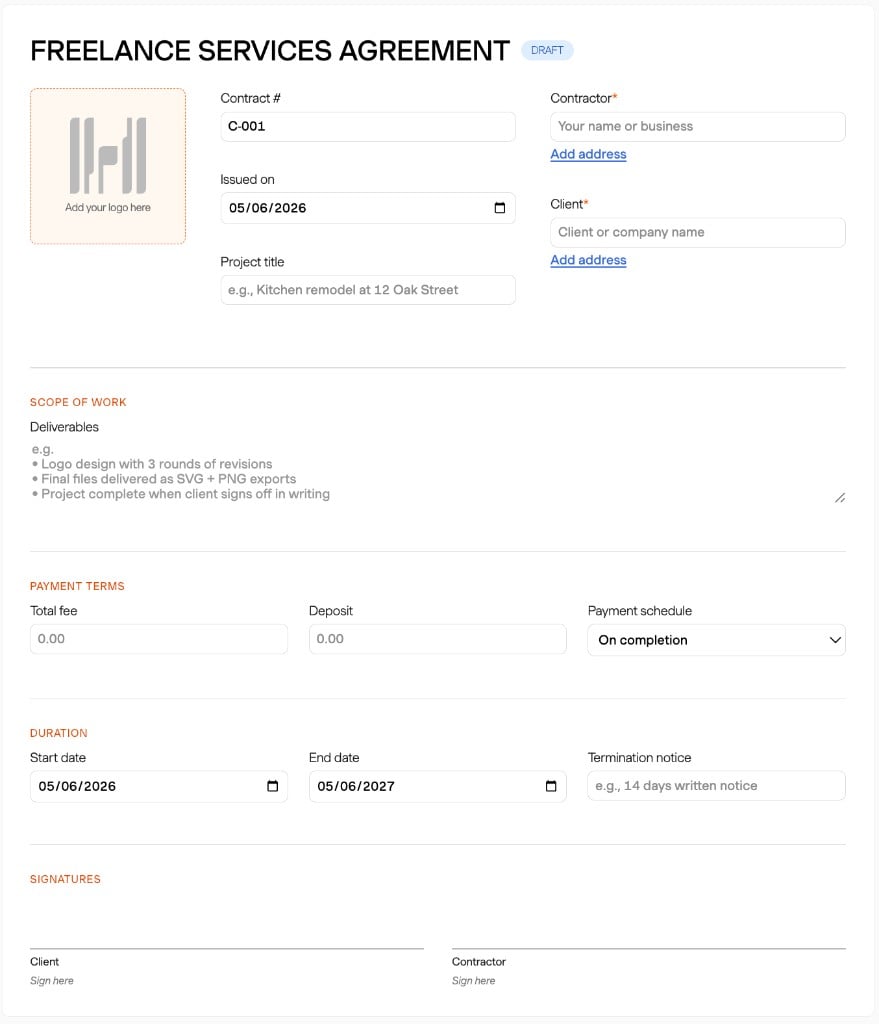
AGREEMENT DRAFT

Add your logo here

Scope of work

Payment terms

Duration

Signatures

Client

Sign here

Contractor

Sign here

Get paid via:
Credit card / Debit card
ACH
Wire transfer

Customize contract

Appearance

Add a logo
Show contract title

Contract settings

Include payment terms Total fee, deposit, and schedule
Include termination clause Notice required to end the contract
Include signature blocks Both parties sign at the bottom

Understanding Contract Templates in Filipino

When drafting a contract template in Filipino, it's crucial to understand the essential elements that make a contract legally enforceable in the Philippines. According to the Civil Code of the Philippines, a valid contract must have three elements: consent of the parties, a determinate object, and a lawful cause. Without these, even the most well-drafted document may be rendered useless in legal terms. Furthermore, while Filipino (Tagalog) is the national language, most contracts are often drafted in English due to its prevalence in legal and business contexts.

Despite this trend, there is a growing need for Filipino-language contracts, especially for local transactions and agreements involving freelancers and small businesses. The recent legislative efforts, such as Senate Bill Nos. 2107, 2006, and 1998, emphasize the importance of written contracts to protect freelancers from issues like late payments. It's essential to ensure contracts are thorough and clearly outline compensation, scope, and breach conditions to avoid disputes.

Key Clauses to Include in a Filipino Contract

To ensure that a contract template in Filipino is robust and legally sound, it's vital to include key clauses that address common contract risks. These include force majeure clauses for unforeseen events, termination clauses specifying conditions for ending the contract, and dispute resolution mechanisms such as arbitration or litigation. Additionally, confidentiality clauses are crucial to protect sensitive information.

Philippine law allows for penal clauses, which stipulate a penalty for non-compliance. However, it's important to draft these clauses carefully, as courts can reduce penalties if deemed excessive. Expert advice suggests avoiding excessive legal jargon and ensuring that obligations are clearly defined to prevent multiple interpretations. Customization is key; generic templates often lack the nuance needed to comply with local laws and protect specific business needs.

The Importance of Customization and Legal Review

While contract templates provide a useful starting point, they must be customized to meet the specific needs of the parties involved. Relying solely on generic templates can lead to significant issues, as they may not comply with Philippine laws or include necessary clauses. For example, misclassification of workers as freelancers rather than employees can lead to legal complications under Philippine labor laws.

Customization should include defining critical terms and specific obligations for each party. It's also advisable to have contracts reviewed by a legal professional to identify potential issues and ensure compliance with local regulations. Legal experts emphasize that written contracts serve as essential documentary evidence, providing clarity and protecting against disputes. A thorough review and proofreading can prevent costly mistakes and ensure that all parties are on the same page.

Cultural Considerations in Contract Drafting

Historically, there has been a cultural hesitation in the Philippines towards formal written contracts, especially among friends and family. Many Filipinos rely on verbal agreements, believing that "our word is our contract." However, this approach can lead to challenges in legal disputes, as proving verbal agreements in court can be difficult.

To overcome these cultural barriers, it's important to frame the presentation of a written contract as a professional step that ensures clarity and protects all parties involved. By explaining the benefits of having a written document, such as clear evidence of terms and conditions, you can reduce the embarrassment some may feel when formalizing an agreement. This approach can help prevent misunderstandings and ensure that contracts are enforceable and mutually understood.

How Harvest Supports Contractors

While Harvest does not provide contract templates tailored for Filipino laws, it offers valuable tools for contractors to manage essential aspects of their business. Harvest supports contractors by providing comprehensive solutions for time tracking, invoicing, and expense management, ensuring that business operations run smoothly and efficiently.

With Harvest, contractors can track billable hours accurately, streamline invoicing processes, and manage expenses effectively. This focus on operational efficiency helps contractors dedicate more time to their core activities, reducing administrative burdens. Although Harvest does not handle legal or tax-specific matters, its features aid in maintaining clear and organized financial records, supporting better business management.

Explore Harvest for Contractors

See how Harvest aids contractors with time tracking, expenses, and invoicing, complementing contract templates in Filipino.

Screenshot of Harvest dashboard showing contract management tools.

Contract Template in Filipino FAQs

  • A valid contract in the Philippines requires consent of the parties, a determinate object, and a lawful cause. These elements ensure the contract is legally enforceable.

  • Despite Filipino being an official language, English is often used in contracts due to its prevalence in legal and business contexts, ensuring clarity and consistency.

  • Common pitfalls include using ambiguous language and relying on generic templates that may not comply with local laws. Customization and legal review are essential.

  • Cultural reluctance towards formal contracts can lead to reliance on verbal agreements, which are harder to enforce. Framing contracts as professional tools can help.

  • Include force majeure, termination, dispute resolution, and confidentiality clauses. These protect parties and outline clear terms for contract fulfillment.

  • Harvest aids contractors by providing tools for time tracking, invoicing, and expense management, streamlining business operations and improving efficiency.

  • Legal review ensures contracts comply with local laws, identifies potential issues, and verifies that all terms are clear, reducing the risk of disputes.

  • Customization ensures the contract meets specific needs, complies with local regulations, and includes all necessary clauses, reducing legal risks.