
Harvest
Contracts
Sign up

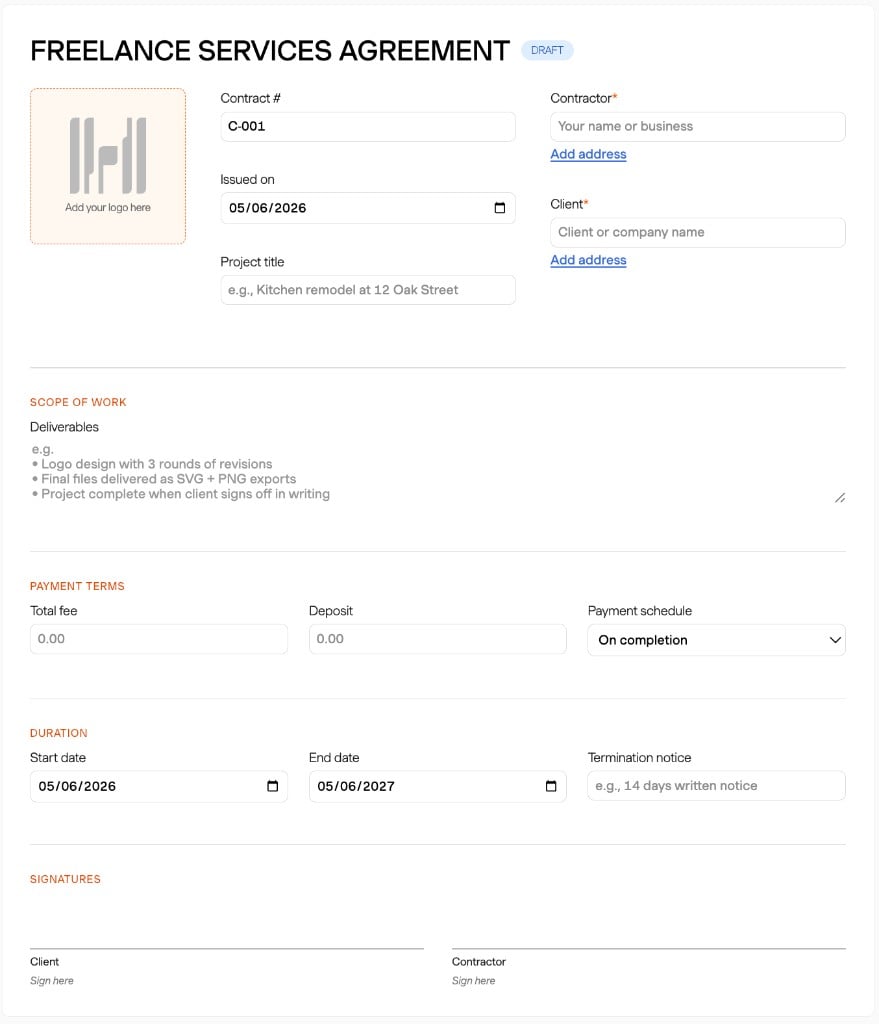
Freelance Contract Template in Filipino

Harvest empowers Filipino freelancers by streamlining time tracking and expense management, critical once a comprehensive freelance contract is in place.

Start from a template

AGREEMENT DRAFT

Add your logo here

Scope of work

Payment terms

Duration

Signatures

Client

Sign here

Contractor

Sign here

Get paid via:
Credit card / Debit card
ACH
Wire transfer

Customize contract

Appearance

Add a logo
Show contract title

Contract settings

Include payment terms Total fee, deposit, and schedule
Include termination clause Notice required to end the contract
Include signature blocks Both parties sign at the bottom

Understanding the Importance of Freelance Contracts in the Philippines

Freelance contracts are essential for Filipino freelancers to protect their interests and ensure clear communication with clients. As the gig economy grows rapidly—reaching an estimated 1.5 million workers in the Philippines—the need for formal agreements becomes increasingly critical. Unfortunately, many freelancers operate without contracts, leading to disputes and financial losses. Legislative efforts, like the proposed Freelance Workers Protection Act, aim to mandate written contracts, highlighting their importance in avoiding misunderstandings and ensuring transparency.

Without a formal contract, Filipino freelancers face challenges such as non-payment, project delays, and scope creep, where clients demand additional work without corresponding compensation. These issues are common due to the reliance on informal agreements. By establishing a comprehensive contract, freelancers can define the scope of work, payment terms, and other critical elements, protecting themselves from such disputes. Harvest, while not offering legal advice, supports freelancers by managing time and expenses to ensure accurate billing once contracts are established.

Essential Clauses for a Filipino Freelance Contract

Crafting a freelance contract tailored to the Filipino context involves understanding specific clauses that safeguard both parties. Essential elements include a clear definition of the scope of work, payment terms, and intellectual property rights. These clauses help avoid common disputes related to deliverables and payments. The contract should also define the responsibilities of each party, ensuring both freelancer and client are on the same page.

Freelancers should pay attention to intellectual property (IP) clauses to ensure ownership of work products transfers to the client, as IP rights typically default to the contractor. Additionally, including confidentiality and non-disclosure agreements protects sensitive information. While Harvest does not provide specific contract templates or legal advice, it can assist freelancers in managing the financial aspects of their projects, such as tracking billable hours and expenses, ensuring they are adequately compensated for their time and efforts.

Customizing Your Freelance Contract for Filipino Clients

Customizing a freelance contract for Filipino clients involves tailoring it to meet local regulations and the specific needs of both parties. It is crucial to include clauses that align with Philippine laws, such as those regarding independent contractor status and tax obligations. Freelancers should be registered with the Bureau of Internal Revenue (BIR) and consider the tax implications of their agreements, such as choosing between a graduated income tax rate or an 8% flat rate for non-VAT taxpayers.

To prevent scope creep, a detailed "What's Included" and "Not Included" section should be part of the contract. This clarity helps manage client expectations and protects the freelancer’s time. While Harvest cannot customize contracts or offer legal advice, it provides valuable tools for time tracking and expense management, which are critical once the contract is in place. By using Harvest, freelancers can ensure accurate billing and maintain a professional relationship with their clients.

Practical Tips for Filipino Freelancers Using Contracts

For Filipino freelancers, having a well-drafted contract is not just a formality but a professional safety net. Experts recommend setting aside 30-35% of income for tax liabilities, as inadequate tax planning is a frequent and costly mistake. It's also advisable to include a partial upfront payment clause—at least 30%—to secure commitment from clients and avoid payment issues down the line.

Freelancers should incorporate late fees in payment terms to encourage timely payments and maintain cash flow. Additionally, defining deliverables rather than dictating daily tasks in the contract helps avoid misclassification as an employee, which can lead to legal complications. While Harvest does not provide contract templates or specific tax guidance, it can help freelancers track their billable hours and expenses, ensuring they get paid accurately and on time.

Simplify Freelance Work with Harvest

See how Harvest helps Filipino freelancers manage time and expenses once contracts are in place. Streamline your workflow today.

Screenshot of Harvest's contract management tools for Filipino freelancers.

Freelance Contract Template in Filipino FAQs

  • A freelance contract for Filipino freelancers should include identification of parties, scope of work, payment terms, intellectual property rights, confidentiality agreements, and dispute resolution mechanisms. These elements ensure clear expectations and protection for both parties.

  • Yes, Philippine law requires freelancers to register with the Bureau of Internal Revenue and obtain a TIN. Contracts should also distinguish freelancers from employees, avoiding misclassification. Proposed laws like the Freelance Workers Protection Act may introduce additional requirements.

  • Customize your contract by including specific clauses that reflect your services, such as detailed deliverables and payment terms. Ensure it complies with local laws by consulting legal counsel, especially concerning taxes and independent contractor status.

  • Freelancers must choose between a graduated income tax rate or an 8% flat rate if their gross receipts do not exceed PHP 3 million annually. They must also register with the BIR and maintain accurate records of earnings and expenses.

  • Essential clauses for protection include scope of work, payment terms with upfront deposits, intellectual property rights, confidentiality agreements, and dispute resolution mechanisms. These help prevent common issues like scope creep and non-payment.

  • Payment disputes can be minimized by including clear terms in the contract, such as partial upfront payments and late fees. Consulting with legal professionals can also help establish effective dispute resolution clauses.