
Harvest
Contracts
Sign up

Nda Template in Romanian

Businesses in Romania need robust NDAs to protect confidential information. Harvest doesn't provide NDA templates, but it supports effective time tracking and invoicing workflows.

Start from a template

AGREEMENT DRAFT

Add your logo here

Scope of work

Payment terms

Duration

Signatures

Client

Sign here

Contractor

Sign here

Get paid via:
Credit card / Debit card
ACH
Wire transfer

Customize contract

Appearance

Add a logo
Show contract title

Contract settings

Include payment terms Total fee, deposit, and schedule
Include termination clause Notice required to end the contract
Include signature blocks Both parties sign at the bottom

Understanding NDAs in Romania

Non-Disclosure Agreements (NDAs) are critical tools for protecting sensitive business information in Romania's expanding business environment. With the country's growing international collaborations, NDAs ensure that valuable information remains confidential, safeguarding companies from potential data breaches. The implementation of the General Data Protection Regulation (GDPR) has further complicated confidentiality practices, requiring businesses to detail data handling procedures and specify how information will be destroyed or retained. For instance, Romanian law mandates the destruction of confidential information within 30 days after an NDA's termination and requires contractual data to be retained for five years, with billing details kept for a decade.

In Romania, NDAs can be executed digitally, making use of electronic signatures to enhance efficiency and compliance. This shift towards digital execution not only simplifies the process but also enhances document integrity. However, businesses must ensure that their NDAs are drafted to comply with Romanian Civil Code and GDPR, including clearly defining the scope and duration of confidentiality, intellectual property safeguards, and penalties for breaches. Failure to meet these legal standards can result in significant administrative fines, emphasizing the importance of thorough legal review and compliance.

Key Components of an Effective Romanian NDA

For an NDA to be enforceable in Romania, it must include several essential components. Firstly, it should clearly identify the contracting parties and provide a precise definition of what constitutes confidential information. This definition should include specific examples and categories, ensuring there is no ambiguity about what information is protected. Explicitly excluding public or independently developed information helps prevent enforceability issues.

Additionally, the NDA must specify the scope and duration of confidentiality. While commercial data is typically protected for two years, personal information is safeguarded indefinitely under Romanian law. Intellectual property safeguards and jurisdiction clauses are also crucial, with many NDAs opting for Romanian law and Bucharest courts as the governing legal framework. Including penalties for breaches, such as liquidated damages, can streamline enforcement by removing the need to prove specific damage.

Drafting NDAs: Avoiding Common Pitfalls

Drafting an effective NDA in Romania involves overcoming several common challenges. Businesses often fall into the trap of using overly broad definitions of confidential information, which can lead to unenforceability. To avoid this, NDAs should contain clear, concise language and specific definitions. Additionally, neglecting digital data handling procedures or failing to address cross-border confidentiality issues can weaken an NDA's efficacy.

To mitigate these risks, organizations are advised to implement internal preventive measures such as access controls, data encryption, and secure document-sharing platforms. Regular updates and reviews of NDAs are crucial to ensure compliance with evolving laws, such as updates to the Unfair Competition Law. By integrating these practices, companies can better protect their intellectual property and reduce the risk of confidentiality breaches.

Practical Steps for Managing NDAs

Managing NDAs effectively requires a structured approach. Begin by preparing a well-drafted document that clearly defines confidential information, duration, and legal consequences. Upload the NDA to a legally compliant eSignature platform, allowing for the addition of signers and assignment of signature fields. Verifying signer identity through methods like multi-factor authentication can add an extra layer of security.

Before sending the NDA, thoroughly review all terms to ensure accuracy and compliance. Once recipients have signed, finalize the agreement electronically and securely store a tamper-proof digital record for future reference. These steps not only streamline the NDA process but also ensure that all confidentiality obligations are clearly understood and legally enforceable.

Explore NDA Templates with Harvest

Harvest supports your business by streamlining time tracking and invoicing, while you focus on drafting robust NDAs.

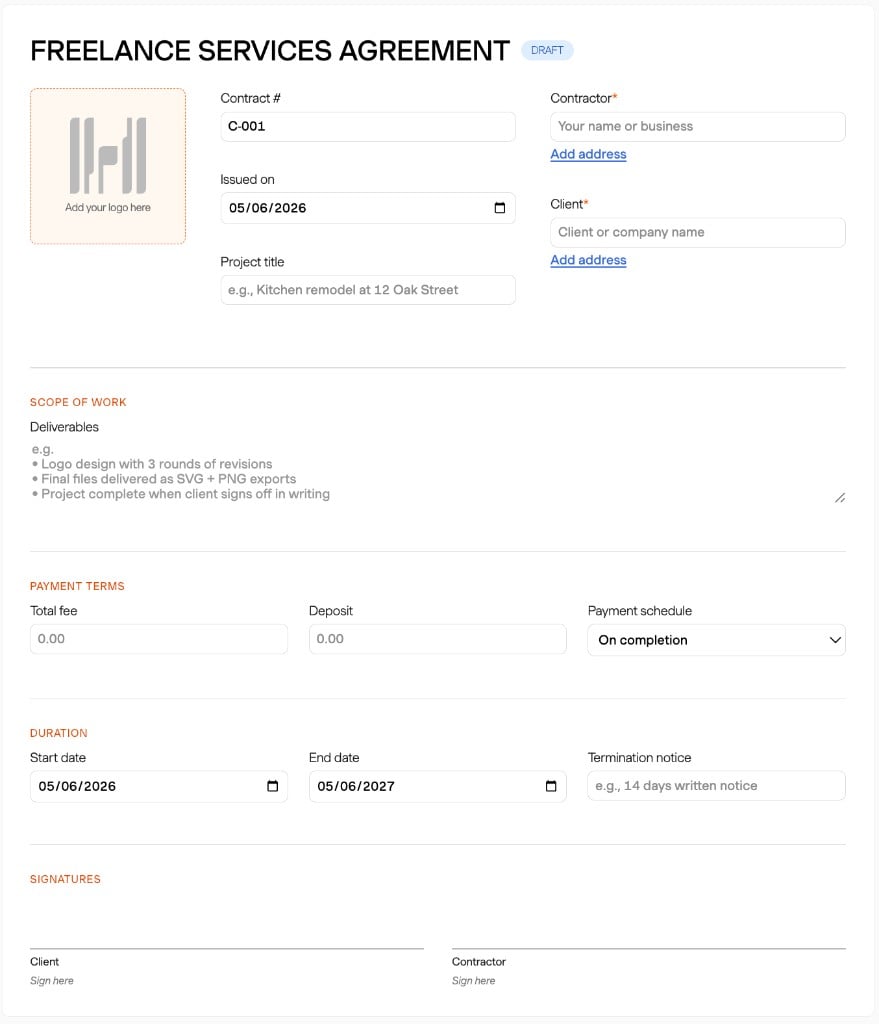
Screenshot of a Romanian NDA template with key legal components highlighted.

Nda Template in Romanian FAQs

  • In Romania, an NDA must comply with the Romanian Civil Code and GDPR. It should include clear definitions of confidential information, the scope and duration of confidentiality, and penalties for breaches. Electronic signatures are valid for NDAs.

  • Yes, NDAs in Romania can be signed electronically using a Qualified Electronic Signature (QES) or Advanced Electronic Signature (AdES), provided the document does not require an authentic notarial act.

  • A Romanian NDA should include identification of parties, definition of confidential information, confidentiality duration, intellectual property safeguards, and applicable law. It should also detail penalties for breaches.

  • GDPR requires Romanian NDAs to detail data handling procedures, including destruction of confidential information within 30 days post-termination and retention of contractual data for five years. Non-compliance can lead to fines.

  • NDAs protect sensitive information in Romania's growing business landscape, especially with increasing international collaborations. They help prevent data breaches and ensure legal compliance.

  • Common mistakes include using overly broad definitions of confidential information, neglecting digital data handling procedures, and failing to address cross-border issues. These can weaken an NDA's enforceability.

  • To ensure enforceability, NDAs should use clear language, define confidential information precisely, and include necessary legal components like jurisdiction clauses and penalties for breaches.