
Harvest
Contracts
Sign up

Statement of Work Template in Danish

In Denmark, a well-structured Statement of Work (SOW) is critical for project success amid new legal standards. Harvest helps manage time and budgets within such frameworks.

Start from a template

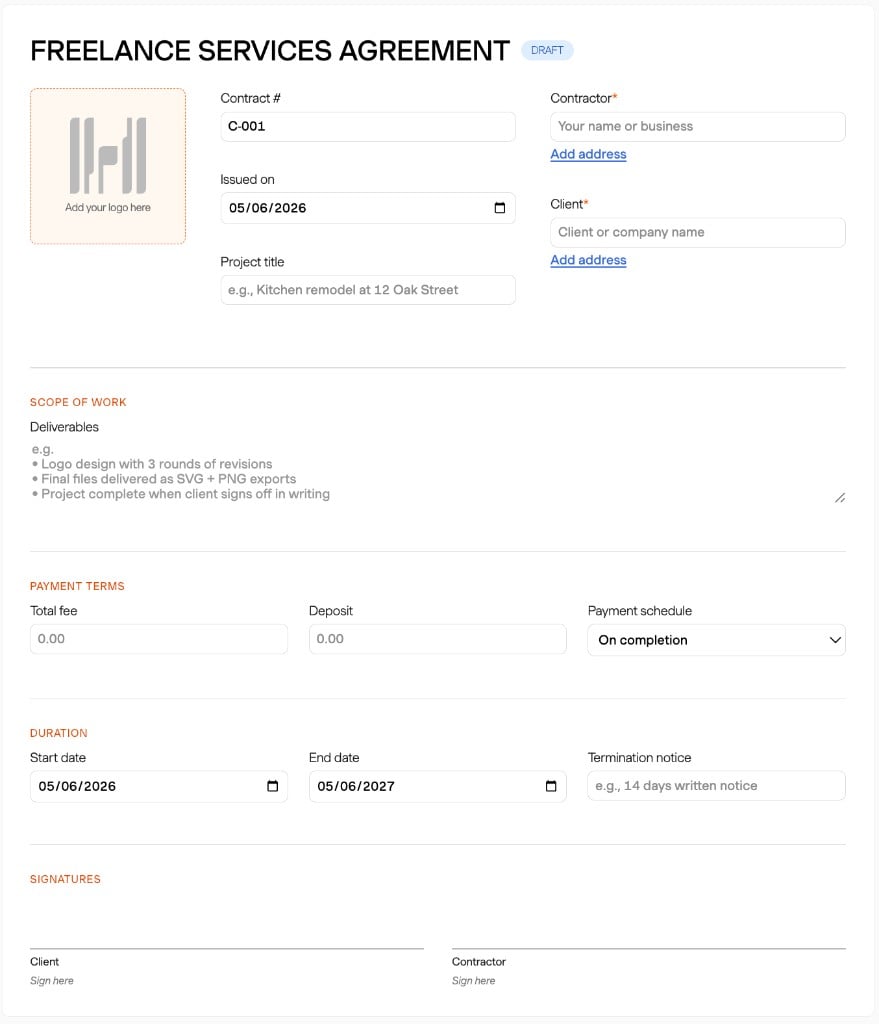
AGREEMENT DRAFT

Add your logo here

Scope of work

Payment terms

Duration

Signatures

Client

Sign here

Contractor

Sign here

Get paid via:
Credit card / Debit card
ACH
Wire transfer

Customize contract

Appearance

Add a logo
Show contract title

Contract settings

Include payment terms Total fee, deposit, and schedule
Include termination clause Notice required to end the contract
Include signature blocks Both parties sign at the bottom

Understanding the Importance of a Statement of Work (SOW) in Denmark

A Statement of Work (SOW) is a crucial document in project management that outlines the scope, deliverables, timelines, and payment terms of a project. In Denmark, the need for a well-defined SOW has become even more critical due to recent changes in employment laws. As of July 1, 2023, the Danish act on statements of employment terms requires more comprehensive documentation for employment relationships, expanding the scope of what needs to be included in work agreements. This heightened focus on transparency and predictability means that drafting an effective SOW is not just about defining project parameters but also about ensuring compliance with local legal standards.

The emphasis on clarity and precision in SOWs helps prevent misunderstandings and scope creep, which can lead to project delays and increased costs. Studies have shown that ineffective contract management can result in financial losses of up to 9%. Therefore, an accurately drafted SOW can significantly contribute to project success by aligning all stakeholders and mitigating risks. While Harvest assists contractors in managing time, budgets, expenses, and invoices, it is crucial to consult a legal professional for specific legal language and compliance requirements for Danish contracts.

Key Components of a Danish SOW Template

Creating a comprehensive Statement of Work (SOW) in Denmark involves several key components that ensure both compliance and project clarity. The new Danish employment laws mandate detailed information in employment contracts, such as the names and addresses of the employer and employee, workplace location, job description, and salary details. For SOWs, this translates to a clear definition of the project scope, deliverables, timelines, and acceptance criteria. It's essential to use clear and specific language to avoid misinterpretations that could lead to scope creep, which contributes to 52% of project inefficiencies.

Additionally, the SOW should include assumptions and constraints, such as budget limits and timelines, along with a formalized change management process. This helps in managing expectations and preparing for potential impacts on timelines or costs. While Harvest can aid in tracking these aspects through its project management capabilities, remember that it does not offer legal guidance on local project management standards in Denmark. For specific legal clauses, especially those needed for public sector projects, consulting with a legal expert is recommended.

Practical Tips for Drafting a Danish SOW

Drafting a Statement of Work (SOW) in Denmark requires a structured approach to ensure it is effective and compliant. Start with a thorough understanding of the project requirements and objectives. Use a systematic format that includes sections for project overview, scope of work, deliverables, timelines, and acceptance criteria. This approach not only aligns with Danish legal requirements but also addresses productivity concerns, as poor communication accounts for 37% of project failures.

Ensure the language is clear and specific, avoiding vague terms like "reasonable effort," which can lead to disputes. Clearly define deliverables and acceptance criteria, and integrate assumptions and constraints. Regular review and refinement of the SOW are crucial to ensure all necessary elements are included and that the document is capable of guiding successful project execution. While Harvest supports managing time and budget elements within a project, it does not provide specific legal or cultural guidance for drafting SOWs in Danish contexts. Local expertise should be sought to ensure culturally appropriate contract drafting.

Legal Considerations for Danish SOWs

Incorporating legal considerations into a Statement of Work (SOW) in Denmark is vital due to recent changes in the Danish act on statements of employment terms. This law, effective July 1, 2023, requires detailed written statements for employees working more than three hours per week, emphasizing the need for transparency in employment terms. For SOWs, this means ensuring all legal requirements are met, such as including specific information about job descriptions, working hours, and salary details.

The act also mandates that these statements be provided within a month of employment start, with most required information delivered within seven days. For those drafting SOWs, it's crucial to align with these timelines and ensure all legal obligations are met. Although Harvest can help manage project timelines and budgets, it doesn't handle Danish VAT regulations or specific legal clauses for public sector projects. Legal advice should be sought to ensure compliance and to address any potential legal exposure.

Harvest's Danish SOW Template

Explore Harvest's project management interface for creating Danish SOW templates, managing time and budgets efficiently.

Screenshot of Harvest's project management interface with SOW context.

Statement of Work Template in Danish FAQs

  • A Statement of Work (SOW) is a comprehensive document that outlines the project scope, deliverables, timelines, and payment terms. It serves as a contractual agreement ensuring mutual understanding between parties involved in a project.

  • In Denmark, a well-defined SOW is crucial due to new legal standards requiring detailed employment terms. It ensures transparency and prevents misunderstandings, which can lead to project delays and increased costs.

  • A Danish SOW should include project scope, deliverables, timelines, acceptance criteria, budget constraints, and a change management process. Clear language is essential to avoid misinterpretations.

  • Harvest helps manage the time and budget aspects of a project, ensuring these elements are tracked efficiently. However, it does not provide specific legal guidance for drafting SOWs in Denmark.

  • A Danish SOW must comply with the Danish act on statements of employment terms, which requires transparency in job descriptions, working hours, and salary details. Legal advice is recommended for specific compliance needs.

  • Harvest does not handle Danish VAT regulations in SOWs. Users are advised to ensure compliance with local tax laws independently.

  • Common pitfalls include vague language, poorly defined deliverables, and lack of stakeholder alignment. Regular review and refinement of the SOW can help mitigate these issues.