
Harvest
Contracts
Sign up

Statement of Work Template in Dutch

Navigating the complexities of a Dutch Statement of Work can be challenging. Harvest aids by ensuring time tracking and invoicing are seamlessly managed, supporting your project's financial accuracy.

Start from a template

AGREEMENT DRAFT

Add your logo here

Scope of work

Payment terms

Duration

Signatures

Client

Sign here

Contractor

Sign here

Get paid via:
Credit card / Debit card
ACH
Wire transfer

Customize contract

Appearance

Add a logo
Show contract title

Contract settings

Include payment terms Total fee, deposit, and schedule
Include termination clause Notice required to end the contract
Include signature blocks Both parties sign at the bottom

Understanding the Key Components of a Dutch Statement of Work (SOW)

In the Netherlands, a Statement of Work (SOW) is a critical document that outlines the specifics of a project agreement between a company and its contractors. Key components of a Dutch SOW include the introduction and purpose, clear project objectives, a detailed scope of work, specific tasks and deliverables, a timeline with milestones, defined roles and responsibilities, quality standards, acceptance criteria, payment terms, and sign-off procedures. These elements ensure clarity and alignment among all stakeholders, reducing scope creep and potential disputes.

Given the Netherlands' robust legal framework, compliance with the Dutch Civil Code is essential. An SOW in this context acts as a formal agreement, emphasizing mutual consent and fairness, while addressing the project’s unique requirements. With the country's high adoption of remote work, clear SOWs become even more crucial in maintaining productivity and accountability across geographic distances.

Legal Considerations for Dutch SOW Compliance

Ensuring a Statement of Work complies with Dutch law is paramount for legal certainty and project success. The Dutch Civil Code (Burgerlijk Wetboek) requires that all service agreements, including SOWs, adhere to principles such as offer and acceptance and reasonableness and fairness. These principles ensure that all parties act honestly and fairly, minimizing the possibility of disputes.

While many contracts in the Netherlands can be formed verbally or electronically, an SOW should be documented in writing to avoid misunderstandings and provide a clear reference. This is particularly important in industries like construction, where established standards such as the Uniform Administrative Conditions for the Execution of Works (UAV 2012) are common. A well-crafted SOW can significantly reduce the 68% of business disputes arising from unclear contractual arrangements.

The Role of SOWs in Project Management and Risk Mitigation

A Statement of Work serves as a blueprint for project management, outlining tasks, deliverables, and timelines. By clearly defining these elements, an SOW helps prevent scope creep, sets clear expectations, and provides legal protection. This is especially critical in sectors with high remote work adoption, like IT and consulting, where clear digital documentation is key to managing distributed teams.

To mitigate risks, a Dutch SOW should include a risk management plan, assumptions, and constraints, allowing stakeholders to identify potential issues early. Additionally, involving all key stakeholders in the SOW creation process ensures alignment and reduces the risk of miscommunication. Leveraging digital tools for SOW creation can further enhance clarity and compliance, streamlining the documentation process and ensuring adherence to legal standards.

Practical Tips for Crafting a Compliant Dutch SOW

Creating a compliant and effective Statement of Work in Dutch requires understanding both legal requirements and project management best practices. Start by utilizing a comprehensive SOW template to ensure consistency and completeness. Involve all stakeholders in drafting the SOW to align expectations and reduce the risk of future disputes.

Pay particular attention to defining the scope and deliverables in clear, unambiguous terms. This prevents scope creep and ensures that all parties have a mutual understanding of the project terms. Additionally, ensure the SOW complies with relevant Dutch laws, including the upcoming labor laws concerning temporary workers and false self-employment. By effectively integrating these elements, you'll enhance the project's success and maintain legal compliance.

Leveraging Harvest for Time Tracking and Invoicing

While Harvest is not specifically designed for creating Statement of Work documents, it plays a crucial role in managing the time tracking and invoicing aspects of project execution. Harvest helps contractors and businesses keep track of billable hours, organize expenses, and generate accurate invoices, which are vital components of project management once the SOW is in place.

By using Harvest, businesses can ensure that their projects remain within budget and that all billable activities are accurately recorded and invoiced. This integration of time tracking and invoicing into the project management workflow supports the clarity and accountability established by a well-crafted SOW, helping to streamline operations and enhance financial accuracy.

Explore Harvest's Tools for Project Success

Discover how Harvest supports your projects with efficient time tracking and invoicing, enhancing accuracy and compliance.

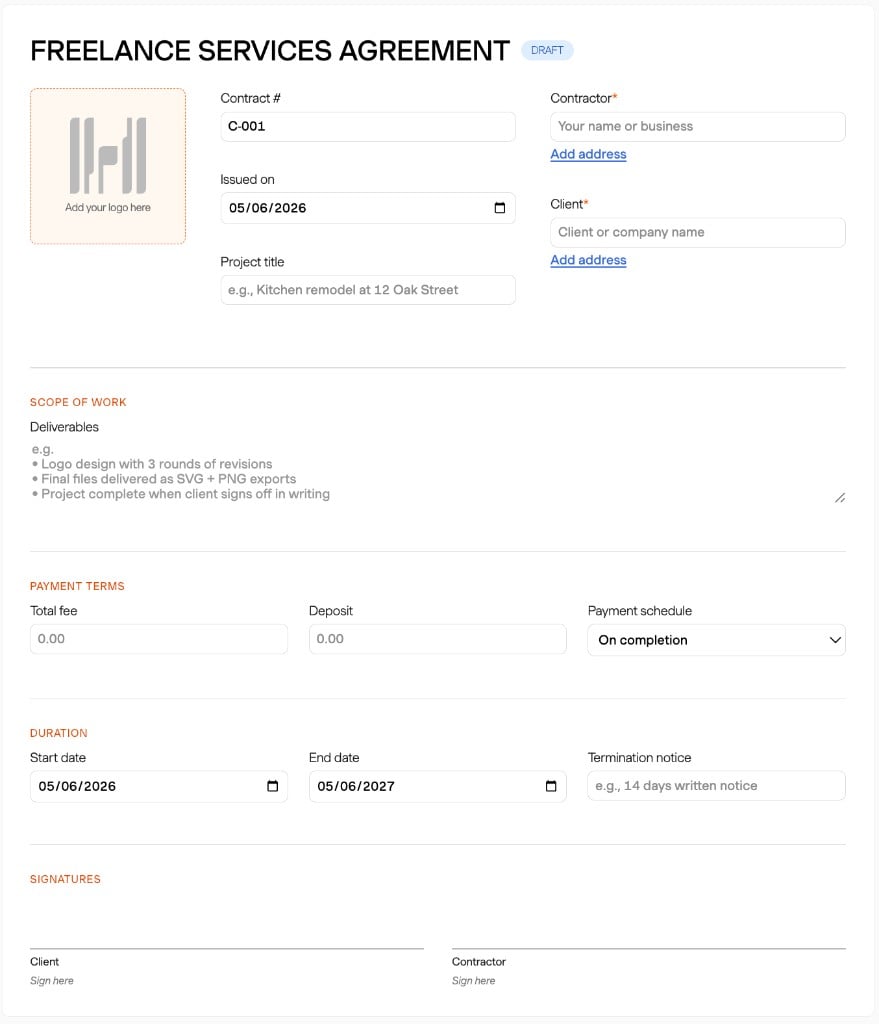
Screenshot of a Dutch Statement of Work template in Harvest.

Statement of Work Template in Dutch FAQs

  • A Statement of Work (SOW) in the Netherlands is a formal document that outlines the specifics of a project agreement between a company and its contractors. It includes elements like project objectives, scope, deliverables, timeline, and payment terms, ensuring clarity and legal compliance.

  • To ensure compliance, your SOW should adhere to the Dutch Civil Code by emphasizing mutual consent and fairness. It should be documented in writing and include clear, unambiguous language to minimize disputes and align with legal standards.

  • A Dutch SOW typically contains an introduction, project objectives, detailed scope of work, specific tasks and deliverables, timeline with milestones, roles and responsibilities, quality standards, payment terms, and sign-off procedures.

  • An SOW acts as a blueprint for project management by preventing scope creep, setting clear expectations, and providing legal protection. It ensures that all parties have a mutual understanding of the project terms, reducing the risk of disputes.

  • Harvest supports project management by providing tools for time tracking and invoicing. This ensures projects remain within budget and that all billable activities are accurately recorded and invoiced, complementing the clarity established by a well-crafted SOW.

  • Avoid vague definitions of scope and deliverables, unrealistic timelines, and failing to comply with relevant legal requirements. Involve all stakeholders to align expectations and include a risk management plan to identify and mitigate potential issues early.

  • Digital tools can streamline the SOW creation process by offering templates, automation, and compliance safeguards. These tools enhance clarity, reduce risks, and ensure adherence to legal standards, making SOW management more efficient.