
Harvest
Expenses
Sign up

Mileage Claim

Harvest simplifies mileage claims by enabling automatic reimbursement calculations through customizable mileage tracking, saving users 42 hours annually.

EXPENSE REPORT DRAFT

Drop your receipts here or click to upload

Images and PDFs (max 10 MB each)

Date
Category
Merchant
Description
Amount
Total
$0.00

Customise report

Appearance

Show report title

Report settings

Understanding Mileage Claim Documentation

Filing a mileage claim requires detailed and accurate documentation to ensure compliance and maximize reimbursement. According to the IRS, detailed logs must include the date of travel, starting and ending locations, business purpose, and total miles driven for each trip. These logs should be contemporaneous, meaning they are made at or near the time of the trip, not reconstructed later. Maintaining accurate records not only supports tax compliance but also prevents disallowed deductions, as seen in cases where incomplete logs led to significant mileage deductions being denied.

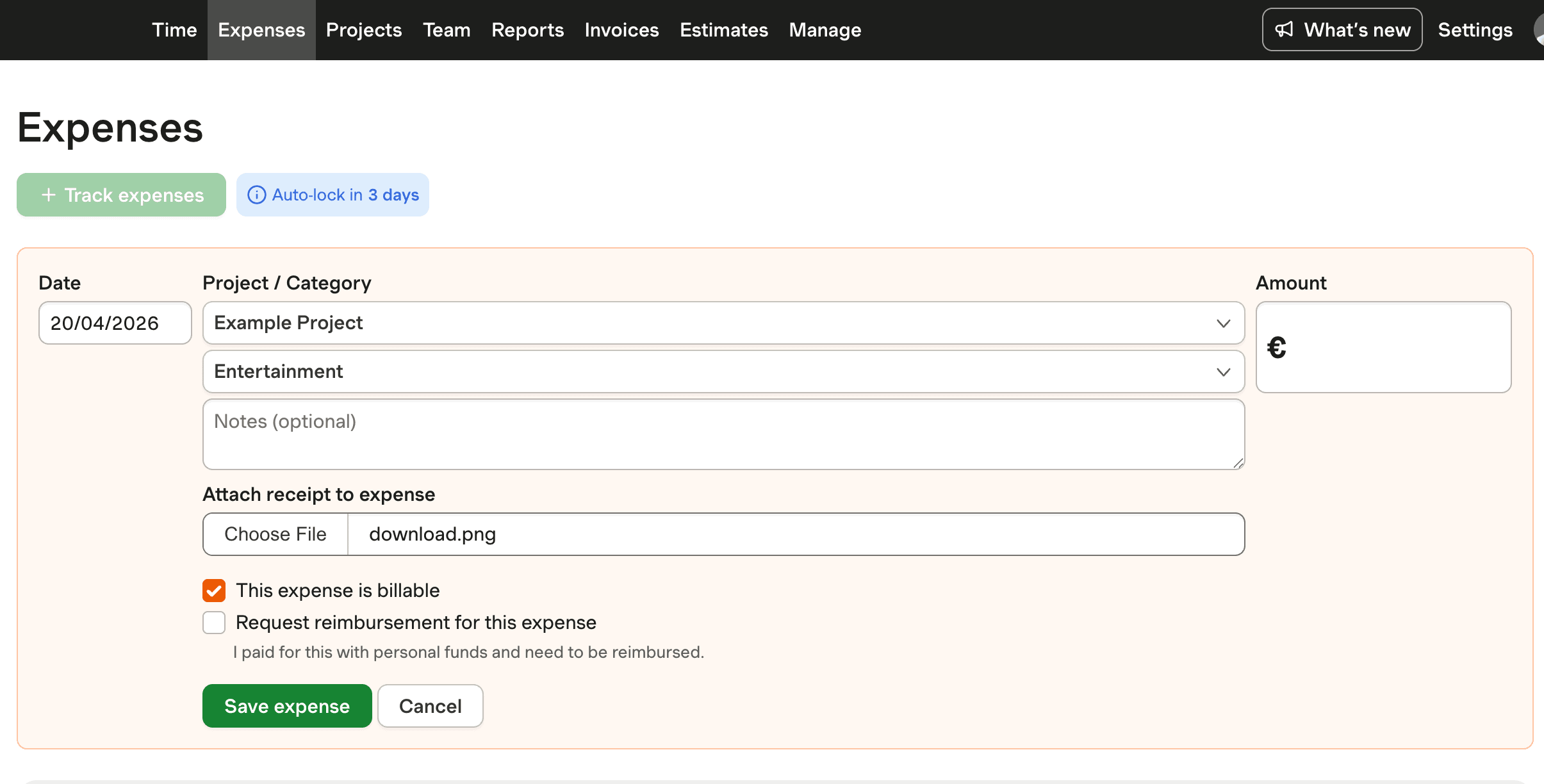
Harvest simplifies this process by allowing users to create a mileage expense category with a per-mile unit price. This functionality enables automatic calculation of reimbursement totals, reducing manual entry errors and ensuring that documentation is complete and compliant. With Harvest, teams can track mileage alongside other vehicle-related expenses like parking and tolls, further streamlining the reimbursement process.
Automating Mileage Tracking for Efficiency

The shift from manual logbooks to automated mileage tracking systems has revolutionized how businesses handle mileage claims. Automated systems save drivers approximately 42 hours annually by eliminating the need for manual data entry and reducing the risk of human error. These systems leverage GPS technology to automatically detect and classify trips, distinguishing between business and personal travel with high accuracy.

Harvest enhances this automation by integrating mileage tracking with its expense management features. By allowing users to set custom mileage rates and automatically calculate reimbursement amounts, Harvest ensures that all mileage claims are precise and audit-ready. This reduces administrative burdens and enhances operational efficiency by integrating seamlessly with payroll and expense management systems.

Compliance with Mileage Reimbursement Regulations

Compliance with mileage reimbursement regulations is crucial for ensuring non-taxable reimbursements. The IRS standard mileage rate for business use in 2026 is 72.5 cents per mile, applicable for reimbursements processed under an accountable plan. In the UK, the HMRC rate is 45 pence per mile for the first 10,000 miles, while the ATO in Australia sets the rate at 88 cents per kilometer.

While Harvest allows users to set custom mileage rates, it does not provide direct guidance on specific regulatory rates like those set by the IRS or HMRC. However, by facilitating detailed record-keeping and automatic calculations, Harvest supports businesses in adhering to these regulations, ensuring that reimbursements are processed accurately and within legal frameworks.

Maximizing Reimbursement with Strategic Tools

Using mileage data as a strategic tool can enhance financial management and operational efficiency. Companies in industries like sales have transformed mileage tracking from a clerical task into a strategic component of financial planning, helping them understand true profitability and optimize tax planning.

Harvest supports this strategic approach by offering customizable expense categories and automatic calculations, enabling businesses to effectively manage and analyze mileage data. By integrating AI-driven insights and predictive analytics, Harvest helps organizations proactively manage expenses and streamline tax planning. These features allow businesses to harness the full potential of mileage data for strategic advantage.

Streamline Mileage Claims with Harvest

See how Harvest automates mileage claims with easy tracking and automatic reimbursement calculations, saving you time and effort.

Harvest dashboard showing mileage claim features and automatic calculations.

Mileage Claim FAQs

  • To file a mileage claim, you need to keep a detailed log of each trip, including the date, starting and ending locations, business purpose, and miles driven. Submit this information to your employer for reimbursement. Using tools like Harvest can automate this process, ensuring accuracy and compliance.

  • Documentation for a mileage claim should include a detailed log of each trip with the date, locations, business purpose, and total miles. This log is essential for IRS compliance and to substantiate your claim in case of an audit.

  • Mileage reimbursement is typically calculated by multiplying the miles driven by the standard mileage rate set by the IRS or other regulatory bodies. For 2026, the IRS rate is 72.5 cents per mile. Harvest allows you to set custom rates and automatically calculate these reimbursements.

  • Personal commuting miles, such as those between home and a regular workplace, are generally not eligible for tax-free reimbursement. Only business-related travel can be claimed. It's important to distinguish between personal and business miles to avoid issues with tax compliance.

  • Automated tracking improves mileage claims by reducing manual entry errors and saving time. Systems like Harvest use GPS technology to automatically log trips, ensuring accurate and compliant records that are ready for audit.

  • Harvest offers customizable expense categories and automatic reimbursement calculations, making mileage tracking efficient and accurate. It integrates with payroll systems, reducing administrative burdens and ensuring compliance with reimbursement regulations.