
Harvest
Contracts
Sign up

Contract Template for Glass Contractors

Harvest provides tools that help glass contractors streamline contract management by integrating time tracking and invoicing into their workflow.

Start from a template

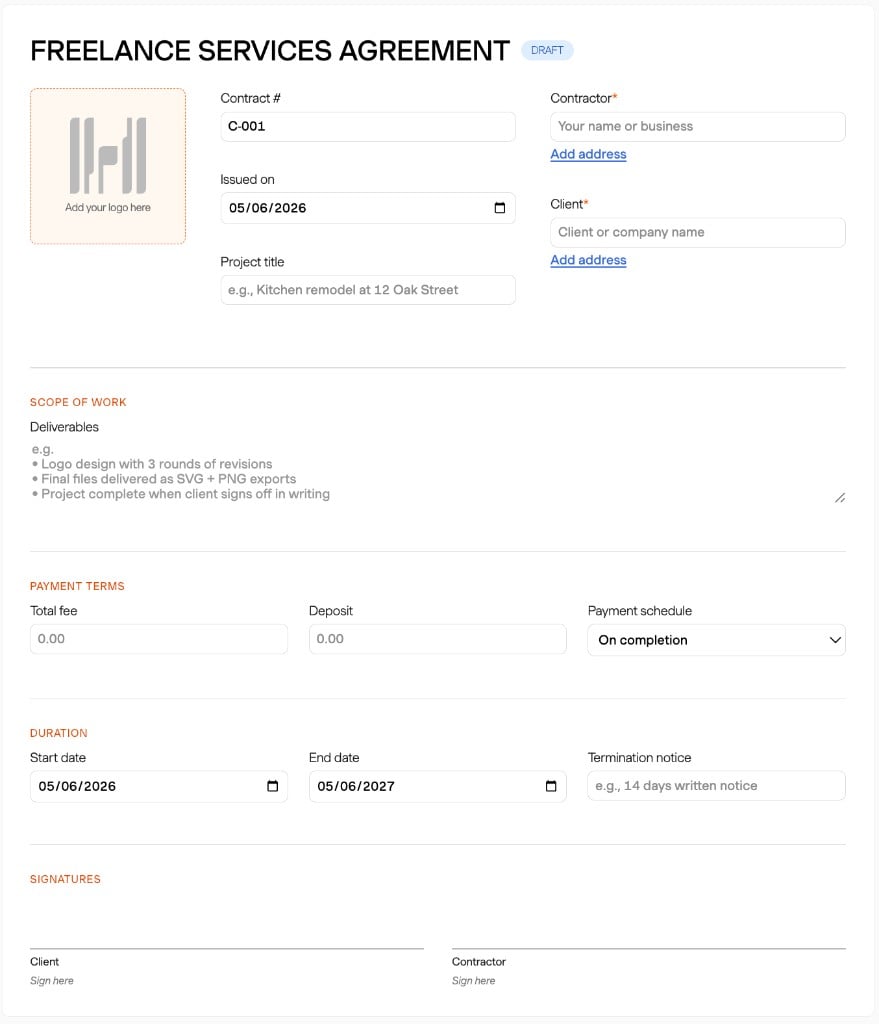
AGREEMENT DRAFT

Add your logo here

Scope of work

Payment terms

Duration

Signatures

Client

Sign here

Contractor

Sign here

Get paid via:
Credit card / Debit card
ACH
Wire transfer

Customize contract

Appearance

Add a logo
Show contract title

Contract settings

Include payment terms Total fee, deposit, and schedule
Include termination clause Notice required to end the contract
Include signature blocks Both parties sign at the bottom

Essential Clauses in a Glass Contractor Contract

A well-crafted contract template for glass contractors is essential for ensuring clarity and reducing disputes in glass installation projects. Key clauses to include are a detailed description of the scope of work, specific payment terms, and warranty details. For example, defining clear payment schedules tied to project milestones can help avoid misunderstandings and ensure timely payments. Industry experts suggest that payment terms should align with project phases, such as 30% upon contract signing, 40% after glass delivery, and the remaining 30% upon completion.

Warranty and liability considerations are also crucial, as they protect both the contractor and the client. The contract should specify the duration of warranties for both materials and installation workmanship. Additionally, including clauses on safety compliance and adherence to local building codes ensures that projects meet legal standards, mitigating risks of future liabilities.

To address potential changes in project scope, a formal change order process should be included. This helps manage additional requests or modifications without disrupting the original timeline and budget. By incorporating these clauses, glass contractors can streamline their operations and focus on delivering quality work.

Legal Requirements for Glass Installation Contracts

Legal requirements in glass installation contracts can vary by state, but there are common elements that contractors should consider. For instance, indemnification clauses are critical in managing liability risks. In California, for example, only limited form indemnity clauses are legally accepted, where the contractor is responsible for damages caused by their own negligence. This ensures that liability is fairly allocated and aligns with state laws.

Moreover, lien waiver forms are another legal aspect that contractors must handle carefully. In 12 U.S. states, such as California, these forms must adhere to statutory requirements, and unauthorized alterations can render them invalid. This highlights the importance of using standardized forms and understanding state-specific legal obligations to avoid potential disputes.

To ensure compliance, it is advisable for glass contractors to have their contracts reviewed by a legal expert familiar with construction law. This can help in identifying any potential pitfalls and ensuring that all legal requirements are met effectively.

Customizing Contract Templates for Specific Projects

Customizing a contract template to fit specific glass installation projects is key to addressing unique client needs and project specifications. Start by adjusting the scope of work section to reflect project-specific details, such as the type of glass to be used, installation methods, and any special requirements like safety features or custom designs.

Payment terms should also be tailored to the project's scale and complexity. For larger projects, consider implementing a milestone-based payment schedule that ties payments to the completion of specific phases. This not only provides financial security for the contractor but also reassures clients that payments are contingent on progress.

Additionally, while standardized templates are useful, integrating additional clauses that address project-specific risks, such as potential delays due to weather conditions, can make the contract more robust. By customizing these elements, glass contractors can ensure that their agreements are comprehensive and aligned with both business objectives and client expectations.

Streamlining Contract Management with Digital Tools

The adoption of digital tools in contract management is revolutionizing how glass contractors operate. Utilizing a contract template within a digital platform can significantly enhance efficiency and reduce errors. Digital tools allow for easy updates and distribution of contract documents, ensuring all parties have access to the latest versions.

These tools can also integrate with other project management software, providing a centralized location for tracking contract terms, deliverables, and payment schedules. This integration helps ensure alignment on project expectations and timelines, reducing the likelihood of disputes.

Moreover, digital contract management can facilitate real-time communication and data entry, which is particularly beneficial for managing complex projects with multiple stakeholders. By leveraging these technologies, glass contractors can streamline their workflows and focus on delivering high-quality installations.

Best Practices for Risk Mitigation in Glass Contracts

Mitigating risks in glass installation contracts begins with clear and thorough documentation. One of the best practices is to eliminate ambiguity around the scope of work and payment terms. This clarity helps prevent misunderstandings and potential conflicts between parties.

Another critical practice is the inclusion of a robust dispute resolution mechanism. This could involve mediation or arbitration clauses that provide a structured approach to resolving disagreements without resorting to litigation. Additionally, ensuring that all parties have a clear understanding of the contract terms before signing can prevent issues down the line.

Engaging an experienced construction attorney to review contract documents can further mitigate risks by identifying potential legal pitfalls. By adhering to these best practices, glass contractors can protect their interests and foster positive client relationships.

Streamline Glass Contracts with Harvest

Harvest's contract template tool helps glass contractors customize agreements with clauses for safety, payments, and more.

Screenshot of Harvest's contract template tool for glass contractors.

Contract Template for Glass Contractors FAQs

  • A glass contractor contract should include clauses on scope of work, payment terms, warranty details, safety compliance, and a change order process. Clear definitions and structured timelines help prevent misunderstandings.

  • Customize a glass installation contract by adjusting the scope of work to include specific project details, such as types of glass and installation methods. Tailor payment terms to reflect project milestones and add clauses for unique risks.

  • Yes, legal considerations include indemnification clauses and lien waiver requirements. Some states have specific forms and statutes, such as California's prohibition on broad form indemnity clauses, requiring careful contract drafting.

  • Integrating digital tools in contract management enhances efficiency by centralizing documents, ensuring real-time updates, and facilitating communication. This helps align project expectations and reduces errors.

  • Harvest aids in managing glass contractor agreements by integrating time tracking and invoicing, ensuring efficient project management and financial oversight. This streamlines the entire contract lifecycle.

  • Common payment terms for glass contractor contracts often include milestone-based payments, such as initial deposits, progress payments during installation, and final payments upon project completion.

  • Indemnification clauses allocate financial responsibility for damages or claims. They are crucial for managing liability risks and should align with state laws, such as the limited form indemnity preferred in California.