
Harvest
Contracts
Sign up

Personal Trainer Contract Template

Harvest offers tools that support personal trainers by helping to streamline time tracking and invoicing processes, ensuring a professional and organized business operation.

Start from a template

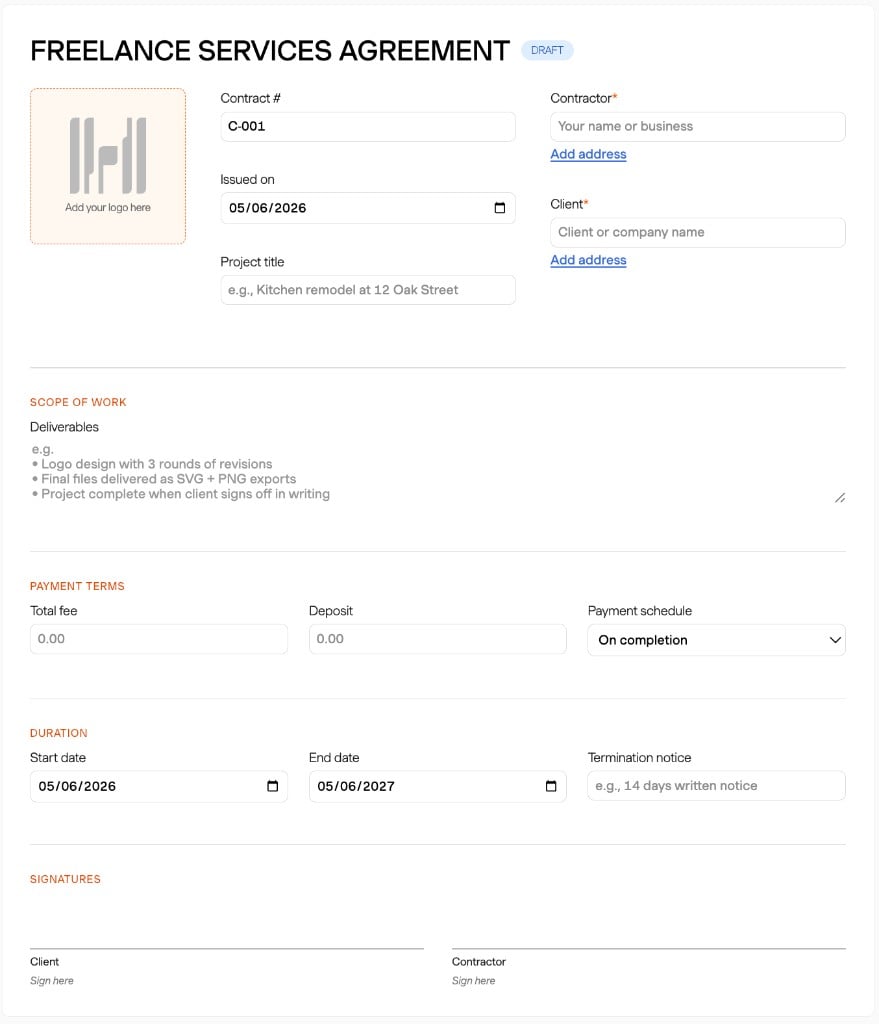
AGREEMENT DRAFT

Add your logo here

Scope of work

Payment terms

Duration

Signatures

Client

Sign here

Contractor

Sign here

Get paid via:
Credit card / Debit card
ACH
Wire transfer

Customize contract

Appearance

Add a logo
Show contract title

Contract settings

Include payment terms Total fee, deposit, and schedule
Include termination clause Notice required to end the contract
Include signature blocks Both parties sign at the bottom

Why a Personal Trainer Contract is Essential

A personal trainer contract is an essential tool for setting clear expectations and establishing professionalism in the personal training business. As the U.S. personal fitness trainer market continues to grow, projected to reach $15.6 billion by 2026, the demand for clear and comprehensive agreements is on the rise. Contracts help define the terms of service, payment structures, and protect both parties involved. In scenarios where clients dispute charges for prepaid sessions or fail to show up, a written agreement provides the necessary documentation to mitigate disputes and maintain cash flow.

Beyond addressing financial terms, contracts serve as a formal acknowledgment of the professional relationship, ensuring that personal trainers are perceived as legitimate business operators rather than casual hobbyists. For example, including clauses for cancellation policies and liability waivers can prevent misunderstandings and protect trainers from potential legal claims. By setting clear boundaries regarding job responsibilities and client expectations, contracts help maintain a reliable communication framework that reassures clients.

Key Clauses in a Personal Trainer Contract

Personal trainer contracts should include several essential clauses to ensure comprehensive coverage of the business relationship. First and foremost, identification and contact information for both parties is a must. The scope of services should be clearly defined, detailing session lengths, frequency, locations, and what is included—avoiding vagueness prevents 'scope creep' and ensures client satisfaction. Payment terms, including pricing, billing schedules, accepted payment methods, and late fees, should be explicitly stated to avoid any misunderstandings.

Another critical element is the cancellation and no-show policy, which outlines procedures, notice requirements, and any fees associated with late cancellations or missed sessions. Liability waivers, while not replacing full contracts, are essential for documenting informed consent regarding the risks involved in physical training. Moreover, including dispute resolution clauses and termination terms can further safeguard the interests of both the trainer and the client, providing a framework for resolving potential conflicts swiftly.

Customizing and Legal Considerations

Customizing a personal trainer contract to match specific services and business models is vital for ensuring its effectiveness. Industry experts recommend having a lawyer review the contract to ensure compliance with local laws and to tailor the language to particular training models. For example, California's Health Studio Services Contract Law imposes specific limitations on contract durations and payment terms, which must be adhered to. Similarly, contracts involving minors require a parent or guardian’s co-signature to be legally binding.

Additionally, personal trainers should integrate contracts with other necessary business forms, such as Physical Activity Readiness Questionnaires (PAR-Qs) and fitness assessments, to ensure client safety and inform program design. With the rise of digital integration, trainers offering online or hybrid services should specify communication protocols, including availability and expected response times, to maintain professional boundaries.

Common Pitfalls and How to Avoid Them

When creating a personal trainer contract, several common pitfalls should be carefully avoided. Vague payment terms can lead to confusion, so it is critical to clearly define pricing, billing schedules, and any associated fees. Trainers should also avoid using liability waivers as a substitute for full contracts; while waivers cover risk and injury, contracts encompass broader business terms, including payment and service agreements.

Another common mistake is failing to specify the services included in the contract. Trainers should outline exactly what is included, such as the number of sessions or program specifics, to prevent dissatisfaction and ensure clients understand what they’re committing to. Lastly, addressing intellectual property is crucial, especially if providing proprietary materials like guides or workbooks. Contracts should state that these materials are for personal use only and not to be redistributed, protecting the trainer's intellectual property rights.

Streamline Contracts with Harvest

Harvest's tools help personal trainers by simplifying time tracking and invoicing, ensuring an organized and professional business approach.

Screenshot of Harvest's contract template interface for personal trainers.

Personal Trainer Contract Template FAQs

  • A personal trainer contract should include identification and contact information for both parties, scope of services, payment terms, cancellation policies, liability waiver, confidentiality clauses, termination terms, and dispute resolution methods. Each section helps clarify the business relationship and protect both the trainer and the client.

  • Trainers can customize contracts by tailoring terms to their specific services, location, and business model. It is advisable to have a legal professional review the contract to ensure compliance with local laws. Customization might include session details, payment schedules, and communication protocols for online or hybrid training models.

  • A liability waiver is crucial as it documents the client's informed consent regarding the risks of physical training. While it limits liability, it does not eliminate it completely, especially in cases of gross negligence. Waivers should be used alongside a full contract for comprehensive protection.

  • Common mistakes include vague payment terms, using liability waivers as contracts, and failing to define services clearly. To avoid issues, ensure contracts are detailed, covering all aspects of the business relationship, and reviewed by a legal professional for compliance.

  • With the rise of digital integration, trainers increasingly offer online or hybrid services. Contracts should specify communication protocols, availability, and response times to maintain professionalism and clear client expectations in this digital context.

  • Yes, it is recommended that personal trainer contracts are reviewed by a lawyer to ensure they are legally sound and compliant with local laws. Legal reviews help identify gaps and tailor the contract language to specific training models.

  • Contracts play a vital role in managing client relationships by setting clear expectations and professional boundaries. They help prevent misunderstandings and disputes, and establish a framework for communication, cancellations, and payment, contributing to a professional and reliable training service.