
Harvest
Contracts
Sign up

How to Write an Nda

Drafting a Non-Disclosure Agreement (NDA) can be challenging, but understanding its essential components and legal nuances is key. Harvest helps businesses streamline their documentation processes.

Start from a template

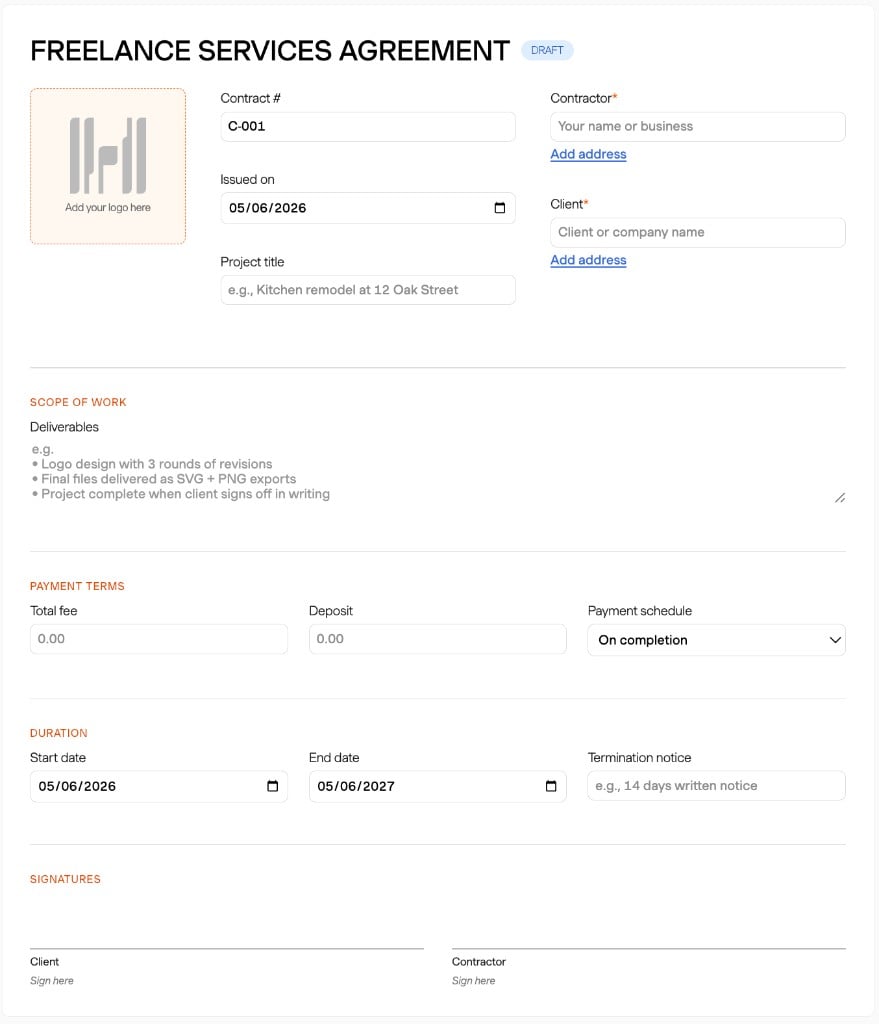
AGREEMENT DRAFT

Add your logo here

Scope of work

Payment terms

Duration

Signatures

Client

Sign here

Contractor

Sign here

Get paid via:
Credit card / Debit card
ACH
Wire transfer

Customize contract

Appearance

Add a logo
Show contract title

Contract settings

Include payment terms Total fee, deposit, and schedule
Include termination clause Notice required to end the contract
Include signature blocks Both parties sign at the bottom

Understanding the Essential Components of an NDA

Creating a robust Non-Disclosure Agreement (NDA) starts with understanding its essential components. An effective NDA should clearly define what constitutes "confidential information" to avoid ambiguity. Industry experts emphasize specificity, such as distinguishing between source code, financial data, and customer lists, to ensure enforceability. This precision is crucial as vague definitions can render an NDA unenforceable, leaving your information vulnerable.

Another critical component is the obligation clause, which outlines the responsibilities of the receiving party in maintaining confidentiality. It's important to include terms regarding the duration of confidentiality, typically ranging from 1 to 5 years, though trade secrets may warrant indefinite protection. However, courts often scrutinize perpetual agreements for reasonableness, especially in employment contexts. Therefore, clearly defining when information is no longer confidential can prevent legal disputes.

Additionally, include clauses that address potential breaches. While NDAs are civil contracts and not typically criminal offenses, breaches can lead to financial penalties, damages, and injunctions. Industry research suggests that NDAs are not "magic shields" against information leaks, making it vital to understand their limitations and ensure they are drafted with precision and clarity.

Defining Confidential Information in Your NDA

Defining confidential information is a cornerstone of any NDA. This definition must be precise to ensure the protection of sensitive data. Experts warn against broad definitions like "everything the company does," as these can be deemed unreasonable and unenforceable. Instead, focus on specific categories such as proprietary algorithms, client lists, and financial forecasts.

Confidentiality must also consider industry-specific requirements. For example, in healthcare, NDAs often align with HIPAA regulations to protect patient information, while technology NDAs might emphasize intellectual property like source code. In the financial sector, NDAs may include terms to keep potential investments and mergers confidential.

For effective NDAs, it's vital to address modern concerns like digital data. As AI becomes more prevalent, a "No-AI Training" clause is increasingly necessary to prevent proprietary data from being used in third-party AI models. This ensures that sensitive information remains secure, aligning with current technological and legal landscapes.

Clauses to Include in Your NDA

When drafting an NDA, including the right clauses is crucial for comprehensive protection. One important clause is the "use of confidential information," which restricts how the information can be used by the receiving party. This is particularly important in sectors like technology and finance, where misuse can lead to significant competitive disadvantages.

It's also wise to include a "residuals clause," though it's contentious. Some tech companies use it to allow employees to utilize retained knowledge without breaching the NDA. However, this can undermine the NDA's intent, so careful consideration and legal advice are recommended before inclusion.

Another essential clause is regarding enforcement and penalties for breaches. While NDAs are civil agreements, breaches can result in financial penalties or injunctions. Having clear, enforceable terms can limit the risk of costly legal battles. Case studies show that well-drafted NDAs can prevent scenarios like the Winklevoss twins' dispute with Zuckerberg, where the absence of an NDA complicated legal proceedings.

Legal Considerations and Compliance for NDAs

Legal compliance is a critical aspect of drafting NDAs. Compliance with local laws is essential, as some U.S. states have specific requirements regarding NDA duration and scope. For instance, Wisconsin prohibits NDAs with indefinite terms, while Illinois and Georgia may require temporal limits in employment contexts.

Cross-border enforcement poses additional challenges due to varying definitions of "confidential information" and "trade secrets." NDAs must address compliance with international regulations like the EU's GDPR and U.S. export control laws to ensure global enforceability.

Experts strongly recommend involving legal counsel in the NDA drafting process. This ensures that the agreement is not only compliant but also tailored to the unique needs of your industry. A well-drafted NDA, reviewed by professionals, enhances enforceability and protects against the costly consequences of information breaches.

Streamline NDA Drafting with Harvest

See how Harvest helps businesses draft NDAs with clear, industry-specific guidelines and streamlined processes.

Screenshot of NDA drafting process in Harvest

How to Write an Nda FAQs

  • An NDA should include a definition of confidential information, obligations of the receiving party, and duration of the agreement. Specificity is key to enforceability.

  • Define confidential information precisely, by specifying categories like algorithms, client lists, and financial data. Broad definitions can be unenforceable.

  • Include clauses on the use of confidential information, penalties for breaches, and possibly a residuals clause. Legal advice is recommended for drafting.

  • Yes, industries like healthcare and finance have specific confidentiality requirements. It's crucial to align NDAs with industry regulations.

  • NDAs typically last 1 to 5 years. However, trade secrets might warrant indefinite protection, subject to legal scrutiny for reasonableness.

  • Legal review ensures that the NDA is compliant and enforceable, accounting for industry needs and local laws, enhancing its effectiveness.

  • Templates can be a useful starting point, but customization is often necessary to address specific legal and industry requirements effectively.