
Harvest
Quotes
Sign up

How to Bid on a Construction Project

Harvest helps contractors accurately calculate project costs and profitability, ensuring informed bidding decisions for construction projects.

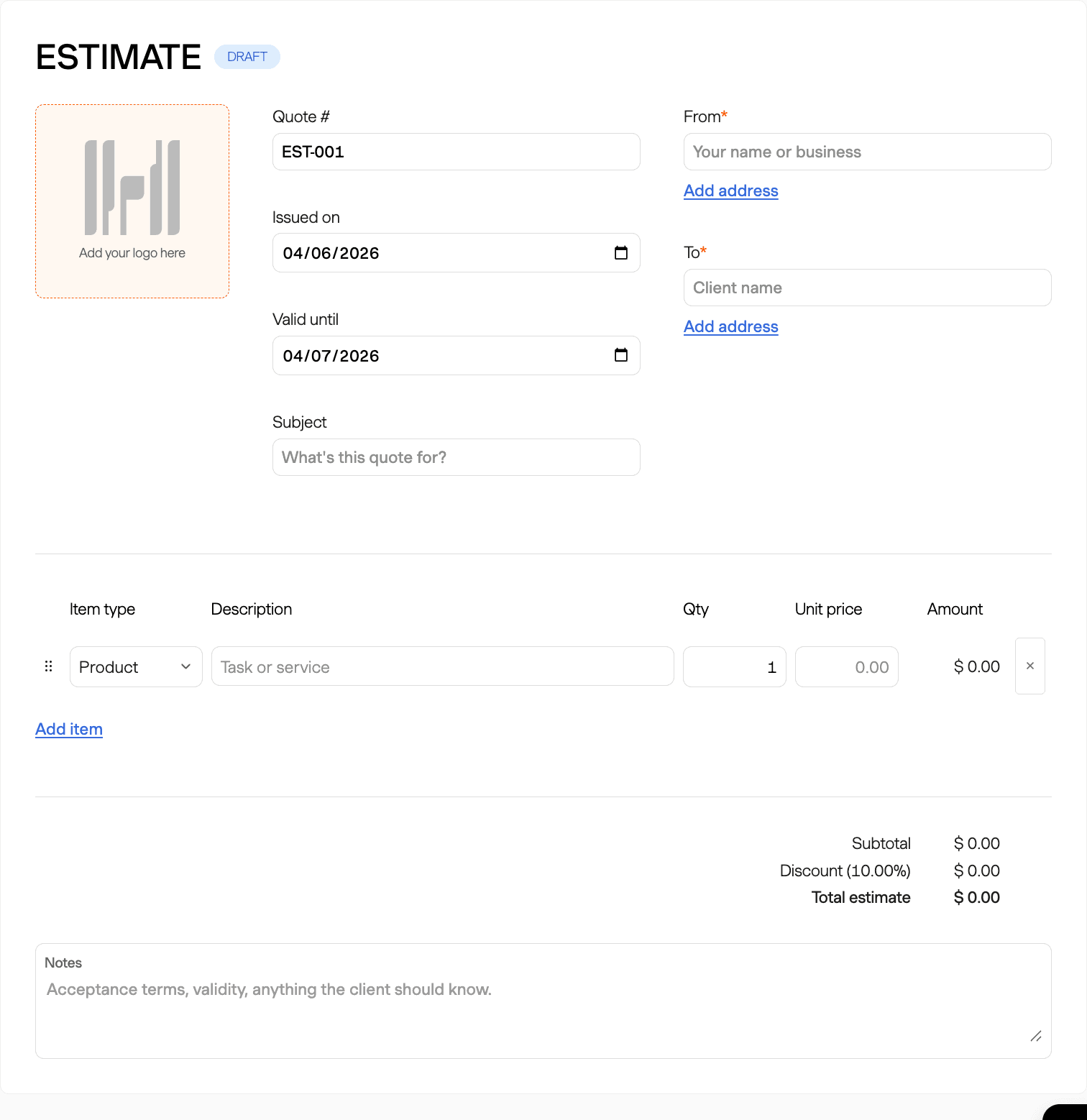
ESTIMATE DRAFT

Add your logo here
Item type
Description
Qty
Unit price
Tax
Amount
Subtotal
$0.00
Discount
$0.00
Total estimate
$0.00
Get paid via:
Credit card / Debit card
ACH
Wire transfer

Customize estimate

Appearance

Add a logo
Show estimate title

Quote settings

Tax Add up to 2 tax rates
%
Discount Apply a discount percentage
%

Understanding the Construction Bidding Process

Bidding on a construction project requires a clear understanding of the process and its nuances. The construction industry often sees fierce competition, with projects attracting between 5 to 8 bidders on average. Despite this, only about 25% of bids are successful, though top-performing contractors can achieve win rates of 40-50%. This underscores the importance of a strategic approach in bidding.

One of the first steps is the bid/no-bid decision, which involves evaluating if a project aligns with your company's expertise and strategic goals. This is crucial as bidding on projects without a clear fit can lead to inefficiencies and wasted resources. Once a decision is made, the next step is to conduct a detailed scope review to understand the project's requirements fully, thereby avoiding costly change orders that could increase project costs by 10% or more.

In integrating digital tools, firms can enhance productivity by up to 15% and reduce project costs by as much as 6%. Digital adoption not only streamlines the bidding process but also improves accuracy and efficiency, with 82% of tech-forward firms reporting positive profitability outcomes. Using tools like Harvest can further assist in tracking project budgets and profitability, providing insights for future bids.

Accurate Cost Estimation and Proposal Development

Developing accurate cost estimates is critical in preparing a competitive bid. This involves using current local market cost data for materials, labor, and equipment, as reliance on national averages can lead to errors of 30-40%. Accurate estimation is essential to avoid underbidding, which can result in losses, or overbidding, which can price you out of contention.

Once costs are estimated, crafting a compelling proposal is the next crucial step. A well-developed proposal not only showcases your pricing but also highlights your value proposition, experience, and understanding of the project. This is vital as bids that offer more than just the lowest price often stand a better chance of success, with strategic bidding leading to sustainable profitability.

Harvest aids contractors in this process by offering tools to calculate project costs and profitability through its profitability reports. This ensures that contractors can make informed decisions, focusing on projects that align with their strengths and strategic goals, ultimately enhancing their bid-winning potential.

Leveraging Technology for Competitive Advantage

In today's construction industry, leveraging technology is no longer optional but a necessity for competitive bidding. With digital transformation, contractors can improve their productivity and reduce costs significantly. Automated takeoff tools and shared bid templates, for instance, can cut estimating time by up to 90%, allowing firms to pursue more opportunities.

Technology adoption in construction is on the rise, with digital systems becoming "table stakes" for firms aiming for higher bid-win ratios and improved profit margins. By integrating data-driven decision-making processes, firms can better track competitor behavior and analyze historical bid patterns, identifying profitable "sweet spots" for future bids.

While Harvest is not a bid submission tool, it excels in managing project budgets and tracking time, providing contractors with the insights needed to refine their bidding strategies. These capabilities ensure that contractors can maintain a competitive edge, focusing on profitability and efficiency in their operations.

Overcoming Common Bidding Challenges

Bidding on construction projects poses several challenges, from pricing errors to managing subcontractor relationships. One common mistake is underbidding or overbidding due to inaccurate cost data. To overcome this, contractors should utilize accurate estimating software and local market data. Additionally, thoroughly vetting subcontractors is crucial to avoid performance issues that could increase project costs by 20%.

Implementing a rigorous project qualification process can also help in defining business strategies and avoiding projects that don't align with a company's strengths. This strategic approach not only improves win rates but also builds stronger client relationships.

While Harvest does not manage subcontractor relationships, it provides valuable tools for tracking time and managing project budgets. These insights can be critical in anticipating project costs and ensuring profitability, enabling contractors to make informed decisions and avoid common pitfalls in the bidding process.

Bid on Construction Projects with Harvest

See how Harvest helps contractors estimate project costs and manage budgets for successful bids.

Screenshot of Harvest project cost estimation tool for construction bidding.

How to Bid on a Construction Project FAQs

  • The key steps include making a bid/no-bid decision, conducting a detailed scope review, developing accurate cost estimates, vetting subcontractors, assessing risks, and crafting a compelling proposal. Each of these steps helps ensure a competitive and informed bid.

  • Prepare a competitive bid by aligning your bid with your strategic goals, using accurate local market data for cost estimation, and highlighting your unique value proposition in the proposal. Thoroughly vet subcontractors and assess potential risks to strengthen your bid.

  • Typically, you'll need to submit a detailed proposal, cost estimates, subcontractor quotes, and any required regulatory or compliance documents. Ensure all submissions meet the tender requirements to avoid disqualification.

  • Technology can streamline the bidding process by automating tasks, improving estimation accuracy, and facilitating digital submissions. Firms using unified digital systems report higher bid-win ratios and up to 25% higher profit margins.

  • When visiting a site, assess access conditions, existing structures, environmental factors, and potential risks. This helps in developing accurate estimates and identifying any challenges that may affect project delivery.

  • While Harvest does not handle bid submissions, it supports contractors by providing tools to calculate project costs and track budgets, aiding in the preparation of informed and competitive bids.

  • Avoid bidding on misaligned projects, underestimating costs due to inaccurate data, and neglecting subcontractor vetting. Implementing a project qualification process and using accurate estimating tools can mitigate these risks.

  • Accurate cost estimation prevents underbidding or overbidding, which can lead to financial losses or missed opportunities. Using local market data and estimating software helps ensure precision in project pricing.