Sign up


Understanding Independent Contractor Agreements in Sweden
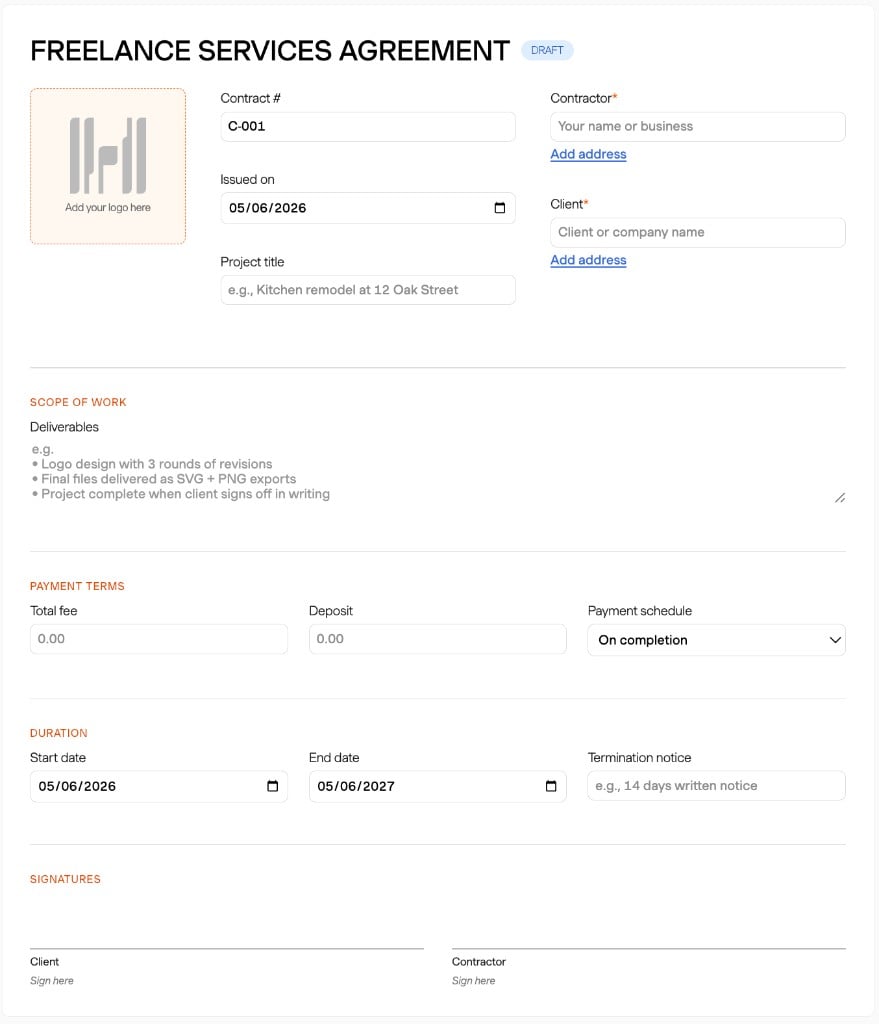
Independent contractor agreements in Sweden are crucial for defining the relationship between a contractor and a client, avoiding misclassification, and ensuring compliance with legal obligations. In the Swedish context, an independent contractor agreement, known as "konsultavtal" or "uppdragsavtal," is not governed by specific legislation but by general contract law. This means the actual working conditions play a pivotal role in determining the nature of the relationship, rather than just the contract's title. Misclassification can lead to significant legal and tax implications, such as demands for employer contributions from the Swedish Tax Agency (Skatteverket).
To ensure compliance, the agreement should clearly delineate the contractor's independence, avoiding conditions that imply employee status, such as control over work hours and location, or long-term exclusive engagements. Furthermore, contractors in Sweden with an F-skattsedel are responsible for their own taxes, typically 30-33% of their income, and social contributions. This autonomy is a key aspect distinguishing them from employees who fall under the Employment Protection Act (LAS).
While Harvest doesn't offer legal contract templates, it supports contractors in managing their time, expenses, and invoices efficiently, allowing them to focus on meeting their contractual obligations without administrative burdens.