
Harvest
Contracts
Sign up

Nda Template in Turkish

Harvest helps businesses focus on strategic tasks by taking care of time tracking and invoicing, leaving you more time to ensure your Turkish NDA is compliant and precise.

Start from a template

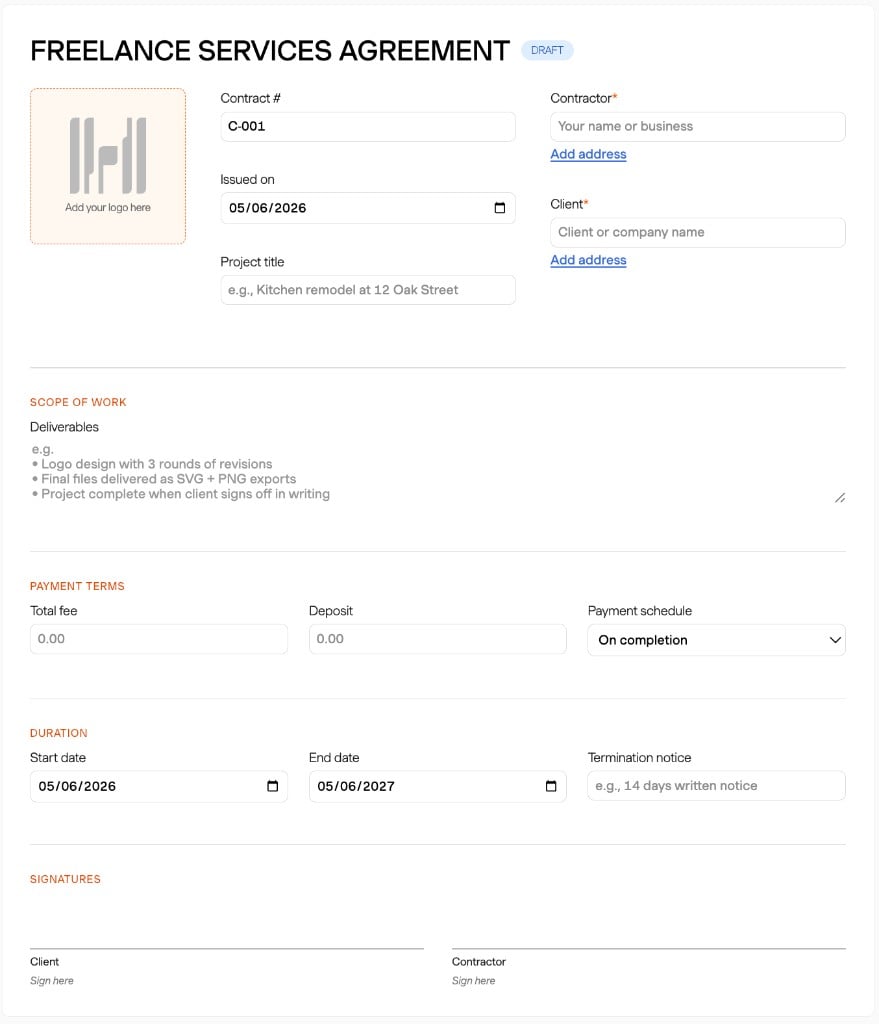
AGREEMENT DRAFT

Add your logo here

Scope of work

Payment terms

Duration

Signatures

Client

Sign here

Contractor

Sign here

Get paid via:
Credit card / Debit card
ACH
Wire transfer

Customize contract

Appearance

Add a logo
Show contract title

Contract settings

Include payment terms Total fee, deposit, and schedule
Include termination clause Notice required to end the contract
Include signature blocks Both parties sign at the bottom

Understanding NDA Requirements in Turkey

In Turkey, non-disclosure agreements (NDAs) are essential for protecting confidential business information. These agreements are governed by the Turkish Code of Obligations No. 6098, which provides the legal framework for contracts. Additionally, the Turkish Commercial Code No. 6102, the Turkish Penal Code No. 5237, and the Personal Data Protection Law No. 6698 (KVKK) play crucial roles in regulating NDAs. For instance, the KVKK mandates that businesses protect personal data and ensure its security, adding an extra layer of compliance for NDAs involving personal information.

Legal compliance is paramount when drafting an NDA in Turkey. A breach can lead to significant legal consequences, including lawsuits, injunctions, and claims for damages. The Turkish Penal Code Article 239 even criminalizes the unauthorized disclosure of trade secrets, with penalties including imprisonment and fines. Therefore, having a legally compliant NDA is not just a good practice but a necessity.

Key Elements of a Turkish NDA Template

Creating an NDA template in Turkish requires careful consideration of several key elements to ensure compliance and enforceability. One of the first steps is to clearly define "Confidential Information," as vague or overly broad definitions can render the NDA unenforceable. It's crucial to specify what constitutes confidential information and outline the obligations of the receiving party regarding its use.

Another important aspect is the inclusion of liquidated damages clauses, known as cezai şart in Turkish. These clauses pre-determine penalty amounts for breaches, providing a clear mechanism for enforcement. However, under Article 182 of the Turkish Code of Obligations, courts have the authority to reduce excessive penalties if they are disproportionate to the breach's severity.

Lastly, NDAs should be integrated with Turkey's data protection laws, especially when handling personal data. This includes ensuring compliance with the KVKK, such as establishing a legal basis for data processing and addressing cross-border data transfers.

Avoiding Common Pitfalls in NDA Drafting

Drafting an NDA in Turkey requires precision and awareness of potential pitfalls. One common mistake is using broad or vague definitions of confidential information, which can lead to unenforceable agreements. For instance, a tech company's NDA was invalidated due to its inclusion of information that an investor could independently access.

To prevent such issues, it's essential to use precise language and clearly define the scope and duration of confidentiality. Additionally, avoid clauses that demand illegal actions or create unbalanced obligations, as these can also render the NDA void.

Leveraging electronic signatures in compliance with Turkey's Electronic Signature Law No. 5070 can streamline the execution process, as qualified electronic signatures hold the same legal weight as handwritten signatures.

Practical Steps for Customizing Your NDA

Customizing an NDA template for your business in Turkey involves a step-by-step framework. Begin by identifying the parties involved and the purpose of the agreement. Clearly define the confidential information and outline the receiving party's obligations. Specify permitted disclosures and set a reasonable duration for confidentiality.

It's also crucial to define remedies for breaches and include standard legal clauses, such as applicable law and dispute resolution. A final review by a legal professional is recommended to ensure practicality and compliance with Turkish laws.

As a best practice, consider preparing bilingual versions of the NDA to avoid translation errors, a common source of disputes in international business transactions, which account for approximately 75% of related disagreements.

Discover Harvest for Accurate NDA Tracking

Explore how Harvest helps streamline time tracking and invoicing, freeing up time to focus on creating a compliant NDA in Turkish.

Harvest dashboard showing time tracking for Turkish NDA projects.

Nda Template in Turkish FAQs

  • NDAs in Turkey must comply with the Turkish Code of Obligations No. 6098, the Commercial Code No. 6102, and the Personal Data Protection Law No. 6698 (KVKK). These regulations ensure proper definition, protection, and handling of confidential information.

  • To ensure enforceability, use precise language, clearly define confidential information, and integrate the NDA with data protection laws. Include liquidated damages clauses and ensure compliance with the KVKK for personal data.

  • A Turkish NDA template should include definitions of confidential information, obligations of the receiving party, permitted disclosures, duration of confidentiality, and remedies for breaches. It's also advisable to prepare bilingual versions to avoid translation disputes.

  • Yes, electronic signatures are valid for NDAs in Turkey. The Electronic Signature Law No. 5070 establishes that qualified electronic signatures have the same legal effect as handwritten signatures, streamlining the signing process.

  • Common pitfalls include vague definitions, overly broad scopes, and unbalanced obligations. These can render an NDA unenforceable, so precise language and clear delineation of terms are crucial.

  • Customizing an NDA involves identifying parties, defining confidential information, specifying obligations, and setting confidentiality duration. A final legal review ensures compliance and practicality.

  • Translation errors can lead to disputes in international business, with about 75% of related issues stemming from such inaccuracies. Preparing bilingual versions helps prevent misunderstandings.