
Harvest
Contracts
Sign up

Independent Contractor Agreement Template in Turkish

Harvest supports contractors by offering robust tools for time tracking, expense management, and invoicing, essential for maintaining efficient operations.

Start from a template

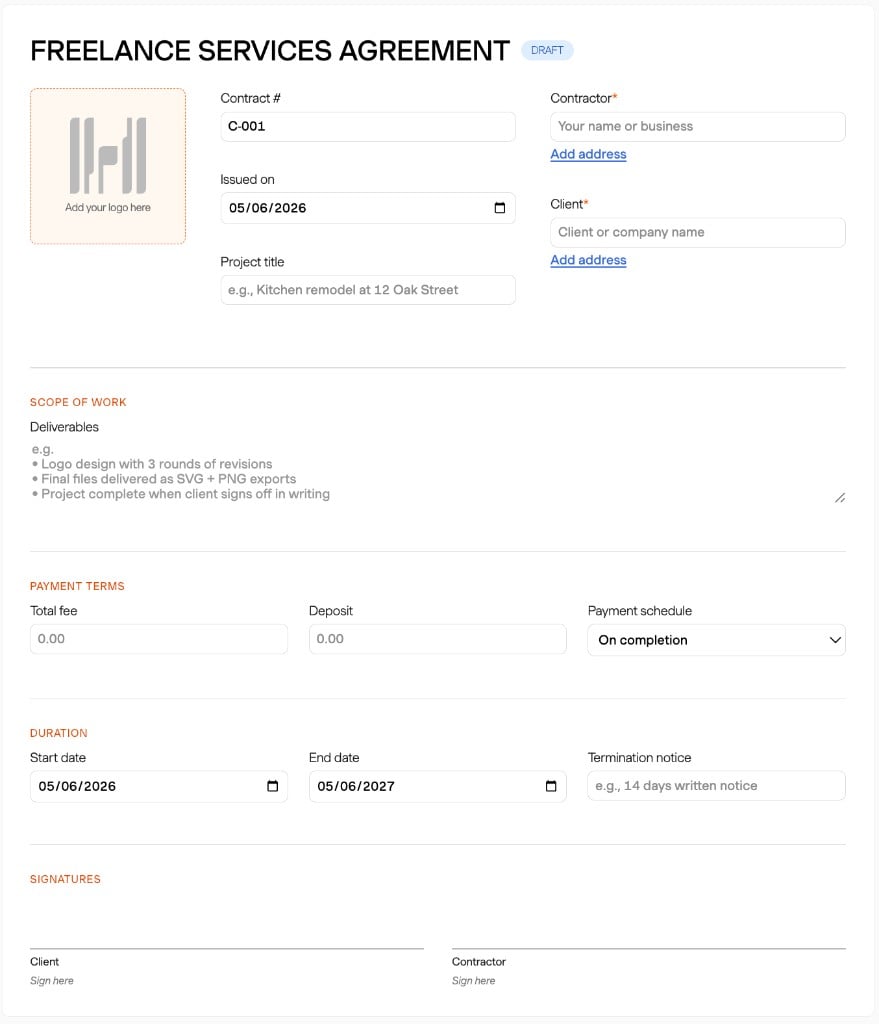
AGREEMENT DRAFT

Add your logo here

Scope of work

Payment terms

Duration

Signatures

Client

Sign here

Contractor

Sign here

Get paid via:
Credit card / Debit card
ACH
Wire transfer

Customize contract

Appearance

Add a logo
Show contract title

Contract settings

Include payment terms Total fee, deposit, and schedule
Include termination clause Notice required to end the contract
Include signature blocks Both parties sign at the bottom

Understanding Independent Contractor Agreements in Turkey

Independent contractor agreements in Turkey are essential legal documents that define the relationship between a business and a self-employed individual. Unlike traditional employment contracts, these agreements establish a framework that protects both parties by outlining the scope of work, payment terms, and other critical elements. The Turkish Code of Obligations (TCO) governs these agreements, and businesses must ensure compliance to avoid misclassification risks. Misclassifying a worker can lead to severe consequences, including hefty fines and retroactive payment obligations.

Legal experts emphasize that an effective agreement should comprehensively address issues such as intellectual property ownership, confidentiality, and dispute resolution mechanisms. It's crucial to draft contracts that clearly differentiate independent contractors from employees, focusing on deliverables rather than controlling work processes. This clarity not only ensures compliance but also protects the business's interests if disputes arise.

Key Clauses for Turkish Independent Contractor Agreements

Creating an independent contractor agreement in Turkey involves including specific clauses that meet local legal standards. Essential elements include the scope of work, payment terms, and contract duration. Intellectual property (IP) rights are particularly crucial in sectors like IT, where ownership of work products can significantly impact business operations. The agreement must also address confidentiality and data protection to protect sensitive business information.

Scope of work clauses should detail the expected deliverables and timelines, while payment terms must specify the payment structure, whether fixed fee or hourly, to prevent disputes. Additionally, termination clauses should outline the conditions under which the contract can be dissolved, ensuring both parties have a clear understanding of their rights and obligations. Legal counsel familiar with Turkish employment laws can provide invaluable guidance in drafting agreements that are enforceable and compliant with Turkish regulations.

Navigating Compliance and Legal Risks

Compliance with Turkish legal requirements is paramount when drafting independent contractor agreements. The Turkish Labour Act No. 4857 and related laws impose strict regulations on worker classification and contractual obligations. Misclassification of workers as independent contractors, when they should be employees, can result in penalties, including fines and retroactive benefits contributions. Companies engaging contractors should regularly conduct classification audits to mitigate these risks.

Furthermore, Turkish law mandates that independent contractors manage their own tax obligations, including income tax, VAT, and social security contributions. Both parties must understand their respective responsibilities to avoid legal complications. Documentation is critical; maintaining thorough records of contracts, invoices, and communications helps demonstrate compliance and independence in the working relationship.

Customizing Templates for Specific Needs

Customizing an independent contractor agreement template to fit specific needs is crucial for compliance and operational effectiveness. While templates provide a practical starting point, they must be tailored to reflect the unique circumstances of each engagement. This customization includes defining the scope of work, payment structures, and contract length.

For businesses operating in Turkey's digital economy, addressing the specific legal needs related to data protection and intellectual property is essential. Consulting with legal professionals to ensure the agreement aligns with Turkish laws and business objectives will help mitigate risks. As the Turkish market continues to embrace flexible work arrangements, having robust, compliant agreements becomes increasingly important.

How Harvest Supports Contractors

While Harvest does not provide legal or tax services for creating independent contractor agreements, it supports contractors in other critical areas like time tracking, expense management, and invoicing. Harvest offers tools that help manage project budgets, track billable hours, and organize expenses, which are vital for maintaining efficient operations.

Harvest's features give contractors the visibility they need to monitor project progress and profitability, streamlining administrative tasks. By focusing on these operational aspects, Harvest allows contractors to dedicate more time to their core business activities, enhancing productivity and financial management. This makes Harvest an indispensable tool for contractors looking to optimize their workflows.

Optimize Your Agreements with Harvest

Explore how Harvest supports Turkish contractors with time tracking, expense management, and invoicing solutions.

Screenshot of Harvest's tools for managing contractor agreements in Turkish.

Independent Contractor Agreement Template in Turkish FAQs

  • Essential clauses in a Turkish independent contractor agreement include the scope of work, payment terms, intellectual property rights, confidentiality, and termination conditions. These elements ensure clarity and legal compliance, protecting both parties in the agreement.

  • To ensure compliance, draft your contractor agreement in line with the Turkish Code of Obligations and consult with legal counsel familiar with Turkish employment laws. Regularly audit worker classifications to avoid misclassification risks and maintain thorough documentation.

  • Independent contractors in Turkey are responsible for their own tax obligations, including income tax, VAT, and social security contributions. They must register with the Turkish tax office and the Social Security Institution (SGK) to manage these responsibilities.

  • Customize a template by outlining specific scope of work, payment structures, and contract duration. Address industry-specific needs, such as data protection and intellectual property, to ensure the agreement aligns with both legal requirements and business objectives.

  • Harvest supports contractors by providing tools for time tracking, expense management, and invoicing, helping them manage project budgets and streamline administrative tasks. This enables contractors to focus on their core business activities.

  • Accurate classification avoids the severe penalties associated with misclassifying employees as independent contractors. It ensures compliance with Turkish laws and protects businesses from fines and retroactive payment obligations.

  • Misclassification can lead to significant penalties, including fines, retroactive benefits contributions, and potential legal disputes. It also risks losing intellectual property rights created by misclassified workers. Proper classification audits are essential to mitigate these risks.