
Harvest
Contracts
Sign up

Statement of Work Template in Russian

Harvest helps streamline project management by providing tools that support the creation and execution of Statements of Work (SOWs) in Russian, ensuring clarity and compliance.

Start from a template

AGREEMENT DRAFT

Add your logo here

Scope of work

Payment terms

Duration

Signatures

Client

Sign here

Contractor

Sign here

Get paid via:
Credit card / Debit card
ACH
Wire transfer

Customize contract

Appearance

Add a logo
Show contract title

Contract settings

Include payment terms Total fee, deposit, and schedule
Include termination clause Notice required to end the contract
Include signature blocks Both parties sign at the bottom

Key Components of a Statement of Work in Russian

A Statement of Work (SOW) serves as a foundational document in project management, outlining the scope, deliverables, timelines, and responsibilities. When drafting an SOW in Russian, it is crucial to include several key components to ensure clarity and enforceability. Firstly, define the subject matter clearly, specifying the nature of the work and the expected outcomes. This should be detailed enough to avoid misunderstandings and align all parties' expectations.

Secondly, specify the deliverables and associated timelines. Clearly outline each deliverable with precise deadlines to facilitate project tracking and accountability. In Russia, contracts exceeding ten thousand Roubles require a simple written form, underscoring the importance of clear documentation.

Furthermore, include payment terms, detailing how and when payments will be made. This should align with any overarching contract or service agreement to prevent disputes. Finally, integrate dispute resolution mechanisms to address potential conflicts. Given the unpredictability of Russian court decisions, a well-defined SOW can help mitigate legal risks and facilitate smoother project execution.

Legal Considerations for SOWs in Russia

Drafting a Statement of Work (SOW) in Russia requires careful consideration of legal requirements to ensure compliance and enforceability. The Civil Code of the Russian Federation provides the legal framework for contracts, emphasizing the need for written agreements, especially those involving significant sums or legal entities.

Contracts in Russia must be drawn up in Russian, and while foreign languages are permissible, a Russian translation may be necessary for legal submissions. This highlights the importance of ensuring the Russian text is meticulously accurate to avoid misinterpretations. Furthermore, essential contract elements must be included, such as the subject matter, parties' obligations, payment terms, and dispute resolution mechanisms, to prevent the contract from being voided.

Additionally, the assignment of intellectual property rights requires registration with Rospatent to be valid against third parties. This underscores the need for an SOW to address IP rights clearly, especially in tech-related projects. By adhering to these legal considerations, organizations can draft robust SOWs that support successful project outcomes.

Adapting SOW Templates for Russian Projects

Adapting a standard SOW template for use in Russian projects involves tailoring it to meet local business practices and legal standards. Begin by translating the template into Russian, ensuring that all technical terms and contractual language are accurately rendered. This step is crucial as the Russian version generally prevails in legal contexts.

Next, customize the SOW to align with the specific regulatory environment of the industry. For instance, in the IT or medical device sectors, the SOW should comply with relevant standards and regulations, such as GOST or Order 181n, which govern technical documentation requirements in Russia. Including these elements ensures the SOW is both comprehensive and compliant.

Finally, incorporate project-specific details, such as local compliance measures, to address potential regulatory changes. By integrating these adaptations, businesses can effectively utilize SOW templates in Russian, streamlining project management and minimizing risks.

Common Mistakes in SOW Management and How to Avoid Them

Managing a Statement of Work (SOW) effectively is crucial to project success, yet common pitfalls can lead to misaligned expectations and project delays. One frequent mistake is failing to clearly define the project scope, which can result in scope creep and increased costs. Utilizing SMART goals—Specific, Measurable, Achievable, Relevant, and Time-bound—can help ensure clarity and alignment.

Another common issue is inadequate communication with stakeholders. Regular reviews and updates to the SOW are essential to keep all parties informed and engaged. This can prevent deviations from the original scope and ensure ongoing alignment with project goals.

Additionally, neglecting to incorporate compliance measures can lead to legal challenges. Staying updated with regulatory changes and integrating compliance clauses within the SOW can mitigate these risks. Lastly, engaging legal counsel to review the SOW can provide a safeguard against potential legal issues, ensuring the document is thorough and enforceable.

Streamline SOWs with Harvest

Explore Harvest's tools for creating compliant and effective Statements of Work in Russian. Enhance clarity and project management efficiency.

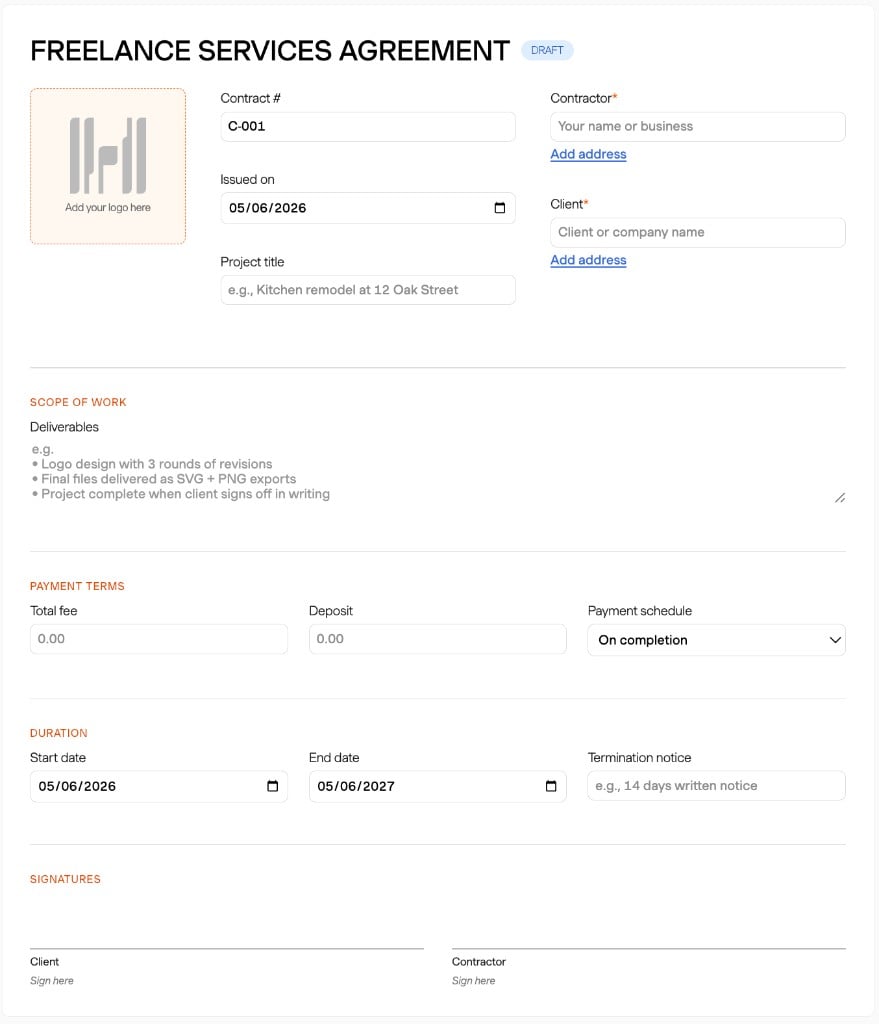
Screenshot of Harvest's Statement of Work template in Russian context.

Statement of Work Template in Russian FAQs

  • A Statement of Work (SOW) in Russian should include the subject matter, deliverables, timelines, payment terms, and dispute resolution mechanisms. These elements ensure clarity and legal compliance.

  • Yes, SOWs in Russia must adhere to the Civil Code, requiring written contracts in Russian for legal enforceability. Essential elements like subject matter and payment terms must be clearly defined.

  • To adapt a standard SOW template for Russian projects, translate it into Russian and ensure compliance with local regulations. Customize it to meet industry-specific standards like GOST or Order 181n.

  • Avoid vague project scopes, inadequate stakeholder communication, and neglecting compliance measures. Use SMART goals and consult legal counsel to ensure a robust, enforceable SOW.

  • Including compliance measures in an SOW is crucial to avoid legal challenges. Regular updates and collaboration with legal teams ensure adherence to regulatory changes.

  • The Civil Code of the Russian Federation governs contracts, emphasizing written agreements for clarity and enforceability. Contracts must be in Russian, and key terms should be clearly articulated.

  • An SOW in Russian ensures compliance with legal requirements and clarity in contractual terms. This is essential for enforceability in Russian legal contexts, where the Russian text prevails.