
Harvest
Contracts
Sign up

Contract Template for Waterproofing Contractors

Harvest offers a practical solution for waterproofing contractors needing a customizable contract template. Easily tailor agreements to meet specific project needs.

Start from a template

AGREEMENT DRAFT

Add your logo here

Scope of work

Payment terms

Duration

Signatures

Client

Sign here

Contractor

Sign here

Get paid via:
Credit card / Debit card
ACH
Wire transfer

Customize contract

Appearance

Add a logo
Show contract title

Contract settings

Include payment terms Total fee, deposit, and schedule
Include termination clause Notice required to end the contract
Include signature blocks Both parties sign at the bottom

Essential Clauses in a Waterproofing Contract

Every waterproofing contract should include several key clauses to ensure clarity and protection for both parties involved. A scope of work clause is crucial, detailing the specific tasks and responsibilities of the contractor. This prevents misunderstandings and sets expectations for the project's outcome. Additionally, a payment terms clause should outline the payment schedule, amount, and method, ensuring both parties are aligned on financial obligations.

Another vital component is a change order clause. Waterproofing projects often encounter unforeseen circumstances, and this clause specifies how changes to the project scope or timeline will be managed, including any additional costs. Finally, a warranty and guarantee clause offers peace of mind by detailing the duration, coverage, and conditions under which repairs or replacements will be made. These elements ensure the contract is comprehensive and legally enforceable.

Legal Considerations for Waterproofing Contracts

Waterproofing contracts must adhere to specific legal and regulatory requirements, which can vary significantly by location. In the United States, contractors generally need a General Contractor License and a Specialty Contractor License for waterproofing. Compliance with state and local building codes is mandatory, and failure to do so can result in costly rectifications and legal complications.

For instance, in California, legislation such as Senate Bill 721 (SB 721) mandates periodic inspections of exterior elements in multi-family buildings, with waterproofing conditions being a key focus. Similarly, in Canada, provincial and municipal regulations require proper land grading and drainage systems in new constructions to prevent water infiltration. Understanding and integrating these legal considerations into contracts can help avoid disputes and ensure project success.

Customizing Your Waterproofing Contract Template

Customizing a waterproofing contract template involves tailoring it to meet the specific needs and circumstances of each project. Begin by clearly defining the scope of work, which should include details about the materials used, the areas to be waterproofed, and any specific techniques employed. This section should also address any potential delays due to weather or unforeseen site conditions.

Incorporate specific payment terms and schedules that reflect the project's phases, ensuring alignment between work completed and payments made. Consider adding a dispute resolution clause to manage potential disagreements amicably, as well as an insurance requirement to protect against any liabilities. By customizing these elements, contractors can create a robust contract that addresses both their needs and those of their clients.

Common Payment Terms in Waterproofing Contracts

Payment terms in waterproofing contracts are critical to ensuring a smooth financial transaction throughout the project lifecycle. Typically, contracts include an initial deposit, progress payments, and a final payment upon project completion. These terms should be clearly outlined to avoid misunderstandings.

Progress payments are often linked to specific project milestones, such as the completion of particular phases of work. This structure helps manage cash flow and ensures that the contractor is compensated as the project advances. Additionally, a retainage clause—holding back a percentage of each payment until project completion—can be included to ensure that all work is completed to the client's satisfaction. Understanding and establishing these terms can enhance financial transparency and trust between parties.

Including Warranty Clauses in Waterproofing Contracts

Warranty clauses are a fundamental aspect of waterproofing contracts, providing clients with assurance about the quality and durability of the work performed. A typical warranty clause should specify the duration of the warranty, the coverage details, and the process for addressing defects.

For example, a warranty might cover defects in materials or workmanship for a period of one to five years. It's important for contractors to state what is included and excluded in the warranty clearly, to prevent disputes. Some warranties may also require periodic inspections or maintenance to remain valid, emphasizing the need for contractors to communicate these requirements to their clients effectively. By incorporating a comprehensive warranty clause, contractors can build trust and demonstrate their commitment to quality work.

Customizable Waterproofing Contract Template by Harvest

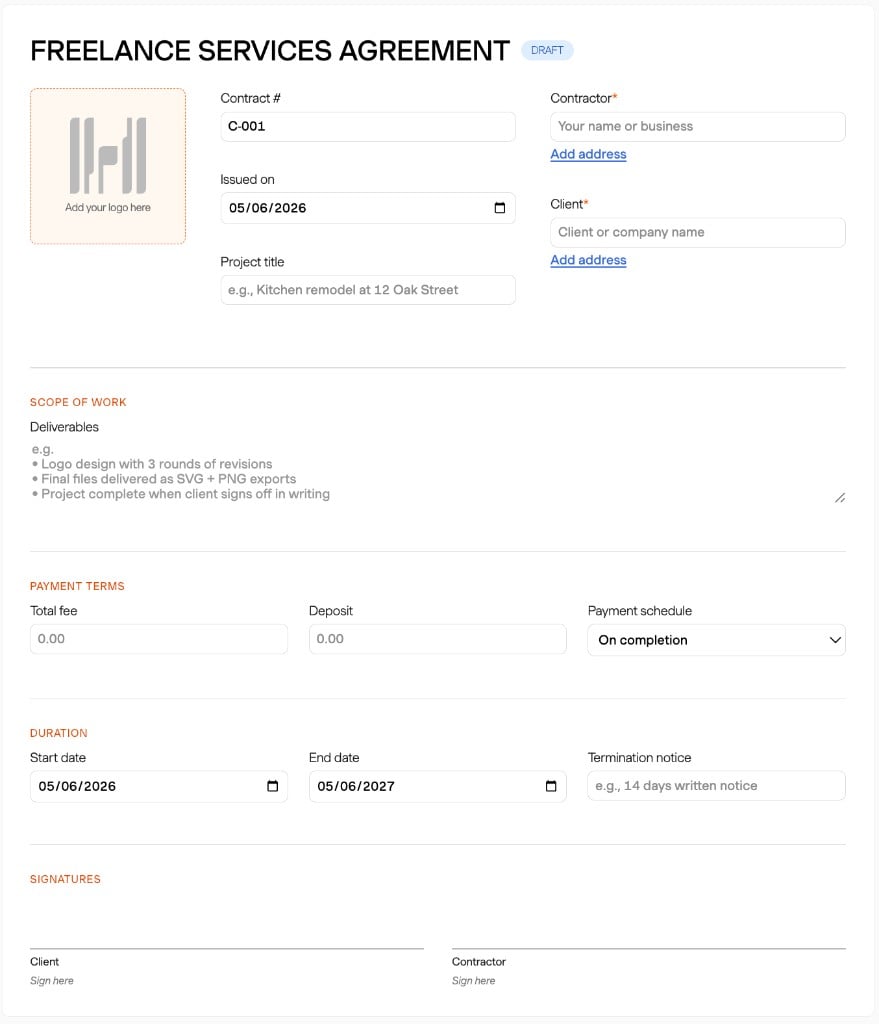
Harvest provides a customizable contract template specifically for waterproofing contractors, covering scope, payment terms, and warranties.

Harvest contract template for waterproofing contractors screenshot

Contract Template for Waterproofing Contractors FAQs

  • A waterproofing contract should include the scope of work, payment terms, change order procedures, warranty details, and insurance requirements. These elements ensure clear expectations and legal protection for both parties.

  • Customize a waterproofing contract template by detailing the specific scope of work, adjusting payment terms to align with project milestones, and adding clauses for dispute resolution and insurance. This ensures the contract meets your unique project needs.

  • Common payment terms include an initial deposit, progress payments tied to project milestones, and a final payment upon completion. A retainage clause may also be included to ensure work is completed satisfactorily.

  • Yes, waterproofing contractors in the US typically need specific licenses and must comply with state and local building codes. Contracts should reflect these legal obligations to avoid disputes and ensure compliance.

  • Warranty clauses provide assurance about the quality and durability of the work. They specify the duration and coverage of the warranty, helping to prevent disputes and build client trust. It's crucial to communicate these details clearly.

  • Using contract templates streamlines the process by providing a structured format that covers all necessary clauses. It saves time, ensures consistency, and helps clearly define the scope of work and payment terms.

  • Change order clauses outline how any modifications to the project will be managed, including additional costs and timeline adjustments. This helps prevent disputes and ensures both parties remain aligned throughout the project.