
Harvest
Expenses
Sign up

Auto Mileage Log

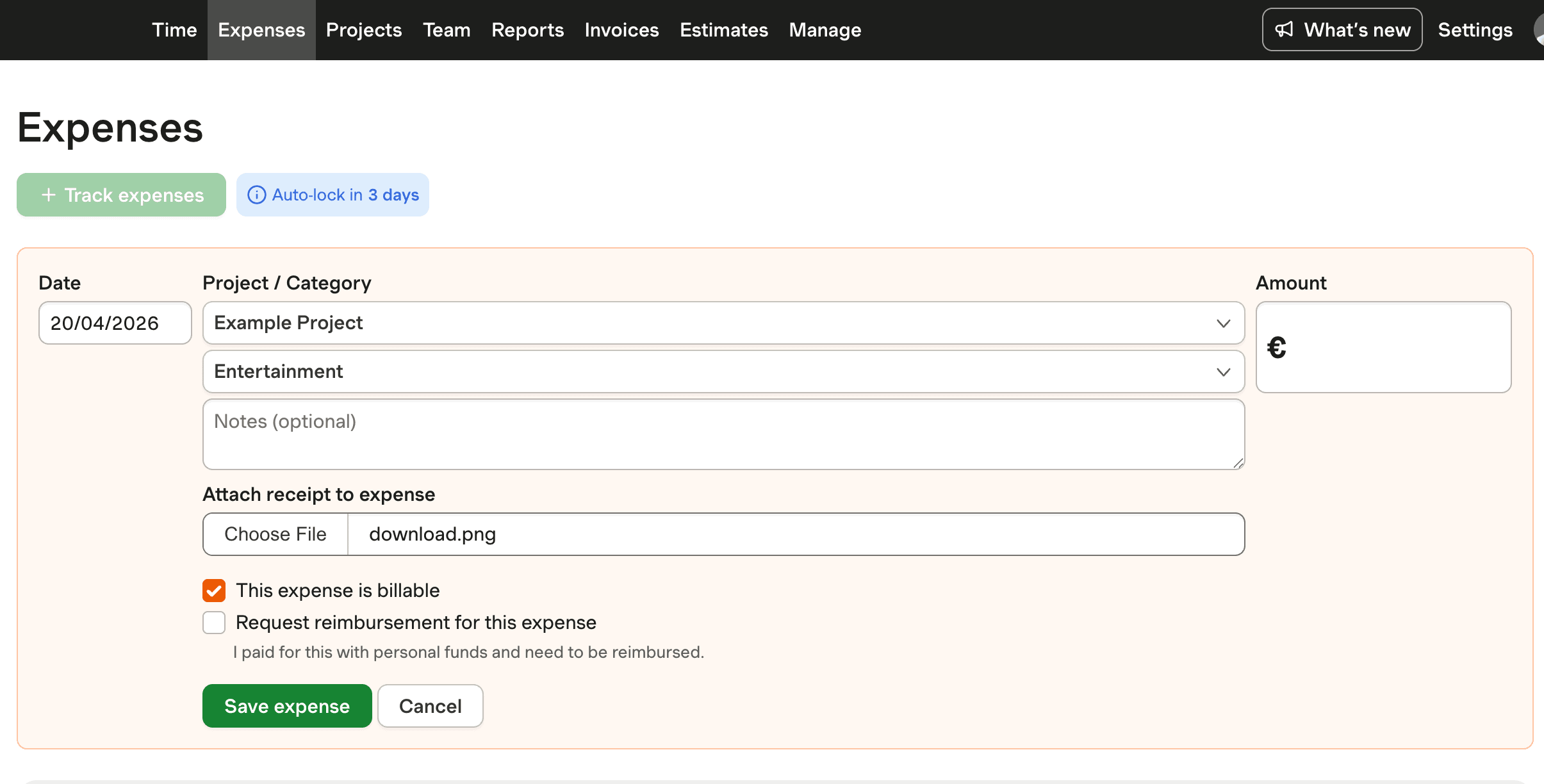
Harvest provides a straightforward way to manually track mileage expenses, ideal for small teams needing basic expense tracking without complex automation.

  • Attach receipts to projects & tasks
  • Turn tracked expenses into client invoices
  • Free 30-day trial, no credit card needed

or drag & drop • Images and PDFs, max 10 MB

Understanding IRS Requirements for Mileage Logs

To claim vehicle expenses for business tax deductions, it's essential to maintain an IRS-compliant mileage log. This log must include specific details such as the date of the trip, starting location, destination, business purpose, and the total miles driven. Additionally, annual odometer readings are required to verify total mileage and business-use calculations. Failing to maintain accurate logs can result in disallowed deductions and potential penalties during an audit.

While Harvest does not automate IRS-compliant mileage logging, it offers a simple way to manually track mileage expenses. Users can enter details such as the quantity and rate of miles driven, helping them maintain a record that supports their tax deductions.
The Benefits of Automated Mileage Tracking

Automating mileage tracking can save drivers significant time. On average, automated systems save users 42 hours annually, time that can be redirected to more valuable business activities. Automated tracking also reduces errors; nearly one-fifth of all expense reports contain errors, which take an average of 18 minutes to correct. By minimizing manual entry, businesses can achieve savings ranging from 20-30% on mileage-related expenses.

Although Harvest requires manual entry for mileage tracking, it remains a cost-effective option for small teams. By manually entering mileage expenses, users can still achieve some of the time-saving benefits of automation, albeit on a smaller scale.

Adopting Best Practices for Mileage Logging

Implementing best practices in mileage logging is crucial for accuracy and compliance. Always record trips contemporaneously — at or near the time of travel — to ensure precise records. This approach avoids issues with back-dated logs, which can be problematic during audits. It's also important to distinguish between personal, commuting, and business trips to ensure only eligible mileage is claimed.

Harvest allows users to manually track mileage expenses, which aligns with these best practices. By capturing essential trip details and maintaining consistency in logging, users can create a reliable record that supports their business tax deductions.

Integrating Mileage Tracking with Business Processes

Integrating mileage tracking with other business processes can streamline operations and improve accuracy. For example, connecting mileage logs with expense management software can reduce manual data entry, and linking with accounting platforms can simplify financial reporting. In construction, mileage data can be used for job costing and optimizing routes.

While Harvest does not offer automatic integration with accounting software for mileage expenses, its ability to copy invoices to platforms like QuickBooks Online and Xero allows for some degree of integration. This can help small businesses simplify their financial processes and ensure accurate expense tracking.

Auto Mileage Log with Harvest

See how Harvest lets you manually track mileage expenses, supporting accurate logs for business tax deductions.

Harvest mileage tracking dashboard for auto mileage log

Auto Mileage Log FAQs

  • An IRS-compliant mileage log must include the trip date, starting point, destination, business purpose, and total miles driven. Annual odometer readings are also required. Logs must be retained for at least 3 years, though many suggest up to 7 years for safety.

  • Using an automated mileage tracking app can save significant time, averaging 42 hours saved annually, and reduce errors in expense reports. These apps often include features like smart trip detection and automatic classification.

  • Yes, free templates for mileage logging are available online. These templates can help individuals maintain an IRS-compliant log by ensuring all required information is included and consistently recorded.

  • Look for features such as automatic trip detection, real-time tracking, integration with accounting software, and compliance with tax regulations. These features help ensure accuracy and ease of use.

  • Harvest allows users to manually track mileage expenses by entering the quantity and rate. While it doesn't automate tracking, it provides a straightforward method for small teams to maintain accurate records for expense tracking.

  • Common mistakes include logging trips retroactively, mixing personal and business miles, and rounding mileage estimates. To avoid these, log trips immediately, distinguish trip types, and record exact figures.

  • To make your mileage log audit-proof, ensure it is complete, accurate, and contemporaneous. Include all required details and maintain logs for the recommended retention period, which is generally 3-7 years.