
Harvest
Contracts
Sign up

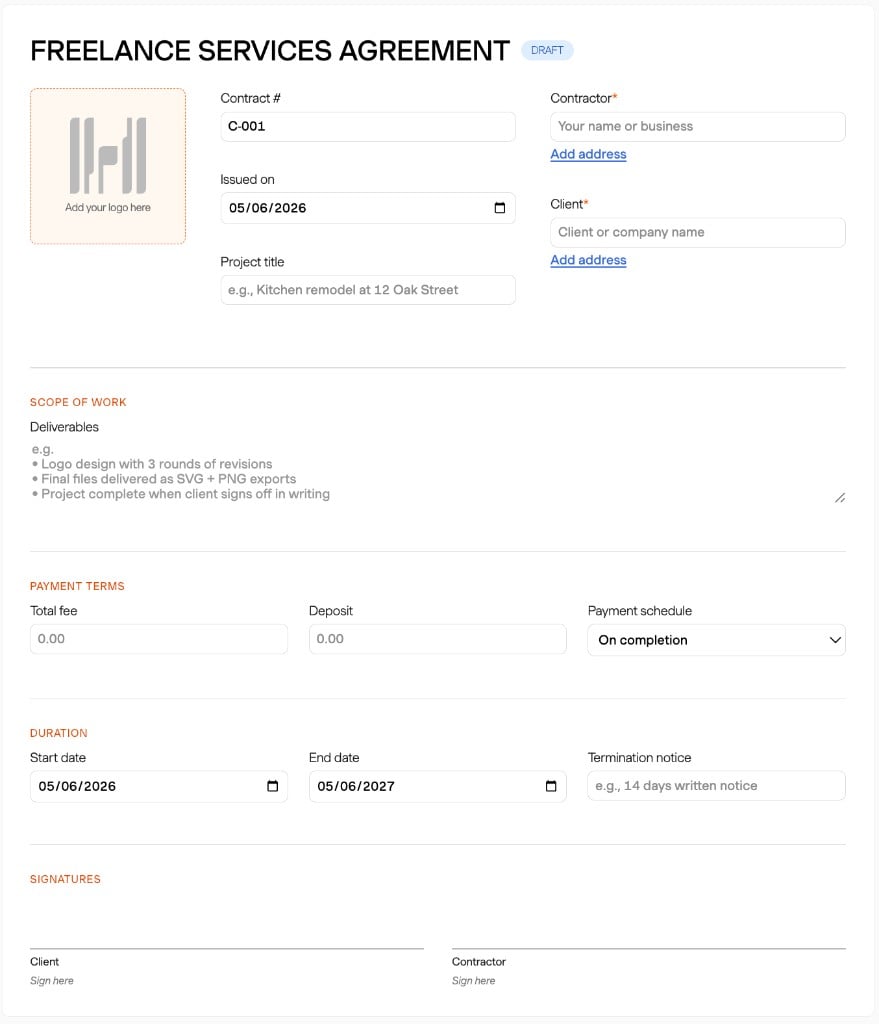
Create a Work for Hire Agreement

Work for hire agreements are crucial for ensuring intellectual property rights. Harvest assists with tracking time and managing invoicing, streamlining the contracting process.

Start from a template

AGREEMENT DRAFT

Add your logo here

Scope of work

Payment terms

Duration

Signatures

Client

Sign here

Contractor

Sign here

Get paid via:
Credit card / Debit card
ACH
Wire transfer

Customize contract

Appearance

Add a logo
Show contract title

Contract settings

Include payment terms Total fee, deposit, and schedule
Include termination clause Notice required to end the contract
Include signature blocks Both parties sign at the bottom

Understanding Work for Hire Agreements

Work for hire agreements are essential legal instruments that establish intellectual property ownership when a creative work is commissioned. These agreements are particularly crucial in determining copyright ownership under U.S. law, where a work made for hire applies in specific scenarios, such as works created by an employee or specially commissioned works fitting certain categories. This legal framework ensures the commissioning party retains rights to distribute and modify the work, safeguarding their interests and investments.

Despite their importance, many overlook the nuances of these agreements, leading to potential disputes. For instance, a news magazine might find itself without copyright ownership of an article written by a freelance journalist if a properly executed agreement isn't in place. Therefore, it's critical to understand the legal implications and ensure a written agreement is executed before the work begins, as retroactive designations are typically not permitted by the courts.

Key Components of a Work for Hire Agreement

A comprehensive work for hire agreement should include several key clauses to ensure legal enforceability. Firstly, it must explicitly state the intention to create a work-for-hire relationship, which is a requirement under U.S. Copyright Law. The agreement should clearly define the scope of work, including project details, deadlines, and deliverables, to align expectations between both parties.

Payment terms are another crucial element, outlining the compensation amount, schedule, and preferred payment method. Additionally, the contract should unequivocally state that the hiring party owns all intellectual property rights to the created work, encompassing copyrights, trademarks, and patents. This clarity helps prevent future disputes over ownership.

Moreover, incorporating confidentiality and non-disclosure provisions is vital to protect proprietary information and trade secrets. These clauses safeguard the hiring party’s confidential data, ensuring it isn’t disclosed or misused by the contractor. Finally, the agreement should include an "entire agreement" clause, which supersedes any prior understandings and mandates that modifications must be in writing and signed by both parties.

Customizing a Work for Hire Agreement

Customizing a work for hire agreement to fit specific needs involves tailoring the document to address the unique aspects of the project and the parties involved. This includes specifying the project's scope, deadlines, and deliverables, as well as any particular legal requirements based on the jurisdiction. For example, Canadian copyright law does not recognize the "work for hire" doctrine, necessitating different contractual language to ensure ownership.

Businesses should conduct due diligence when hiring contractors to confirm they are not bound by other contracts that could conflict with the work-for-hire agreement. Additionally, when engaging international contractors, it's crucial to draft agreements that comply with the local laws and language requirements of the contractor's country, as legal standards can vary significantly.

Adopting plain, clear language in the agreement not only aids in avoiding misunderstandings but also streamlines the onboarding process. This approach helps in fostering a positive working relationship with contractors and minimizes the potential for future disputes, ensuring both parties are clear on their rights and responsibilities.

Legal Considerations and Compliance

The legal landscape surrounding work for hire agreements requires careful navigation to ensure compliance and effectiveness. Under U.S. copyright law, a work-for-hire agreement must be in writing, signed by both parties, and negotiated before work commences. Failing to meet these criteria can render the agreement unenforceable, leaving the hiring party without the intended intellectual property protections.

It's important to note that the "work for hire" doctrine applies exclusively to copyrights and does not extend to other forms of intellectual property like patents or trade secrets. Therefore, additional language addressing ownership should be included in the contract to secure rights comprehensively.

Legal experts often recommend incorporating "present assignment" language in agreements with independent contractors. This ensures that copyright ownership is transferred to the hiring party even if the work-for-hire designation is later challenged. Understanding these legal nuances and proactively addressing them in the agreement helps businesses retain control over their creative assets.

The Importance of a Work for Hire Agreement

Work for hire agreements play a critical role in protecting the intellectual property rights of both parties involved in a creative commission. Approximately 70% of independent contractors report that having a written agreement clarifies expectations and safeguards their interests. Without such agreements, businesses risk losing control over essential creative assets, such as logos, software, and advertising campaigns.

Real-world examples highlight the significance of these agreements. For instance, a clothing brand hiring a photographer for a product shoot would use a work-for-hire agreement to guarantee full ownership of the images, allowing them to freely edit and publish the photos. Similarly, startups often employ independent contractor agreements with work-for-hire clauses to ensure they own all rights to the creative outputs produced by freelancers.

The evolving nature of work, with increasing remote and AI-related projects, underscores the need for robust legal protections through work for hire agreements. As businesses navigate these complexities, having a clear, well-drafted agreement is crucial in maintaining control and preventing potential conflicts over intellectual property rights.

Create a Work for Hire Agreement with Harvest

Harvest helps you draft comprehensive work for hire agreements, ensuring your intellectual property rights are protected.

Screenshot of Harvest's work for hire agreement creation tool.

Create a Work for Hire Agreement FAQs

  • A work for hire agreement is a legal document that determines the ownership of intellectual property when a creative work is commissioned. It ensures the hiring party retains rights to use and modify the work.

  • Key clauses include the scope of work, payment terms, intellectual property rights, confidentiality, and non-disclosure provisions. An "entire agreement" clause is also recommended.

  • Customize by specifying project details, deadlines, and deliverables. Ensure compliance with local laws, especially when hiring international contractors, and use clear language to avoid misunderstandings.

  • Legally, the agreement must be in writing and signed before work begins. It applies to copyrights, not other IP forms, and should include ownership transfer language to ensure enforceability.

  • Businesses and individuals commissioning creative works, such as logos or software, need these agreements to secure ownership and prevent disputes over intellectual property rights.

  • Having an agreement clarifies expectations and rights, protecting both parties. It prevents disputes and ensures the hiring party retains necessary control over creative outputs.

  • Common mistakes include failing to meet statutory criteria, not clearly stating ownership rights, and using vague language. Ensuring the agreement is signed before work starts is also crucial.