
Harvest
Contracts
Sign up

Contract Template in Vietnamese

Navigating the complexities of Vietnamese contract law is crucial for businesses operating in Vietnam. Harvest offers comprehensive solutions to streamline contract management, ensuring compliance and efficiency.

Start from a template

AGREEMENT DRAFT

Add your logo here

Scope of work

Payment terms

Duration

Signatures

Client

Sign here

Contractor

Sign here

Get paid via:
Credit card / Debit card
ACH
Wire transfer

Customize contract

Appearance

Add a logo
Show contract title

Contract settings

Include payment terms Total fee, deposit, and schedule
Include termination clause Notice required to end the contract
Include signature blocks Both parties sign at the bottom

Understanding Vietnamese Contract Requirements

In Vietnam, contracts must adhere to specific legal standards to be considered valid. According to Article 117 of the Civil Code 2015, a contract requires mutual consent, competent parties, lawful purpose, and compliance with formalities. While many contracts can be verbal, those involving land or mortgages must be written and notarized. This ensures that all parties understand the agreement and that it holds up under legal scrutiny.

Despite the flexibility in form, it's crucial to remember that electronic contracts are increasingly common, especially in e-commerce. With Vietnam aiming for over 80% digital contract adoption by 2025, businesses are embracing electronic signatures and centralized digital storage. However, ensuring these contracts are crafted in Vietnamese, or include a bilingual version, is vital. The Vietnamese version often prevails in legal matters, particularly if disputes arise.

Common Pitfalls in Vietnamese Contracts

Foreign businesses often encounter challenges when drafting contracts in Vietnam. A frequent issue is the use of generic HR templates that fail to comply with local labor laws, such as the requirement for salaries to be stated in Vietnamese Dong. Additionally, bilingual contracts can pose risks if the language clause is vague, leading to legal uncertainty. Vietnamese courts generally prioritize the Vietnamese text unless an arbitration agreement specifies otherwise.

Inaccurate translations can also cause significant problems. Concepts like "indemnification" in common law do not always translate cleanly into Vietnamese civil law, leading to unenforceable clauses. To mitigate these risks, businesses should engage professional legal translators and conduct side-by-side legal reviews to ensure consistency and compliance.

Drafting Effective Contracts in Vietnam

Drafting effective contracts in Vietnam requires attention to detail and clarity. Legal experts advise against using generic templates without customization. Contracts should clearly define all terms, roles, and obligations, and include precise delivery and payment terms to prevent ambiguity. This level of detail protects all parties by reducing the risk of disputes over interpretation.

Incorporating robust dispute resolution clauses is also essential. Experts recommend a multi-step process, beginning with negotiation or mediation, before moving to arbitration or court proceedings. The Vietnam International Arbitration Center (VIAC) is a popular choice due to its enforceable awards, providing a reliable framework for resolving disputes.

Leveraging Digital Contracts for Efficiency

The shift towards electronic contracts in Vietnam offers significant advantages. Digital contracts save time and reduce costs while aligning with the government's digital transformation goals. By 2026, all electronic labor contracts must be digitally created and stored on a centralized platform, enhancing efficiency and compliance with regulatory standards.

One of the key drivers behind this shift is the booming e-commerce sector, which demands agility and cross-border capabilities. As businesses increasingly adopt digital contracts, they benefit from streamlined processes and secure digital signatures. This not only enhances operational efficiency but also opens up new opportunities for international trade.

Ensuring Compliance and Legal Soundness

To ensure compliance with Vietnamese law, businesses must thoroughly understand local contract requirements. This includes adhering to the maximum penalty caps for breaches, which are set at 8% for commercial contracts. Moreover, maintaining detailed documentation of all contract-related activities is crucial for legal protection.

For complex or high-value contracts, seeking expert legal counsel is highly recommended. Experienced legal professionals can navigate the intricacies of Vietnamese law, ensuring that contracts are robust and enforceable. This proactive approach minimizes risks and safeguards business interests in a dynamic legal environment.

Vietnamese Contract Templates with Harvest

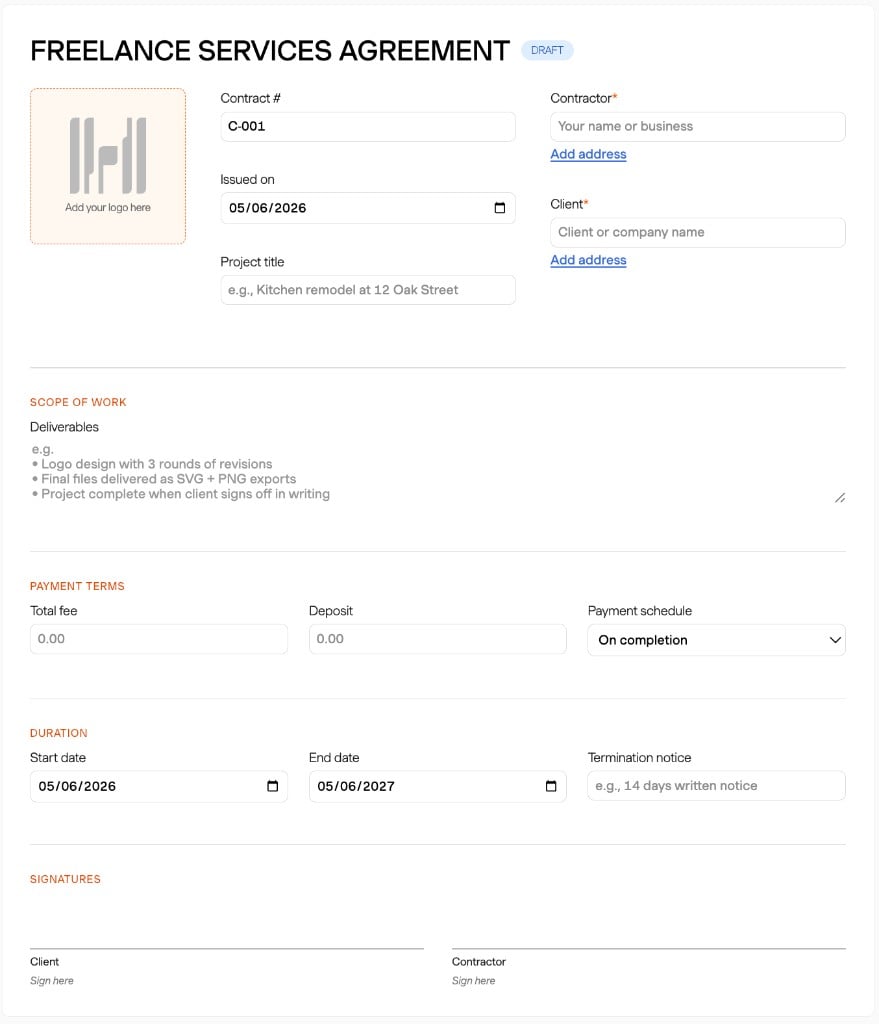
Explore Harvest's solutions for managing Vietnamese contracts, offering templates that ensure compliance and efficiency.

Screenshot of a Vietnamese contract template in Harvest.

Contract Template in Vietnamese FAQs

  • In Vietnam, a contract must meet four conditions for validity: mutual consent, competent parties, lawful purpose, and compliance with formalities. Specific types like land contracts require written format and notarization.

  • Businesses should draft contracts in Vietnamese or bilingually, engage professional translators, and seek legal counsel to ensure compliance. Key elements include stating salaries in Vietnamese Dong and adhering to legal formalities.

  • Bilingual contracts must clearly state which language prevails to avoid disputes. Vietnamese courts will favor the Vietnamese version if no arbitration agreement is in place, making consistency crucial.

  • Digital contract adoption is rapidly increasing, driven by e-commerce growth and government initiatives. By 2025, over 80% of businesses aim to use digital contracts, enhancing efficiency and reducing costs.

  • Electronic contracts save time and costs, enabling quick execution and storage. They align with Vietnam's digital transformation goals and support cross-border business opportunities.

  • Contracts should define terms clearly, specify roles and obligations, and include detailed delivery and payment terms. This precision helps prevent misunderstandings and disputes.

  • Incorporate robust dispute resolution clauses, starting with negotiation or mediation. Consider arbitration through institutions like VIAC for enforceable awards, ensuring a clear path to resolution.

  • The maximum penalty for commercial contract breaches is 8% of the breached obligation's value. For construction contracts with public funds, it can rise to 12%.

  • Legal experts ensure contracts comply with local laws, reducing risk. They help navigate complexities and protect business interests, especially in high-value or complex agreements.