
Harvest
Contracts
Sign up

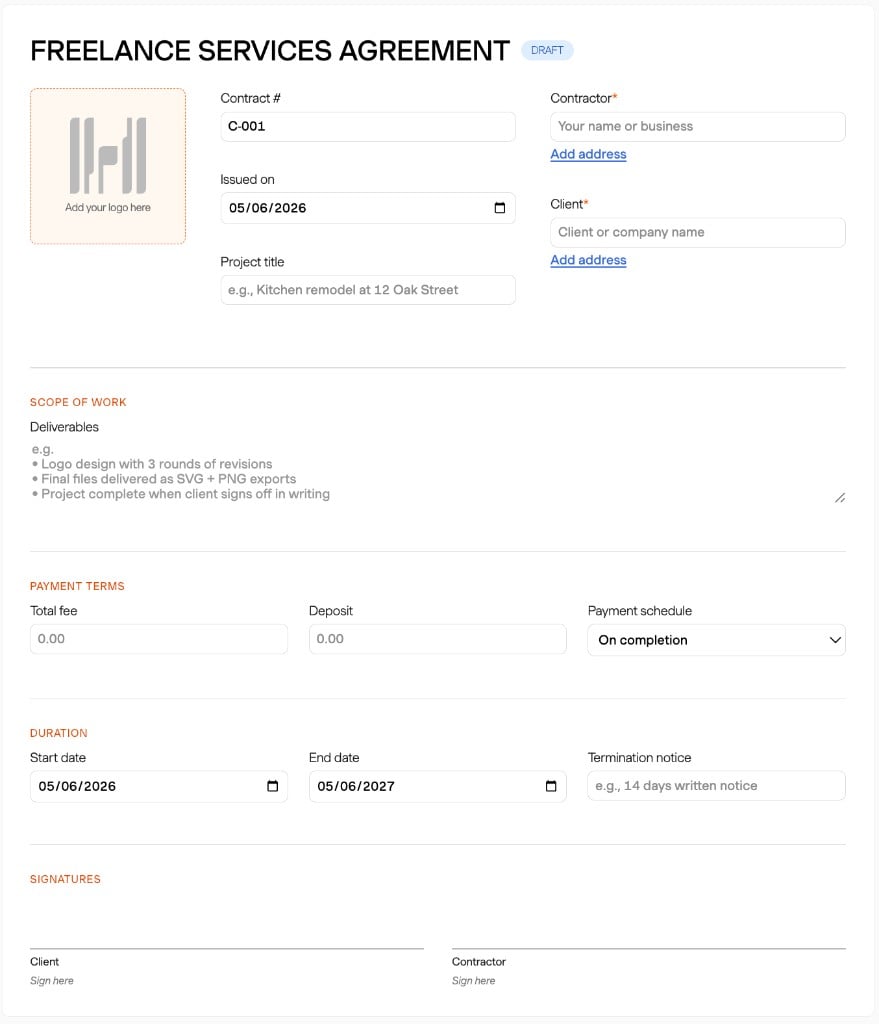
Create a Subcontractor Agreement

Creating a subcontractor agreement is crucial for clear project execution. Harvest helps by tracking project timelines, managing expenses, and invoicing, ensuring smooth coordination.

Start from a template

AGREEMENT DRAFT

Add your logo here

Scope of work

Payment terms

Duration

Signatures

Client

Sign here

Contractor

Sign here

Get paid via:
Credit card / Debit card
ACH
Wire transfer

Customize contract

Appearance

Add a logo
Show contract title

Contract settings

Include payment terms Total fee, deposit, and schedule
Include termination clause Notice required to end the contract
Include signature blocks Both parties sign at the bottom

Essential Components of a Subcontractor Agreement

A subcontractor agreement is a critical document that outlines the terms of engagement between a main contractor and a specialist, ensuring clarity and mitigating risks. To craft an effective agreement, it must include several essential components. First, the scope of work should be clearly defined, detailing specific tasks, deliverables, and timelines. This clarity reduces the risk of scope creep, a common issue where additional work is added without formal agreements. Industry data shows that clear agreements enhance project efficiency, often reducing delays and improving coordination.

Additionally, payment terms must be detailed, outlining how and when subcontractors will be paid. This includes specifying milestones and conditions for progress payments, which can prevent disputes over finances. Legal considerations are paramount; understanding local, state, and federal laws, such as the Fair Labor Standards Act (FLSA) in the U.S., ensures compliance and avoids misclassification risks. Harvest can assist by tracking project timelines and expenses to support these components, though legal advice is recommended for the agreement itself.

Customizing Your Subcontractor Agreement Template

Customizing a subcontractor agreement template allows businesses to tailor the document to specific project needs and legal requirements. Begin by identifying the parties involved and ensuring their correct legal identification to avoid issues during claims or insolvency. Next, include insurance and licensing requirements, though Harvest focuses on time tracking rather than these legal aspects.

Crafting a comprehensive agreement involves establishing change order procedures to manage project modifications. Harvest supports this by tracking changes in project timelines and expenses, allowing for seamless integration into subcontractor agreements. For construction projects, include quality standards and dispute resolution mechanisms to address common challenges like inconsistent work quality and poor communication.

Legal Considerations and Compliance in Subcontractor Agreements

Legal compliance is paramount when drafting subcontractor agreements. Each country has specific regulations; in the U.S., for example, misclassification under the Fair Labor Standards Act (FLSA) can lead to significant fines. In the UK, compliance with the IR35 off-payroll working rules is essential. Therefore, consulting a legal expert to review agreements is advisable to ensure they are enforceable and tailored to specific projects.

While Harvest does not manage legal protections or compliance, it can enhance project management through its time tracking and invoicing features, supporting clear payment terms and change order management. By integrating these capabilities, contractors can improve project oversight without assuming unsupported legal functions.

Common Pitfalls to Avoid in Subcontractor Agreements

Subcontractor agreements can falter if common pitfalls are not addressed. One major issue is the lack of a standardized template, which can lead to inconsistencies and wasted time. Using a well-structured template ensures quality and efficiency. Additionally, failing to secure a signed contract before work commences can result in unfavorable terms; always ensure agreements are finalized beforehand.

Another frequent problem is vague terms, particularly around the scope of work and payment schedules. These ambiguities often cause disputes, so detailed definitions are essential. While Harvest does not handle confidentiality agreements or warranty clauses, its focus on detailed project tracking and invoicing can support the documentation of clear scopes and payment terms, reducing these risks.

Integrating Subcontractor Agreements with Project Management

Integrating subcontractor agreements with project management processes enhances efficiency and communication. These agreements should align with project timelines, milestones, and reporting requirements, all of which Harvest can help manage through its project tracking features. Establishing clear communication protocols is crucial, supported by tools that enable real-time data access and automated workflows.

Financial management is another critical integration point. Agreements should detail invoicing procedures and conditions for payments, which Harvest facilitates through its invoicing capabilities. By bridging these elements, contractors can achieve a more cohesive and streamlined project management approach, ensuring that subcontractor agreements are not isolated but part of a comprehensive project strategy.

Create a Subcontractor Agreement with Harvest

See how Harvest tracks timelines and manages expenses for effective subcontractor agreements.

Harvest project tracking and timelines for subcontractor agreements

Create a Subcontractor Agreement FAQs

  • An effective subcontractor agreement should include a clear scope of work, payment terms, and compliance with legal requirements. It must also address dispute resolution and change order procedures.

  • Start by identifying the parties and their legal obligations. Tailor the scope of work, payment terms, and include specific clauses like change order procedures. Harvest can assist in managing project timelines and expenses.

  • Ensure compliance with local, state, and federal laws, such as classification standards under the FLSA in the U.S. Legal review is recommended for crafting enforceable agreements.

  • Harvest supports project management by tracking timelines and expenses, facilitating clear payment terms and change order management, but it does not handle legal aspects of agreements.

  • Avoid vague terms and ensure a standardized template is used. Secure signed contracts before work starts and integrate agreements with project management processes for efficiency.

  • They should align with project timelines and milestones, which can be managed through tools like Harvest. Clear communication and financial management are also essential for integration.

  • Having a signed agreement ensures that all terms are clear and enforceable, preventing disputes and aligning all parties on responsibilities and payment terms before work starts.