
Harvest
Contracts
Sign up

Property Management Contract Template

Harvest provides a customizable property management contract template, offering clarity on responsibilities and terms for effective management. Simplify your contract process with Harvest.

Start from a template

AGREEMENT DRAFT

Add your logo here

Scope of work

Payment terms

Duration

Signatures

Client

Sign here

Contractor

Sign here

Get paid via:
Credit card / Debit card
ACH
Wire transfer

Customize contract

Appearance

Add a logo
Show contract title

Contract settings

Include payment terms Total fee, deposit, and schedule
Include termination clause Notice required to end the contract
Include signature blocks Both parties sign at the bottom

Essential Elements of a Property Management Contract

A property management contract is a pivotal document outlining the responsibilities and expectations between property owners and managers. It must cover critical elements to ensure both parties are protected and disputes are minimized. The contract should clearly define the scope of services, including rent collection, maintenance responsibilities, tenant screening, and financial reporting. This clarity helps avoid misunderstandings and sets a solid foundation for the property management relationship.

Beyond basic responsibilities, the contract should include specific clauses for termination, outlining the conditions and notice periods required to end the agreement, typically 30, 60, or 90 days. Additionally, it must detail the property manager's fees and any additional charges for specific services. Industry experts emphasize the importance of transparency in these fees, warning against vague or hidden charges that may impact the owner's profitability.

It's also crucial to address state-specific legal requirements within the contract. For example, states like California and New York have mandatory disclosure rules and security deposit accounting regulations that need to be incorporated. By customizing the contract to meet these requirements, property managers can ensure compliance and protect both their interests and those of the property owner.

Customizing a Property Management Contract Template

While property management contract templates provide a valuable starting point, customization is key to addressing specific property needs. Templates should be tailored to include property-specific rules, such as maintenance spending limits and decision-making processes, particularly for properties with multiple owners. This customization ensures that the contract accurately reflects the unique aspects of the property and the owner's expectations.

Industry experts recommend defining tenant screening criteria within the contract, specifying requirements for credit checks, income verification, and rental history. By clearly outlining these criteria, property managers can ensure the selection of qualified and responsible renters, thereby minimizing the risk of tenant-related issues.

Another critical aspect of customization is the inclusion of a proactive maintenance plan. A well-structured plan with a preventive maintenance schedule can significantly reduce long-term repair costs and prevent financial shocks from emergency repairs. This foresight not only maintains property value but also contributes to tenant satisfaction and retention.

Navigating Legal and Compliance Considerations

Property management contracts are legally binding agreements that require careful attention to legal and compliance considerations. It's essential to ensure the contract complies with state-specific licensing and disclosure requirements. For example, in Florida, specific rules govern property management agreements, and failing to comply can lead to legal complications.

Document retention is another critical compliance aspect. Property managers are advised to keep copies of all expired leases for a minimum of seven years to cover potential disputes related to security deposits and lease violations. Financial records, such as bank statements and owner statements, should be retained for at least three years, as required in states like Arizona.

Furthermore, understanding statutes of limitations is vital. In Florida, the statute of limitations for enforcing contract provisions is five years, while verbal contracts have a four-year limit. These legal frameworks provide a timeline for addressing potential disputes and ensure both parties can enforce their contractual rights effectively.

Leveraging Technology in Property Management

The property management industry is rapidly evolving with technology playing a central role. Over 90% of property managers now use technology to manage their portfolios, indicating a strong shift towards digital solutions. This adoption enhances efficiency, transparency, and tenant satisfaction, as over 80% of tenants expect tech-driven management practices.

Innovations like blockchain and smart contracts are transforming property management by enabling secure, transparent transactions and automating routine tasks. These technologies reduce administrative overhead and enhance security, offering significant advantages for property managers.

AI and machine learning are also making waves, with predictive analytics and automated customer service improving operational efficiency. For example, AI-driven platforms have shown to significantly increase tour-to-lease conversion rates, as seen with QuadReal's 33% improvement after implementing such technologies. By embracing these advancements, property managers can streamline operations and improve tenant experiences.

Explore Harvest's Contract Template

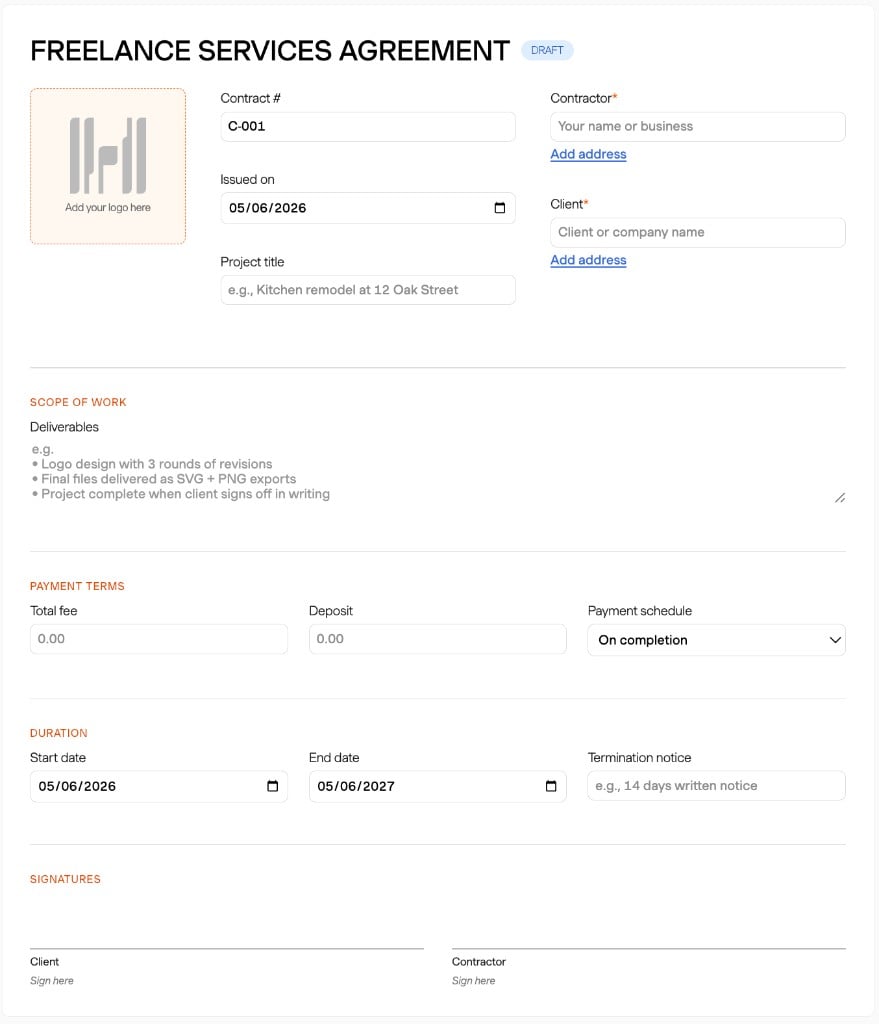
Harvest's property management contract template offers customizable options to clearly define responsibilities and terms.

Screenshot of Harvest property management contract template.

Property Management Contract Template FAQs

  • A property management contract should clearly outline the responsibilities of both the property manager and the owner. This includes rent collection, maintenance duties, tenant screening, and financial reporting. It should also detail fees, termination conditions, and state-specific compliance requirements.

  • Yes, property management contracts must comply with state-specific legal requirements, which can include licensing and disclosure rules. For example, states like Florida and California have particular regulations that must be included in the contract to ensure legal compliance.

  • Customizing a property management contract template involves adding specific rules and clauses to address unique property needs. This can include setting maintenance spending limits, defining tenant screening criteria, and implementing a proactive maintenance plan to ensure the contract accurately reflects the property management relationship.

  • Technology in property management enhances efficiency and transparency. With over 90% of managers using tech solutions, benefits include streamlined operations, enhanced tenant satisfaction, and improved financial reporting. Technologies like AI and blockchain further automate tasks and improve security.

  • Best practices include securing a signed agreement, regularly reviewing for clarity, and ensuring compliance with state-specific requirements. Retaining documents for the recommended periods and customizing templates to property-specific needs are also vital for effective contract management.

  • AI impacts property management by optimizing rental pricing, improving operational efficiency, and enhancing customer service. AI-driven platforms can increase conversion rates, as demonstrated by QuadReal's 33% improvement in tour-to-lease conversions using AI and automation.

  • Document retention is crucial for legal compliance and resolving disputes. Property managers should keep expired leases for at least seven years and retain financial records for three years, ensuring they can address issues related to security deposits and lease violations effectively.

  • Blockchain technology offers enhanced security and transparency by enabling secure transactions and automating contract execution. Smart contracts can automate tasks like rent collection and lease renewals, reducing administrative overhead and improving operational efficiency.