What Are the Features of Time Tracking?
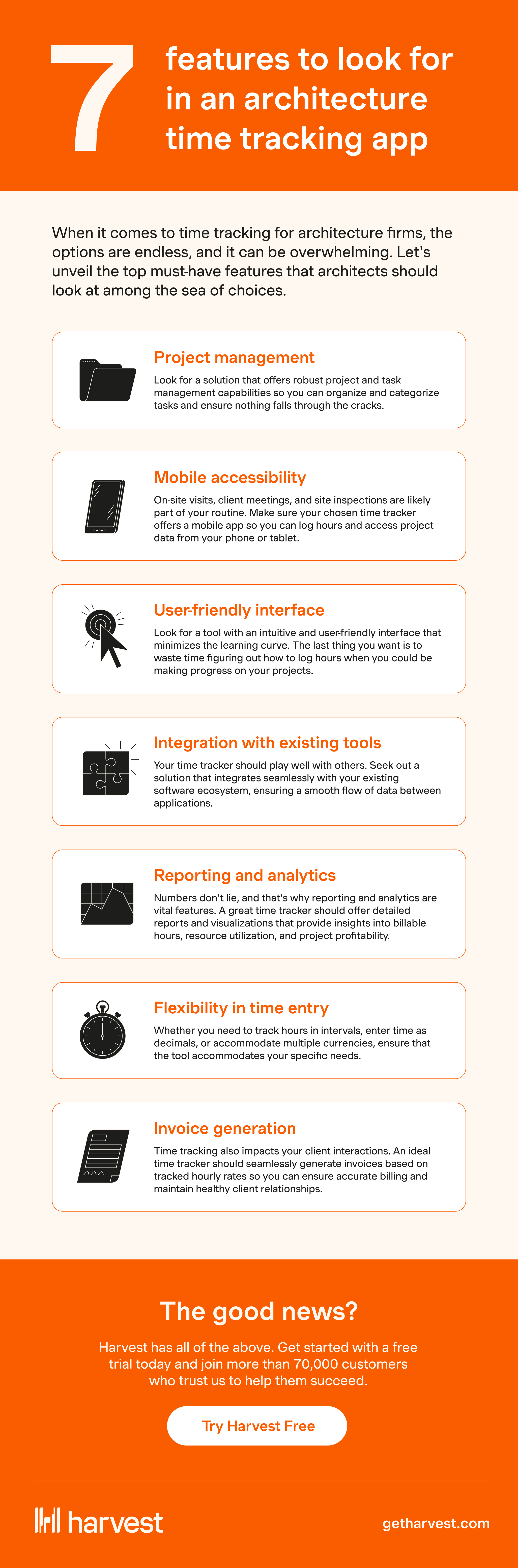
In the world of architecture, time tracking software must cater to a wide range of tasks and processes. Key features to look for include real-time tracking, phase-based task management, and detailed reporting capabilities. Architects benefit greatly from the ability to track time spent on specific project stages, such as schematic design or construction documentation, which helps in maintaining accurate budgets and timelines.
One significant trend in the architecture industry is the shift towards digital tools. According to architecturelist.com, 79% of architects believe that digital tools enhance their productivity. This statistic underscores the importance of choosing a time tracking app that integrates seamlessly with other digital tools architects use daily.
Furthermore, automated time tracking reduces the need for manual entries, allowing architects to focus more on their design work and less on administrative tasks. This is crucial as poor time management can lead to a significant loss of billable hours, impacting a firm's bottom line. Effective time tracking can improve billing accuracy by 20-30%, a substantial financial benefit for any architectural firm.
In summary, when selecting a time tracking app, architects should prioritize features that align with their workflow, enhance productivity, and ensure detailed reporting. By doing so, they not only improve operational efficiency but also gain valuable insights into project management, leading to more accurate scheduling and budgeting.
Ease of Use: Why It Matters for Architects
Ease of use is a critical factor in choosing a time tracking app for architects. A user-friendly interface ensures that the app can be adopted quickly by all team members, minimizing disruption to workflow and maximizing productivity. For architects, who often juggle between design software and client meetings, the ability to quickly log time without cumbersome processes is essential.
Many architects face the misconception that detailed time tracking is inherently complex and time-consuming. However, modern apps are designed with simplicity in mind. For instance, apps like Harvest offer intuitive start/stop timers and seamless integration with popular tools like Asana and Trello, which streamline the tracking process significantly. This ease of use encourages consistent time logging, a practice that can lead to a 15-20% improvement in financial performance within the first year of implementation.
Consider the experience of a firm that integrated a user-friendly time tracking tool and reduced redundant data entry. This transition saved them over 4,300 hours annually. The lesson here is clear: a straightforward interface not only saves time but also money.
When evaluating time tracking apps, look for those that offer mobile accessibility. Architects often work on-site or attend meetings away from their desks, making it crucial to log hours from anywhere. In conclusion, opt for a time tracking solution that offers ease of use and flexibility to ensure it becomes a helpful part of your daily routine.
How to Integrate Time Tracking Apps with Architecture Tools
Integrating time tracking apps with existing architecture tools is key to streamlining operations and enhancing productivity. For architecture firms, this means connecting your time tracking software with project management tools, accounting systems, and even design software. This seamless integration eliminates the need for manual data entry, ensuring that time logs are accurate and up-to-date.
Many firms are already experiencing the benefits of integration. For instance, by connecting time tracking apps with their project management tools, firms can directly link hours worked to specific tasks and deadlines. This not only aids in project management but also provides insights into resource allocation and project profitability.
In the architecture industry, where projects can involve complex phases and numerous team members, integration with tools like Slack, Trello, and QuickBooks is invaluable. According to getharvest.com, integrations can save firms up to 20 hours per month on administrative tasks alone.
To maximize the benefits of an integrated system, ensure that your chosen time tracking app supports the tools your team already uses. This will facilitate smoother transitions and encourage widespread adoption among team members, ultimately leading to more efficient and profitable projects.
The Importance of Detailed Reporting in Time Tracking
Detailed reporting is a cornerstone feature of time tracking apps that is particularly valuable for architects. Such reports allow firms to analyze how time is allocated across different phases of a project, from initial design to final construction. This level of insight is crucial for improving project planning and resource allocation.
For instance, detailed reporting can reveal inefficiencies in the workflow or unexpected time sinks, enabling project managers to make informed decisions about resource adjustments. This kind of data-driven approach can lead to a 15% improvement in project scheduling for architectural firms, as noted by timerewards.com.
Another advantage of detailed reporting is its role in client transparency and trust. Clients appreciate seeing where time is spent, and detailed reports can justify costs and build confidence in your firm's efficiency. This transparency is particularly important in avoiding disputes over billing, which can account for lost revenue if not managed well.
In conclusion, the reporting capabilities of a time tracking app should not be an afterthought. Selecting software that provides comprehensive, customizable reports can empower architects to optimize their workflows, enhance client relationships, and ultimately increase profitability.
Mobile Access: Tracking Time on the Go
Mobile access in time tracking apps is a game-changer for architects. It enables them to log hours and manage projects from wherever they might be, whether at a construction site, in a client meeting, or traveling between locations. This flexibility not only makes it easier to maintain accurate records but also enhances overall productivity by allowing architects to respond to project needs in real-time.
According to architecturelist.com, 79% of architects believe that using digital tools such as mobile time tracking apps enhances their productivity. This move towards digital solutions reflects a broader trend in the industry, where cloud-based tools are increasingly the norm. Mobile access supports this trend by providing a seamless way to integrate time tracking with other digital workflows.
A real-world example of this is the shift from traditional methods like spreadsheets, which are prone to errors and inefficiencies, to cloud-based apps that sync across devices. This transition allows architects to ensure that all time entries are up-to-date and easily accessible, thus reducing administrative burdens. For firms, this means less time spent on manual entry and more time focusing on design and execution.
For your team, ensuring that your time tracking app includes robust mobile capabilities can make a significant difference. It allows for daily logging and real-time project management, reducing the risk of inaccuracies and ensuring better oversight of project progress. This not only boosts efficiency but can also lead to improved client satisfaction as projects run more smoothly.
Security and Privacy: Protecting Sensitive Data
Security and privacy are paramount when it comes to time tracking apps for architects. The sensitive nature of architectural projects means that any data breach could have serious implications, from financial losses to reputational damage. Therefore, robust security features are essential to protect this critical information.
Architectural firms must comply with various regulations, such as GDPR in the EU, which imposes strict requirements on how personal data is handled. According to jibble.io, the GDPR requires that time tracking software not only secures data but also ensures transparency and accountability in its handling. This means firms need to choose apps that offer encryption, secure data storage, and clear privacy policies.
One common misconception is that security features slow down software performance or add unnecessary complexity. However, in reality, modern time tracking solutions are designed to integrate seamlessly into existing workflows without compromising speed or user experience. For instance, many apps offer automated backups and regular security updates as standard features.
For architectural firms, selecting a time tracking app with comprehensive security and privacy features is not optional but a necessity. It's an investment in safeguarding both your business's data and your clients' trust. By prioritizing security, you ensure that your firm can operate smoothly, free from the disruptions that data breaches can cause.
Customization Options to Fit Your Architectural Needs
Customization options in time tracking apps allow architecture firms to tailor the tool to their specific needs, enhancing efficiency and project management. Architecture firms often juggle a variety of tasks, from site visits to client presentations, each requiring different tracking methodologies.
According to getharvest.com, firms that implement effective time tracking systems can improve financial performance by 15-20% within the first year. Customization plays a significant role in this by allowing firms to create workflows that align with their operational needs, thus maximizing efficiency and profitability.
For example, some firms might need project-specific categories, while others require the ability to link time entries directly to design phases. These customization options ensure that the data collected is relevant and actionable, facilitating more accurate project forecasts and resource allocations.
Ultimately, customization is key to adapting a time tracking solution to meet the unique challenges of your firm. It allows for a more streamlined workflow and minimizes the friction that can come from using a generic, one-size-fits-all system. By choosing an app that offers robust customization capabilities, you’re setting your firm up for smoother project management and better financial oversight.
Scalability: Growing with Your Architecture Firm
Scalability is crucial in time tracking apps for architecture firms. As your firm grows, the software you use must be capable of expanding with it, managing increasing project demands and team sizes without missing a beat. A scalable time tracking solution ensures that your firm can handle more complex projects and larger teams efficiently.
A significant trend in the industry is the shift to cloud-based solutions, which inherently offer better scalability. According to beehiiv.com, 67% of construction projects now utilize cloud-based tools, reflecting their adaptability to growing business needs. These tools allow firms to easily add new users, projects, and data storage without significant downtime or disruption.
When selecting a time tracking app, consider how well it integrates with other systems you might already be using, such as project management or accounting software. This integration is vital for maintaining seamless operations as your business scales. A scalable solution should also offer robust reporting and analytics features to provide insights into how time is being utilized across the firm.
Investing in a scalable time tracking app is a strategic move that prepares your firm for future growth. It helps avoid the costly and time-consuming process of migrating to a new system later on. By choosing an app that grows with you, your firm can continue to deliver projects efficiently and maintain high levels of client satisfaction as you expand.
Frequently Asked Questions
What are the features of time tracking software?
Time tracking software typically includes features like automatic time recording, start/stop timers, project management tools, and reporting capabilities. These features minimize manual input, enhance accuracy, and provide insights into productivity and project performance.
What is the best app for time tracking for architects?
The best time tracking apps for architects include Paymo for its Pomodoro technique, Tick for budget tracking, and actiTime for workflow management. Each app offers unique features tailored to the needs of architects, helping them manage their time and projects effectively.
How can time tracking software benefit architects?
Time tracking software can significantly benefit architects by improving billing accuracy and project scheduling. By accurately tracking hours, firms can boost their billable revenue by 15-20% and save time on administrative tasks, leading to enhanced overall productivity.
Why is ease of use important in time tracking apps?
Ease of use is crucial in time tracking apps because it encourages consistent usage among team members. A user-friendly interface reduces the learning curve, minimizes resistance to adoption, and ensures that accurate data is recorded, ultimately leading to better project insights.
What security features should a time tracking app have?
A reliable time tracking app should have robust security features such as data encryption, user authentication, and regular backups. These measures protect sensitive project information and ensure compliance with data protection regulations, giving architects peace of mind in managing client data.


