What Are the 5 Steps of Architecture?
Understanding the five steps of architecture is crucial for managing projects effectively from conception to completion. These steps provide a structured approach, ensuring that all aspects of a project are thoroughly considered and addressed. The five critical phases include: concept design, schematic design, design development, construction documentation, and construction administration.
The first phase, concept design, is where ideas are born. During this stage, architects focus on understanding the client's needs and translating them into initial sketches and ideas. This stage is crucial for setting the tone and direction of the project. Next is the schematic design phase, where these concepts are further refined and developed into more detailed drawings and plans.
Design development follows, where the project's design is finalized, and more detailed specifications are created. This phase involves collaboration between architects, engineers, and other stakeholders to ensure that the design is feasible and meets all necessary requirements. The construction documentation phase involves creating detailed drawings and specifications that will guide the construction process.
Finally, construction administration is the phase where the project comes to life. Architects oversee the construction process, ensuring that the building is constructed according to the plans and specifications. Each phase requires careful planning and coordination to ensure a successful outcome. According to openasset.com, it’s crucial to follow these structured steps to maintain compliance and meet client expectations.
Streamlining Project Workflows with Technology
Leveraging technology can significantly streamline project workflows in architecture, reducing manual tasks and improving overall efficiency. Tools like Building Information Modeling (BIM) and cloud-based management systems help centralize data and enhance collaboration, making it easier to manage complex projects.
One common misconception is that merely adopting new technology will automatically improve productivity. However, without a strategic vision, technology can become just another tool rather than a transformative asset. According to architectmagazine.com, while architects are optimistic about emerging technologies, their immediate impact on productivity has been minimal without a clear strategic approach.
To truly streamline workflows, firms should focus on integrating technology into their processes in ways that align with their specific needs. For example, using cloud-based platforms to enable real-time collaboration can reduce the chances of miscommunication and rework. Additionally, automating routine tasks like scheduling and document management can free up time for more critical design work.
By thoughtfully incorporating technology into your firm’s workflow, you can overcome operational efficiency challenges and maintain a competitive edge in the industry. It’s not just about having the right tools but using them strategically to enhance productivity and streamline processes.
Leveraging Collaborative Design Software
Collaborative design software can be a game-changer for architecture firms, enhancing teamwork and creativity. These platforms allow multiple team members to work on a project simultaneously, providing a more integrated approach to design. This can lead to faster decision-making and more innovative outcomes.
One benefit of using collaborative software is the ability to centralize project information. This ensures that everyone is on the same page, reducing the need for endless meetings to clarify details. Tools like BIM and digital annotation systems facilitate real-time updates and feedback, which can significantly streamline the design process. According to cloudcoach.com, centralizing project notes and BIM information can reduce the need for numerous meetings and speed up project timelines.
Moreover, these platforms often include features that allow for seamless communication across teams, whether they are co-located or working remotely. This is particularly important as more firms adopt hybrid work models. The ability to share updates and receive feedback in real time can foster a more collaborative and dynamic work environment.
Incorporating collaborative design software into your practice can unlock new levels of creativity and efficiency. It empowers your team to work smarter, not harder, focusing their energies on innovative design rather than administrative tasks. By doing so, your firm can produce more original and high-quality work in less time.
Embracing Automation for Repetitive Tasks
Embracing automation for repetitive tasks can drastically improve productivity in architecture firms, allowing teams to focus on more strategic and creative work. By automating routine processes, firms can reduce human error, save time, and ultimately increase efficiency.
Repetitive tasks such as scheduling, document management, and even some aspects of design can be automated using various tools. This not only frees up valuable time for architects to focus on creative solutions but also ensures consistency and accuracy across projects. For instance, automating the updating of drawing sets or preparing specifications can significantly cut down on manual workload.
According to planman.app, automation can alleviate the burden from administrative pile-up, which is a common issue for architecture firms. This is especially relevant in a fast-paced environment where time is often of the essence.
To get started, firms should identify the most time-consuming tasks and explore automation tools that can be integrated into their existing systems. Investing in automation not only boosts productivity but also enhances the quality of the work delivered by ensuring more time is available for creative problem-solving. By adopting automation, architecture firms can maintain a competitive edge, delivering projects more efficiently and with greater precision.
Enhancing Team Communication
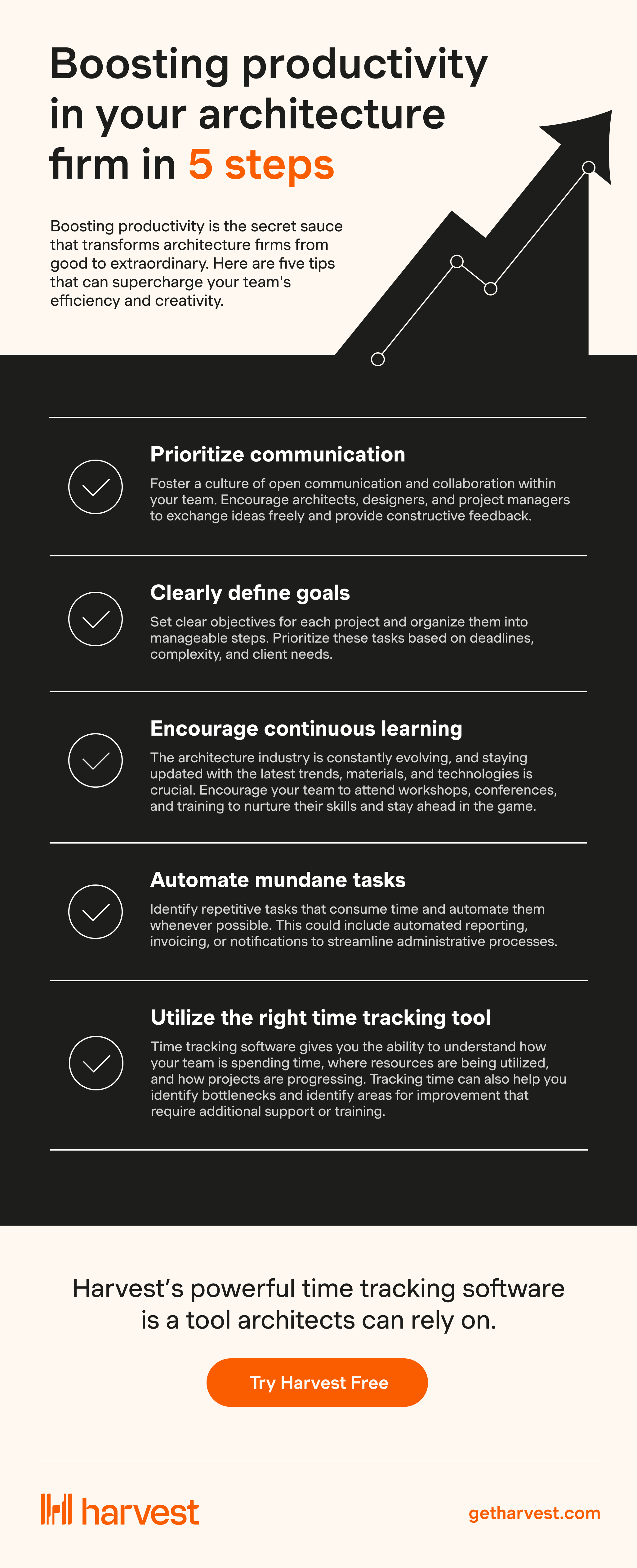
Enhancing team communication is a vital step for any architecture firm aiming to boost productivity. Effective communication ensures that all team members are aligned and informed, which is crucial for the intricate and collaborative nature of architectural projects. Without clear communication, projects can suffer from misunderstandings, resulting in delayed timelines and increased costs.
A common misconception is that communication is primarily about talking more. However, it's not just about quantity but the quality of communication. Many architecture firms struggle with ineffective work patterns, such as redoing work due to miscommunication. To address this, firms can implement collaborative design software and digital annotation tools. These tools centralize project notes and Building Information Modeling (BIM) information, reducing the need for numerous meetings and speeding up project timelines. According to cloudcoach.com, using these tools can significantly reduce project timelines.
For a practical tip, consider short, regular team meetings. These meetings help keep everyone updated and aligned with the project's objectives. Additionally, clear digital communication guidelines can enhance team alignment, ensuring everyone is on the same page and reducing time lost in clarifying details. Remember, communication is not just about exchanging information but ensuring understanding and alignment across your team.
Improving Knowledge Management and Training
Improving knowledge management and continuous training can significantly boost your architecture firm's productivity by keeping your team up-to-date with the latest industry trends and techniques. This approach ensures that your team is not only efficient but also innovative, adapting swiftly to changes in the architectural landscape.
One significant challenge is the misconception that training is a one-time event. Instead, it should be an ongoing process. Regular staff training on emerging technologies, software updates, and new regulatory standards equips teams with the skills needed to adapt and avoid productivity dips. According to openasset.com, continuous professional development ensures architects remain agile and effective.
To effectively manage knowledge, consider implementing a centralized knowledge base. This resource can store project learnings, client feedback, and best practices, making it easily accessible for all team members. Such a system not only preserves valuable insights but also fosters a culture of learning and sharing. When everyone in the firm can quickly tap into collective knowledge, it reduces redundancy and enhances the quality of output.
In summary, prioritize continuous learning and knowledge management to maintain a competitive edge. Invest in training sessions, workshops, and seminars that focus on both technical skills and soft skills like communication and leadership. This holistic approach not only boosts productivity but also prepares your team to tackle future challenges effectively.
Prioritizing Secure and Accessible File Management
Prioritizing secure and accessible file management is crucial for protecting sensitive data and enhancing access for all team members in an architectural firm. Given the complexity and volume of data generated in architectural projects, a robust file management system is essential not only for daily operations but also for long-term project success.
A common pitfall is relying on outdated systems or unsecured platforms, which can lead to data breaches and compliance issues. According to e-architect.com, the need for secure and accessible file management is underscored by the increasing importance of organized data handling aligning with legal retention needs.
To address these challenges, firms should adopt a cloud-based file management system. This approach not only enhances security through encryption and regular updates but also ensures that files are easily accessible from anywhere, facilitating remote work and collaboration. Such systems allow for version control and audit trails, which are critical for maintaining the integrity and accuracy of project documentation.
Moreover, implementing a standardized naming convention and folder structure can greatly improve file retrieval and reduce time spent searching for documents. By ensuring that everyone knows where to find what they need, your team can focus more on their core tasks rather than administrative ones. Overall, investing in secure and accessible file management solutions is an investment in your firm's efficiency and reputation.
Adopting Flexible Work Practices
Adopting flexible work practices, including remote work options, offers significant advantages for architecture firms looking to boost productivity. By providing employees with the flexibility to work from different locations, firms can attract top talent and increase overall job satisfaction, which in turn enhances productivity.
The shift to hybrid work models is a significant trend in the industry. In 2020, 39.1% of architects worked in a hybrid model, and this is estimated to increase to 76.6% of firms choosing a hybrid model by 2022. Meanwhile, full remote work dropped significantly from 34.8% in 2020 to 9.9% in 2022, reflecting a balanced approach that many firms are adopting. According to re-thinkingthefuture.com, this trend highlights the growing acceptance and implementation of flexible working arrangements.
Implementing flexible work practices requires a strategic approach. Start by assessing which roles and tasks are suitable for remote work. Use project management and collaboration tools to maintain team cohesion and ensure that all members remain aligned and productive. Tools like Slack or Harvest can help facilitate communication and track time effectively, ensuring that productivity standards are met even outside the traditional office environment.
In essence, by adopting flexible work practices, architecture firms can create a more dynamic and adaptable work environment. This not only helps retain existing talent but also attracts new talent, fostering a culture of innovation and productivity. It's about creating a work-life balance that empowers your team to deliver outstanding results.
Frequently Asked Questions
What are the 5 steps of architecture?
The five steps of architecture include: 1) Conceptual Design, 2) Schematic Design, 3) Design Development, 4) Construction Documentation, and 5) Construction Administration. Each step builds on the previous one, ensuring a comprehensive approach to project development, from initial ideas to final execution.
How to grow your architecture firm?
To grow your architecture firm, focus on enhancing operational efficiency, adopting new technologies, and expanding your service offerings. Building a strong online presence and networking within the industry can also attract new clients and projects, ultimately driving growth.
How can technology streamline architectural workflows?
Technology can streamline architectural workflows by automating repetitive tasks, improving collaboration, and enhancing project management. Utilizing tools like Building Information Modeling (BIM) and cloud computing allows for real-time updates and better communication among team members, which can significantly increase productivity.
What are the benefits of using collaborative design software?
Collaborative design software improves team communication, enhances project visibility, and allows for simultaneous contributions from multiple stakeholders. This leads to faster decision-making, reduces errors, and ensures that everyone is aligned with the project goals, ultimately boosting overall productivity.
Why is automation important in architecture firms?
Automation is crucial in architecture firms as it reduces administrative burdens, allowing architects to focus more on design and creative tasks. By automating processes like billing, scheduling, and project tracking, firms can increase efficiency, minimize human error, and improve overall project delivery.


