What Are the Key Benefits of Time Tracking in Accounting?
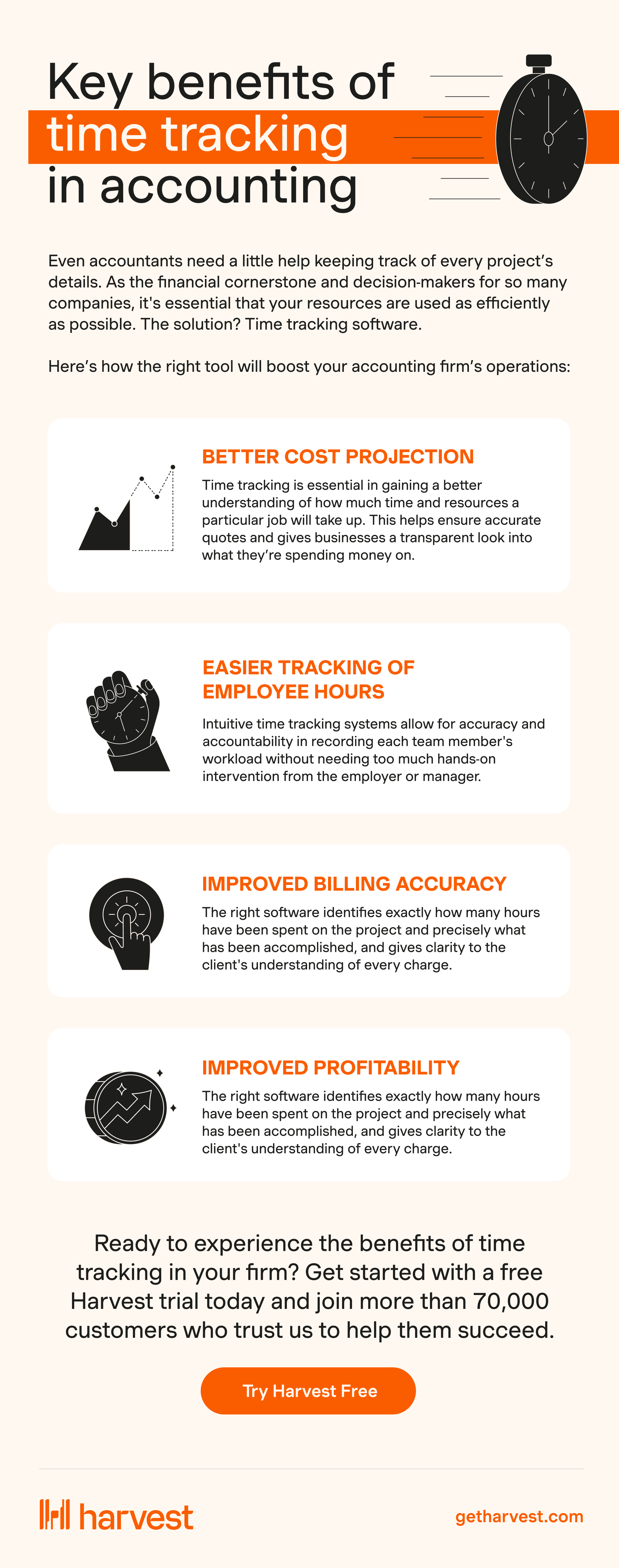
Time tracking in accounting delivers a range of benefits that can significantly impact productivity, billing accuracy, and resource management. One of the primary advantages is increased productivity. By tracking how time is spent on various tasks, accountants can identify areas where efficiency can be improved. This insight helps in reallocating time to more critical tasks, ultimately enhancing overall productivity.
Enhanced billing accuracy is another key benefit of time tracking. With precise records of time spent on client work, accountants can ensure that invoices are accurate, reducing the likelihood of billing disputes. According to teamtrackin.com, manual systems contribute to 1-8% of payroll discrepancies due to errors, highlighting the need for precise time tracking.
Better resource management is an essential benefit of time tracking in accounting. By having a clear view of how resources are allocated, firms can optimize staffing levels and project timelines. This ensures that resources are used efficiently, minimizing waste and maximizing output. Professional services firms, for example, can lose up to 25% of billable hours due to inefficient time tracking, which can translate into significant revenue losses. Implementing a robust time tracking system can help mitigate these losses and improve financial outcomes.
How Time Tracking Improves Billing Accuracy
Time tracking is pivotal in enhancing billing accuracy for accounting professionals. By maintaining detailed records of time spent on various tasks, accountants can create invoices that reflect the true amount of work completed. This not only ensures clients are billed fairly but also builds trust through transparency.
A common misconception is that manual time tracking is sufficient for maintaining accurate billing. However, manual methods often lead to errors and omissions. According to cleanjack.be, 44% of business owners report frequent timesheet errors, with a significant portion stemming from incorrect entries.
The better approach is to utilize digital time tracking tools that automatically record time spent on tasks. These tools minimize human error and provide precise data that can be directly integrated into invoicing software. As a result, accountants can deliver detailed and accurate invoices, reducing the potential for disputes. This not only improves billing accuracy but also strengthens client relationships by demonstrating professionalism and reliability.
Digital vs. Paper Timesheets: Which to Choose?
When it comes to time tracking, choosing between digital and paper timesheets can significantly impact efficiency and accuracy. Digital timesheets offer several advantages over their paper counterparts, primarily through automation and ease of integration with other software.
Digital solutions streamline the process of recording time entries, reducing the likelihood of errors and forgotten logs that are common with paper timesheets. According to timerewards.com, manual systems are prone to errors that contribute to payroll discrepancies, affecting 1-8% of total payroll.
Moreover, digital timesheets can easily integrate with accounting and payroll systems, ensuring a seamless flow of accurate data. This is particularly beneficial for professional services firms that need to manage billable hours efficiently. While paper timesheets might seem simple, they require more manual intervention and are less secure, potentially leading to higher costs in the long run. For firms looking to increase accuracy and efficiency, digital timesheet solutions are the clear choice.
Why Is Time Management Important for Accountants?
Time management is a cornerstone of success for accountants, playing a critical role in reducing stress, increasing productivity, and achieving a balanced work life. Effective time management allows accountants to prioritize tasks, meet deadlines, and avoid the last-minute rush that often leads to errors.
A common challenge within the accounting field is the tendency to multitask, which can undermine efficiency. Multitasking can decrease productivity by as much as 45%, as it divides attention and focus. This inefficiency highlights the importance of structured time management practices. By focusing on one task at a time and allocating specific periods for each, accountants can significantly boost their productivity.
Implementing a robust time management strategy can lead to tangible benefits. According to tempo.io, integrating time tracking with project management tools not only aids in better scheduling but also enhances visibility into workload distribution. This holistic approach to time management helps accountants maintain a balance between professional demands and personal wellbeing, ultimately leading to a more fulfilling career.
What Are the Best Time Tracking Tools for Accountants?
When it comes to selecting the best time tracking tools for accountants, the market offers several robust options. Top contenders include QuickBooks Time, Clockify, and Xero, each with unique features tailored for financial professionals. QuickBooks Time, for instance, integrates seamlessly with QuickBooks accounting software, providing an intuitive interface that simplifies payroll processing and enhances invoicing accuracy. This integration is a significant advantage for firms already using QuickBooks. Clockify stands out with its user-friendly design and free tier, making it a popular choice for smaller firms or individual accountants looking to optimize their workflow without incurring additional costs.
A common misconception is that all time tracking tools are the same, but that's not the case. Tools like Xero provide specific features that cater to international accounting practices, including multi-currency invoicing and compliance with regional tax regulations. This makes Xero particularly beneficial for firms with a global client base. Comparing user reviews, QuickBooks Time is often praised for its customer support and ease of use, whereas Clockify receives accolades for its affordability and flexibility.
When considering pricing, QuickBooks Time offers a flexible subscription model that can scale with your firm’s needs. In contrast, Clockify’s freemium model is perfect for those who want to get started with basic features and upgrade as necessary. Xero, although slightly more expensive, provides comprehensive accounting functionalities, making it an all-in-one solution for many financial firms. According to clockify.me, the adoption of digital solutions like these is on the rise, highlighting the shift from manual to automated systems for better efficiency.
Strategies for Implementing Time Tracking in Accounting
Implementing time tracking in an accounting firm involves more than just choosing a tool; it requires a strategic approach to ensure success. Start by setting clear objectives. What do you want to achieve? Whether it's improving billing accuracy or optimizing resource allocation, defining these goals will guide your implementation process.
A common misconception is that time tracking is solely for billing purposes. In reality, it helps identify where time is spent, leading to better decision-making and resource management. According to industry experts, professional services firms face significant revenue loss due to inefficient time tracking, with estimates suggesting 15-25% of billable hours are lost. For a 50-person firm billing $200/hour, this can amount to an annual revenue loss of $780,000 to $1.3 million. This underscores the importance of precise time tracking.
Training staff is another critical step. Without proper training, even the best tool can become a burden rather than a benefit. Introduce the system gradually, starting with a pilot phase allowing feedback from users to fine-tune processes. Emphasize the benefits of accurate time tracking, such as reduced administrative work and improved job satisfaction due to fair compensation. Furthermore, establish guidelines for what activities need tracking and how often entries should be made. Regular feedback and open communication will foster acceptance and smooth integration into daily operations.
Finally, consider integrating time tracking with existing systems like payroll or project management software. This not only streamlines operations but also reduces the potential for errors that can occur with manual data entry. As the trend toward digital solutions continues, ensuring your firm is equipped with an efficient time tracking system is increasingly important. According to teamtrackin.com, digital solutions are becoming a staple in professional services, enhancing both accuracy and efficiency.
Exploring the Benefits of Real-Time Tracking
Real-time tracking offers several benefits for accountants, chiefly improving communication and providing immediate data insights. With real-time data, accountants can make quick, informed decisions, enhancing their ability to respond to client needs promptly. This capability is crucial in the fast-paced financial world, where timely decisions can significantly impact business outcomes.
Unlike traditional methods, which often involve a delay between data collection and analysis, real-time tracking allows for instantaneous data access. This immediacy helps accountants identify trends and anomalies as they occur, providing a proactive approach to managing financial data. For instance, in the healthcare sector, real-time tracking is used to maintain efficient resource management, ensuring accountability and timely service delivery. This model can be adapted to the accounting field, where timely financial insights are equally valuable.
Moreover, real-time tracking minimizes the risk of errors that might arise from forgotten or inaccurately logged hours. By encouraging immediate time entries, accountants can ensure that all billable hours are captured accurately, reducing discrepancies and enhancing client trust. According to timerewards.com, firms that adopt effective time tracking can see a 20-30% increase in captured billable hours, a testament to the efficiency gains possible with real-time data.
Ultimately, the shift to real-time tracking is about more than just keeping up with technology; it’s about leveraging it to provide better services and foster stronger client relationships. By utilizing real-time data, accountants can not only streamline their workflows but also enhance their strategic planning capabilities, ensuring they remain competitive in an ever-evolving market.
Getting Started with Time Tracking in Your Accounting Practice
Getting started with time tracking in your accounting practice doesn't have to be daunting. Begin by selecting a time tracking tool that aligns with your firm's needs. Consider factors such as integration capabilities, ease of use, and cost. Tools like Harvest offer seamless integration with popular accounting systems and have features tailored for financial tasks, making them an excellent starting point.
Next, establish a clear process for how time tracking will be implemented. This includes setting expectations for daily entries, defining which activities require tracking, and developing a routine review process. Encourage your team to log their time as tasks are completed to ensure accuracy and reduce the chance of forgotten entries. This not only aids in capturing all billable hours but also helps in identifying areas where efficiency can be improved.
Training is critical to a successful implementation. Provide comprehensive training sessions to ensure all team members understand how to use the tool and the importance of accurate time tracking. Highlight the benefits, such as increased billing accuracy and reduced administrative workload, to foster acceptance and enthusiasm. Regularly solicit feedback from your team to identify any challenges and make necessary adjustments.
Finally, integrate your time tracking tool with other business systems, such as invoicing and payroll. This integration streamlines operations and reduces the potential for data entry errors, enhancing overall efficiency. As more firms move towards digital solutions, it's essential to ensure your practice is not left behind. According to cleanjack.be, the transition to digital time tracking is essential for maintaining competitiveness and operational effectiveness.
Frequently Asked Questions
What are the benefits of time tracking?
Time tracking offers several key benefits including improved productivity, accurate billing, and enhanced operational efficiency. By recording how time is spent, organizations can identify inefficiencies and optimize workflows. Additionally, accurate time tracking ensures that all billable hours are captured, minimizing revenue loss and increasing profitability.
Why is time management important for accountants?
Time management is crucial for accountants as it helps them meet deadlines and manage workloads effectively. By prioritizing tasks and organizing their schedules, accountants can reduce stress and improve their overall productivity. Effective time management also allows accountants to allocate time for professional development and maintain a healthy work-life balance.
What are the best time tracking tools for accountants?
Some of the best time tracking tools for accountants include Toggl, Harvest, and Clockify. These tools offer features like automatic time tracking, project management integration, and detailed reporting. They help accountants streamline their time tracking process, reduce errors, and enhance billing accuracy, ultimately improving their efficiency.


