What is Time Tracking in Tech?
Time tracking in the tech industry is essentially a method for recording and analyzing the time spent on various projects and tasks. It serves the dual purpose of enhancing productivity and ensuring operational efficiency. By systematically tracking time, tech teams can gain valuable insights into their workflow, identify bottlenecks, and optimize resource allocation.
In the tech world, time tracking is not just about logging hours; it's about understanding how those hours translate into productivity and project progress. For example, software development teams often use time tracking to balance coding, testing, and debugging activities. Tools like Jira and Asana integrate time tracking features to help tech teams maintain a clear picture of their project timelines and resource utilization.
Moreover, time tracking helps address common challenges such as task prioritization and project estimation. In industries like software development, where project delays can be costly, having a precise understanding of time allocation can prevent scope creep and improve deadline adherence. According to hubstaff.com, companies implementing AI-based time tracking tools have reported up to a 32% improvement in work-time efficiency.
Time tracking tools also support remote work environments by offering mobile applications and geofencing capabilities. This flexibility ensures that tech teams can accurately record their work hours regardless of location, fostering accountability and performance in a remote or hybrid work model. As remote work becomes more prevalent in the tech industry, the role of time tracking in maintaining productivity and efficiency will continue to grow.
Top 5 Benefits of Time Tracking
Time tracking offers several key benefits that can transform the way tech teams operate. Here are the top five benefits of implementing time tracking solutions:
- Increased Productivity: By tracking time, employees become more aware of how they spend their work hours, which often leads to increased focus and productivity. Companies using time tracking tools have reported significant improvements in efficiency, with some experiencing a 32% boost, as noted by hubstaff.com.
- Enhanced Accountability: Time tracking promotes a sense of accountability among team members. It helps individuals take ownership of their time, leading to improved performance and contribution. Around 70% of employees using mobile time tracking applications report feeling more accountable, as per lifthcm.com.
- Better Project Management: With clear time records, project managers can allocate resources more effectively and adjust schedules based on realistic estimations. This leads to more precise project planning and execution.
- Cost Efficiency: By identifying time wastage and inefficiencies, companies can save costs significantly. Effective time tracking can reduce productivity leaks by up to 80%, potentially increasing revenues by 61%, according to ecotimebyhbs.com.
- Improved Compliance: For tech firms subject to regulations like the Fair Labor Standards Act (FLSA), accurate time tracking is crucial for compliance. It helps avoid legal issues related to inaccurate payroll reporting and labor violations.
How Does Time Tracking Improve Productivity?
Time tracking significantly boosts productivity within tech teams by providing clear insights into how work hours are spent and where improvements can be made. One of the primary mechanisms through which this occurs is by enhancing self-awareness among employees. When individuals are conscious of their time usage, they are more likely to stay focused and manage distractions effectively.
A common misconception is that time tracking might stifle creativity or be seen as a micromanagement tool. However, when implemented correctly, it is the opposite. Time tracking empowers teams to identify non-productive habits and streamline processes. For instance, automated time tracking can reduce payroll corrections by up to 43%, freeing up valuable time for creative work, as noted by attendancebot.com.
Moreover, time tracking tools can provide real-time data that helps managers make informed decisions. For example, by analyzing time logs, managers can identify which projects are consuming more resources than anticipated and adjust plans accordingly. This not only aids in efficient resource management but also ensures that projects stay on track, reducing the likelihood of burnout among team members.
In addition, time tracking fosters a culture of transparency and accountability. When everyone is aware of how their time contributes to the team's goals, it enhances motivation and collaboration. This culture shift can lead to significant productivity improvements, with teams more likely to meet deadlines and achieve project goals efficiently.
Best Tools for Time Tracking
Choosing the right time tracking tool for your tech team involves weighing the pros and cons of various options. The market offers a range of tools, each with unique features designed to cater to different organizational needs.
For teams that prioritize integration with existing systems, tools like QuickBooks Time and Harvest are excellent choices. QuickBooks Time offers seamless integration with payroll and accounting systems, making it a great fit for businesses that need to keep financials tightly aligned with time tracking. Harvest, on the other hand, not only integrates with over 50 platforms including Slack and Jira but also provides robust invoicing and reporting features, making it ideal for tech teams that need comprehensive project management solutions.
For those looking for simplicity and ease of use, Toggl Track offers a user-friendly interface with features like one-click timers and detailed reporting. It's particularly beneficial for teams that want to focus on tracking time without the added complexity of other features.
Clockify is another popular option, especially for teams seeking cost-effective solutions. It offers a free plan that includes unlimited tracking for unlimited users, making it a budget-friendly choice for startups and small tech firms.
Lastly, if mobile tracking is a priority, TimeCamp provides an intuitive mobile app for tracking time on the go. This feature is especially useful for tech teams that operate in remote or hybrid work environments. According to appfire.com, mobile time tracking has become increasingly important as tech teams adapt to more flexible work arrangements. Choosing the right tool depends on your team’s specific needs, budget, and existing tech stack.
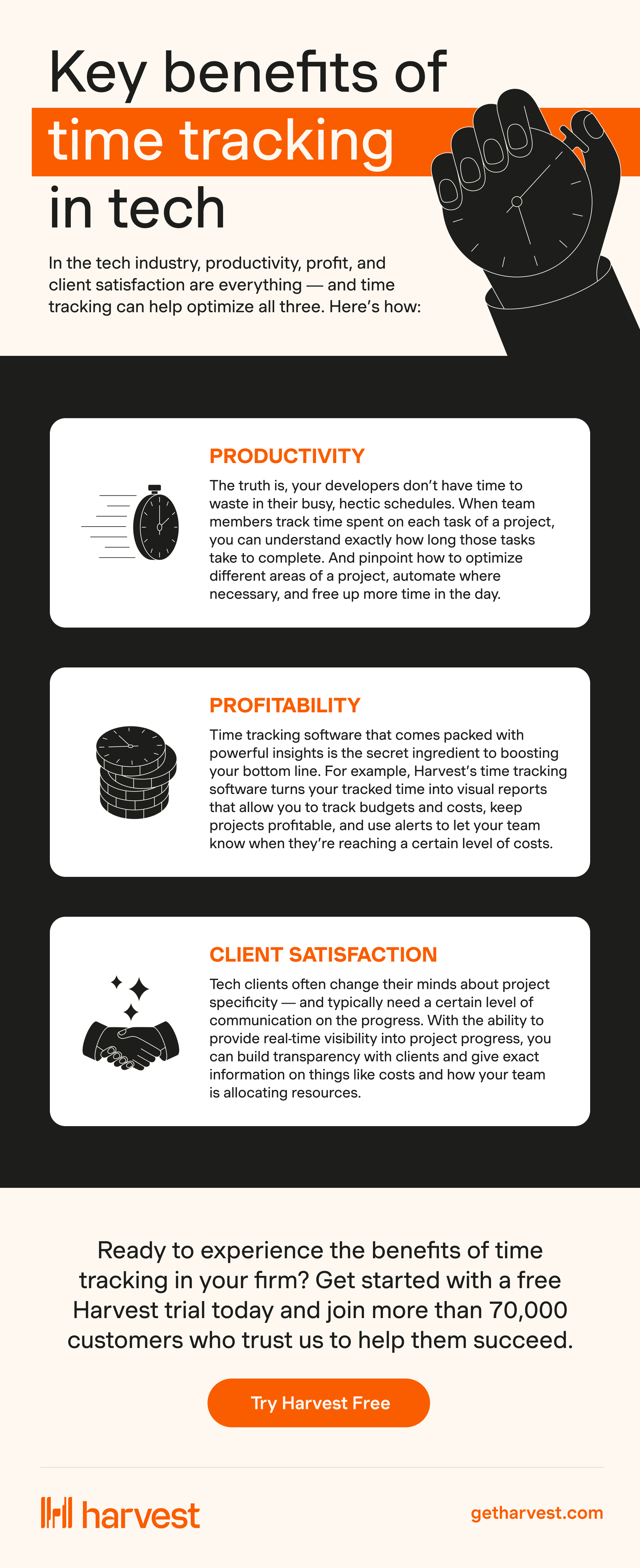
Case Studies: Success Stories with Time Tracking
Time tracking has proven to be a game changer for many tech companies, offering tangible improvements in efficiency and cost savings. One notable example is a computer software company that saved 80 hours per month on administrative tasks and reduced billing-related expenses by 20% through the use of time tracking systems. This success story highlights the potential for significant operational improvements when time tracking is effectively implemented.
Another inspiring case is Busy Bee, a retail chain that optimized their labor costs by 20% using advanced attendance software. By integrating scheduling features with time tracking, they were able to align staff availability with customer demand efficiently. This optimization not only cut costs but also enhanced customer satisfaction by ensuring adequate staffing during peak hours.
Time tracking isn't just about cutting costs. For Acme Manufacturing, an auto parts producer, the adoption of attendance software with fingerprint scanners reduced time theft by 30% and improved payroll accuracy by 15%. This demonstrates that the right tools can enhance both security and efficiency, ensuring that staff are compensated accurately for their work hours.
These examples underscore the potential of time tracking to address diverse business challenges. Whether it's reducing administrative burdens, optimizing labor costs, or ensuring payroll accuracy, time tracking offers a range of benefits that can be tailored to meet the specific needs of different industries. According to ecotimebyhbs.com, implementing these systems can significantly streamline operations and improve a company's bottom line.
Common Challenges in Time Tracking and How to Overcome Them
Time tracking, while beneficial, often comes with its set of challenges. One common issue is employee resistance, largely due to concerns over micromanagement or privacy. Employees may fear that time tracking is a means of surveillance rather than a tool for productivity. To overcome this, organizations must clearly communicate the benefits, such as improved efficiency and accurate workload management, and provide transparent training sessions to allay fears and clarify intentions.
Integration issues also pose a significant challenge. Many tech teams struggle with time tracking tools that don't seamlessly connect with other business systems like payroll or HR software. This disconnect often leads to manual data transfers, which can be time-consuming and error-prone. Choosing time tracking solutions with native integrations or API-based connections, such as those offered by Harvest, can ensure a smooth data flow and minimize errors.
Another frequent challenge is the high error rate associated with manual time entry. Paper timesheets or spreadsheets are not only cumbersome but also prone to inaccuracy and fraud, with businesses potentially losing up to 7% of their total payroll each year due to such errors. Digital, automated systems can significantly reduce these discrepancies, ensuring more accurate and reliable data.
To address these challenges, tech teams should select intuitive and well-integrated time tracking tools that are easy to use and adapt to existing workflows. According to timecentral.co, addressing these issues proactively can lead to a more productive and satisfied team.
What Are the Benefits of Time Tracking for Remote Teams?
For remote tech teams, time tracking offers distinct advantages that go beyond mere clock-ins and outs. It fosters an environment of accountability and improved communication, ensuring that all team members are aligned despite geographical distances. One significant benefit is the enhancement of productivity. According to studies, companies using AI-based time tracking tools have seen up to a 32% improvement in work-time efficiency. This is crucial for remote teams, where self-discipline and time management are more challenging.
Time tracking also facilitates better project management. With clear records of how time is spent, managers can more effectively allocate resources and set realistic deadlines. This transparency helps avoid the common pitfalls of remote work, such as overcommitment or burnout, by providing a clear picture of team capacity and workload.
Moreover, time tracking tools often integrate with communication platforms like Slack or Microsoft Teams, allowing for seamless updates and the sharing of time logs. This integration ensures that everyone stays connected and informed, which is particularly important in remote settings where face-to-face interactions are limited.
By providing detailed data on time usage, time tracking enables remote teams to identify inefficiencies and make informed decisions to optimize their workflows. This not only boosts individual accountability but also encourages a culture of trust and transparency. As the demand for remote work continues to grow, leveraging time tracking can be a strategic advantage for tech companies looking to enhance their remote operations. According to timetrex.com, these systems are essential in navigating the complexities of remote team management.
Getting Started with Time Tracking: Tips and Best Practices
Embarking on a time tracking journey can be smooth and beneficial if you follow some key best practices. First, it's crucial to define your objectives. Whether your goal is to improve project delivery, track billable hours, or optimize resource allocation, having a clear purpose will guide your implementation strategy and keep your team focused.
When choosing time tracking tools, prioritize those that are user-friendly and easily integrate with your existing systems. Solutions like Harvest offer seamless integrations with popular platforms such as Asana, Trello, and QuickBooks, making the transition smoother and less disruptive to your operations. These integrations help ensure that your time tracking efforts support, rather than hinder, your overall workflow.
Starting with a pilot program can also be beneficial. By testing the system with a small team or department, you can identify potential challenges and gather valuable feedback. This approach allows you to make necessary adjustments before a full-scale rollout, minimizing disruptions and resistance.
Training is another critical component of successful time tracking implementation. Ensure that all employees understand the system's functionalities and the importance of accurate time logging. Clear communication about the benefits of time tracking, such as enhanced productivity and transparency, can help alleviate concerns about micromanagement.
Consistency is key. Encourage your team to track time daily to build a habit and ensure data accuracy. According to lifthcm.com, regular reviews and adjustments based on your time data can further refine processes and drive continuous improvement.
Frequently Asked Questions
What are the benefits of time tracking for project management?
Time tracking enhances project management by improving productivity, accountability, and resource allocation. It allows managers to monitor progress in real-time, identify bottlenecks, and make informed decisions to optimize workflows. Additionally, accurate time records help in budgeting and forecasting, ultimately leading to more successful project outcomes.
How can time tracking tools integrate with other software?
Time tracking tools can seamlessly integrate with various software, such as project management, accounting, and communication platforms. This integration allows for streamlined workflows, as data can be shared across systems, reducing manual entry and errors. Many time tracking tools offer APIs or built-in integrations to facilitate this connection, enhancing overall efficiency.
What are common mistakes to avoid in time tracking?
Common mistakes in time tracking include inconsistent entries, neglecting to track all activities, and failing to communicate expectations to the team. These errors can lead to inaccurate data, which undermines the benefits of time tracking. To avoid these pitfalls, establish clear guidelines, encourage regular updates, and provide training on using the tracking tools effectively.
How do I choose the right time tracking tool for my team?
Choosing the right time tracking tool involves assessing your team's specific needs, such as ease of use, integration capabilities, and reporting features. Consider factors like team size, project complexity, and remote work requirements. It’s also beneficial to test a few options through free trials to see which tool best fits your workflow and enhances productivity.


